BAU: ARTIST AT WAR
A forger's courage and hope shine bright inside hell.
Should You Watch It?
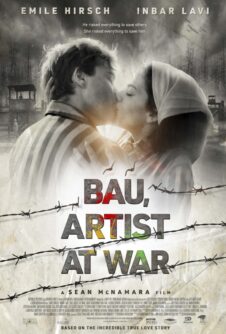
This is one of the finest films of its kind in years, and the source material behind it earns every bit of that praise. Emile Hirsch and Inbar Lavi give performances that make you feel Joseph and Rebecca Bau's suffering and their joy in equal measure, and the director recreates the camp with an authenticity that will strike anyone who has visited one in person. Real humor threads through real horror without cheapening either.
But this is still a Holocaust film, and it doesn't flinch. A father is shot in front of his son. A guard kills a weeping man at his wife's grave. There's brief strong language and one moment of politically-charged content. None of it is gratuitous, and all of it serves a story built on faith, hope, and sacrificial love — but it means this movie belongs to grown-ups and mature teens, not family movie night.
If you're an adult who can sit with hard history, this is a beautiful, worthwhile watch.
The Story
NO SPOILERS — WE KEEP THE SURPRISESIn 1971, a young lawyer travels to Tel Aviv to convince artist Joseph Bau to testify against a former Nazi camp officer. Reluctantly, Joseph agrees to tell his story. The film flashes back to 1943, where Joseph, living in the Krakow ghetto, uses his artistic talent to forge documents that help others escape the Nazis. When he and his family are sent to the Plaszow concentration camp, his skills — and his unshakable optimism — draw the attention of people who may hold his fate, and the fate of many others, in their hands.
Is It Any Good?
Four stars means this is filmmaking at its finest, and the source review backs that up scene for scene. The camp sets are recreated with striking authenticity, and the director punctuates the horror with brief clips of Bau's real Holocaust-era artwork, giving the film unusual emotional weight. Hirsch and Lavi carry the romance and the grief with equal conviction, and the script — balancing real suffering with real humor — plays almost like a masterclass in tone. Little here feels like a weakness; the praise is nearly total, and it's earned by craft, not sentiment alone.
The Worldview
This film stands on a strong moral foundation, told from a Jewish, biblical perspective. Characters pray, recite the Shabbat blessing even inside the camp, and lean on faith rather than despair. Sacrifice runs through the whole story — Joseph's father takes the blame for his son's joke and is shot for it; Rebecca gives up her own place at Schindler's factory so Joseph's forgery skills can save others. One moment even carries a Christian allusion to Christ's sacrifice for humanity. The film is unambiguously anti-Nazi and celebrates freedom without qualification.
One passing scene is worth naming plainly: a minor character, also imprisoned, says briefly that he's there because he "loves" the "wrong" person. It's a small, politically-tinted aside rather than a theme the film builds on, but discerning viewers should know it's there.
What the film gets right, though, outweighs that moment. It insists that hope and joy can survive even the worst darkness, and that love laid down for others is the truest kind. Scripture says the same, more plainly: "Greater love has no one than this, that someone lay down his life for his friends" (John 15:13). Joseph and Rebecca Bau lived that verse before it ever reached a screen.
The Content Guide
The specifics — spoilers included by nature — so you can judge for your own family.
Dominant Worldview and Other Worldview Content/Elements
Very strong moral worldview from a Jewish, biblical perspective, with some strong redemptive elements, one of which reflects a Christian allusion to Jesus Christ’s sacrifice for people, includes many scenes feature characters talking about their faith and reciting the Jewish Shabbat blessing even while imprisoned, movie has a strong emphasis on helping others and sacrifice, Joseph Bau and Rachel and their friends in the Resistance are dedicated to helping others despite putting their own lives at risk, Joseph’s father takes the fall for one of Joseph’s jokes, and this leads to him being shot, as he knows how valuable Joseph is to the Resistance, and Rachel also sacrifices herself to make sure Joseph is sent to Schindler’s factory instead of her, because she knows his forgery skills are important to help save others, plus the movie is thoroughly Anti-Nazi and celebrates freedom, but there’s a politically correct moment where a minor character is a homosexual who says in one brief scene that he’s in the concentration camp because he “loves” the “wrong” person
Foul Language
Eight obscenities (including one “f” word), two Jewish slurs, some instances of bathroom humor (title character lies to German camp officers that was a diarrhea outbreak in the women’s bunkhouse to hide the fact that he married his girlfriend in a women’s dorm and slept the night with her), title character shows his middle finger, and a character uses a faucet in title character’s 1971 studio n Tel Aviv where title character has painted a man on the wall behind it to make it look like a man is urinating when the faucet is turned on
Violence
Some strong and light violence includes evil German guard whips the title character instead of the character’s elderly father, a dead prisoner is shown tangled in the camp’s electric fence as he had committed suicide, a female prisoner is beaten to death off-camera, but viewers can hear what’s happening after the guard shuts the door, a character’s father is shot in front of him, title character is clubbed and unconscious as the National Socialist troops evacuate the prisoners from Plaszow, there’s footage of a man being hung for stealing, a woman’s obscured dead body in an office (she was giving the camp commandant a manicure but clipped one of his fingers, camp commandant angrily shoves woman’s head down on some documents on his desk that she was perusing, guard shoots prisoner dead in cold blood for weeping over his wife’s gravesite, German officers get violently angry from time to time, and Israelis in 1971 Tel Aviv walk to bomb shelters while missile explosions occur
Sex
No sex scenes but it’s implied that a recently married couple spend the night together on their wedding night
Nudity
Upper and rear male nudity (one scene shows National Socialist German guards forcing prisoners to strip and take cold showers and then stand outside in the cold (some rear nudity is shown, but men are shown holding their hands over their genitals
Alcohol Use
Some alcohol use
Smoking and/or Drug Use and Abuse
Some smoking, but no drugs;
Miscellaneous Immorality
Title characters, prisoners and Resistance members in the German concentration camp lie and sneak, but it is all in service of others and helping to save their own lives, and many scenes feature the National Socialist bigotry against Jews.
Talk About It
Questions for the drive home, the dinner table, or the youth group.
Joseph uses humor and hope to keep others alive in spirit, even inside a concentration camp. Where does Scripture point to joy as something worth holding onto in suffering?
Nehemiah 8:10 · James 1:2-4Both Joseph's father and Rebecca make sacrificial choices that cost them dearly so others can live. How does their sacrifice echo Christ's words about love?
John 15:13The film shows prisoners praying and reciting the Shabbat blessing even in captivity. What does it look like to hold onto faith when everything else has been stripped away?
Habakkuk 3:17-19This story is firmly anti-Nazi and celebrates freedom, but includes one brief moment reflecting a view of relationships that differs from a biblical one. How can a family watch stories like this with discernment — honoring the truth of the history while thinking carefully about every message inside it?
Philippians 4:8The Final Word
Joseph and Rebecca Bau's story is the kind Movieguide exists to celebrate — hope, faith, and sacrificial love refusing to die even in history's darkest place, told through performances and filmmaking that earn every star. It's also a genuine Holocaust drama, with the violence and weight that history demands. So here's our answer: worth the trip — adults only. Choosing for family movie night instead? Start with our latest family-friendly picks.