
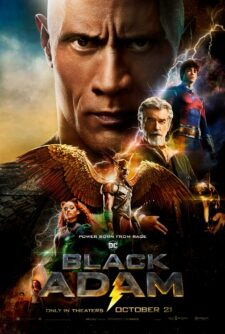
BLACK ADAM
Exciting superhero action with strong moral themes—for discerning adults.
Should You Watch It?
BLACK ADAM delivers exciting action, constant jeopardy, and a strong central performance from Dwayne Johnson. Pierce Brosnan and Aldis Hodge also provide strong support. The story gives its heroes a clear enemy in demonic power, emphasizes freedom, and includes several redemptive examples of sacrifice.
The cost is substantial. The movie contains intense action violence, including killings and threats against a teenager, along with 21 obscenities. Its worldview is also mixed, with references to gods, Fate, magic, mystical powers, and demons. Those elements may trouble viewers who want a cleaner spiritual vision.
If you are a discerning adult who can engage those concerns without harm to your conscience, this is WORTH THE TRIP — ADULTS ONLY.
The Story
NO SPOILERS — WE KEEP THE SURPRISESFive thousand years ago, Teth Adam received extraordinary powers from a council of wizards before being imprisoned for using those powers for revenge. Now free in the fictional kingdom of Kahndaq, he becomes a symbol of hope to people seeking freedom.
But the Justice Society sees him as a threat to peace and stability. As a criminal seeks an ancient crown connected to demonic power, Black Adam must decide whether to stand alone or join four superheroes to stop him.
Is It Any Good?
Three stars means a strong but uneven superhero film. BLACK ADAM has exciting action scenes and is filled with jeopardy. Dwayne Johnson delivers a strong performance in the title role, with Pierce Brosnan and Aldis Hodge also standing out.
Sarah Shahi and Bodhi Sabongui provide strong support as well. However, a few of the supporting characters and players are lackluster. The result is entertaining and energetic, though not consistently strong across its cast.
The Worldview
BLACK ADAM presents a mixed pagan worldview. The film refers to gods, Fate, magic, and mystical powers. Dr. Fate’s abilities come from a magical helmet, although he does not cast spells in this movie. The story also involves a crown that gives its wearer the power of six demons.
The film’s moral content is stronger in several important ways. The heroes fight a villain seeking demonic power, and they do not want the evil crown for themselves. Hawkman repeatedly urges Black Adam not to kill the villain’s henchmen. The movie also promotes freedom through the people of Kahndaq, and it presents two or three redemptive examples of sacrifice. Mother-son and father-son themes further strengthen its moral center.
The film’s spiritual ideas remain confused because positive themes of protecting human life, freedom, and sacrifice exist alongside pagan and occult elements. Its sacrifice theme can point toward the biblical meaning of self-giving love: “Greater love has no one than this, that someone lay down his life for his friends” (John 15:13).
The Content Guide
The specifics — spoilers included by nature — so you can judge for your own family.
Dominant Worldview and Other Worldview Content/Elements
Strong mixed pagan worldview with several polytheistic references to “gods” and talk about Fate, some stronger references to magic that include a “council of wizards” who imbue superpowers to chosen human “heroes” in history using the magical word “Shazam!” (which is the name of the main wizard), and there’s a superhero named “Dr. Fate” who has mystical powers through using a magical helmet (though he doesn’t cast any “spells” in the movie like the character does in the comic books), mixed with some strong positive moral elements regarding protecting human life, fighting demonic evil (the “heroes” are trying to find and hide an evil crown made from “Eternium” jewels that gives the wearer the power of six demons), strong mother-son and father-son themes, and strong content promoting freedom (a song during the end credits has lyrics about fighting to take back your freedom “or die in vain,” (a phrase that may remind some of the American Founding Father Patrick Henry’s great line, “Give me liberty or give me death”), plus there are two or three redemptive examples of sacrifice, one of which is similar to Jesus Christ’s aphorism that there’s no greater love than someone who sacrifices himself for his friends
Foul Language
21 obscenities (including some “s” and “h” words, two a** words, and one “d” word) but no profanities
Violence
Strong, sometimes intense, action violence such as villain stabs a man in the stomach, lots of fighting and punching between heroes and villains, villains shoot guns and missiles at superheroes, an evil king threatens to kill a boy for standing up to him, small army of mercenary soldiers tries to kill a being with superpowers, but they are pretty powerless against him, and he destroys them with their own weapons and by tossing around their vehicles and flying machines like toys, lots of explosions, title character hits other characters with lightning bolt charges, people fall and their bodies crash into walls and other objects, villain points gun at teenager’s head
Sex
No sex
Nudity
Upper male nudity in scenes of ancient slavery in a fictional country
Alcohol Use
No alcohol use
Smoking and/or Drug Use and Abuse
No smoking or drugs;
Miscellaneous Immorality
Villain kidnaps boy and threatens to kill him if the boy’s mother doesn’t hand over a bejeweled crown with evil demonic powers.
Talk About It
Questions for the drive home, the dinner table, or the youth group.
The people of Kahndaq want freedom, and Black Adam becomes a possible answer to that longing. What does true freedom look like in Scripture?
Galatians 5:1 · John 8:36Hawkman urges Black Adam not to kill, even when violence seems justified. How should Christians think about justice, mercy, and vengeance?
Romans 12:19–21 · Micah 6:8The heroes refuse to claim demonic power for themselves. Why does the source of power matter, not only the goal we pursue?
Deuteronomy 18:10–12 · 1 Thessalonians 5:21–22The film presents sacrifice as part of heroism. How does Jesus’ sacrifice shape the way Christians understand courage and love?
John 15:13 · Philippians 2:3–8The Final Word
BLACK ADAM is exciting and morally serious in places, with strong performances and meaningful themes of freedom and sacrifice. But its intense violence, obscenities, and mixed pagan and occult worldview make it unsuitable for children and young teens. For discerning adults, it is WORTH THE TRIP — ADULTS ONLY. For other family options, see.

