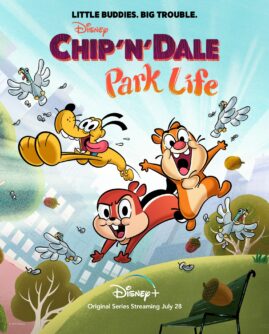
CHIP ‘N’ DALE: PARK LIFE: Episodes 2.1-2.3
Chipmunks on the run — bright, kind, and a little bizarre.
Should You Watch It?
Here's the good news up front: this is warm, creative, family-friendly television. The first three episodes of Season Two follow Disney's chipmunk pals Chip and Dale through a world populated entirely by animals — relaxing, hunting for food, competing, and sometimes teaching each other real life lessons. Each episode holds three short stories, and they're often delightfully strange.
The show wears a strong moral worldview on its sleeve. It promotes charity, kindness, and helping others — even those who don't seem to deserve it. The chipmunks can tell right from wrong, and lying and cheating are treated as wrong.
The one thing worth a parent's attention: sometimes characters benefit by harming others and face no consequences for it. That's a small thing in a mostly sunny series, but it's the kind of thing worth naming for a young child. So watch it, enjoy it — and be ready for a short conversation if one comes up.
The Story
NO SPOILERS — WE KEEP THE SURPRISESChip and Dale are back on Disney+, and Season Two opens with a theme: things aren't quite what they seem. The two chipmunks find themselves stuck in a capsule hurtling toward space — crash-landing on what can only be Mars — before homesickness sets in and someone reveals a secret.
From there the pair compete in power plays, wrestle with hoarding and minimalism, and stumble into the repercussions of lying and the surprising power of healing and love. Three episodes, three short stories each, and no dialogue at all — just chipmunk chatter and a lot of visual invention.
Is It Any Good?
Three stars, and here's what they mean: this is genuinely creative, fun, and sometimes delightfully bizarre television. Xilam Animation, which co-produced the show, gives it colorful, eye-popping designs — and, in an interesting move, no dialogue at all. What the chipmunks and other animals share never goes beyond indistinguishable chattering.
That choice forces the writers to be more inventive, telling their stories through implication rather than words. It's not a weakness; it's simply different from most family programming, and it works. Because the show revolves around little rodents in an all-animal world, the scenarios often tip into the ridiculous — which is part of the charm. It's a well-made, warm-hearted series that knows exactly what it is.
The Worldview
For a wordless comedy about chipmunks, this show has a clear and encouraging moral spine. It exalts charity, kindness, and helping others — even those who seem not to deserve it. Its heroes know right from wrong, and the series treats lying and cheating as things not to be accepted. That's a lot to admire in family entertainment.
There's one soft spot worth naming honestly. Sometimes characters benefit by harming others and face no consequences for their behavior, and some lie, steal, or profit from another's misfortune without ever recognizing it as wrong. In a series this cheerful, that can slip past a young viewer — which is why a watching parent is the best safeguard.
Episode 2.3 also features a story in which a chipmunk suddenly gains healing powers and, for a short time, becomes something of a messianic figure. It's played for whimsy rather than reverence, but families may want to notice it.
Underneath the silliness runs a real and worthy instinct: to be generous, even to the undeserving. Scripture calls that instinct higher still — "Give to everyone who begs from you" (Luke 6:30), for love that spends itself on the undeserving is love at its truest.
The Content Guide
The specifics — spoilers included by nature — so you can judge for your own family.
Dominant Worldview and Other Worldview Content/Elements
Strong moral worldview promotes being charitable and helping others. The chipmunks know what is right. Lying and cheating are not accepted, but sometimes characters benefit by harming others and face no consequences for their behavior, plus Episode 2.3 contains a story about a chipmunk suddenly having healing powers and becoming a messianic figure for a short time
Foul Language
No foul language
Violence
Light cartoon violemve include animals are hit, animals thrown against a door, stepped on, and otherwise injured
Sex
No sex, but a chipmunk kisses another chipmunk non-sexually, and a squirrel touches a chipmunk’s butt because there’s an acorn in his pocket
Nudity
No nudity
Alcohol Use
No alcohol use
Smoking and/or Drug Use and Abuse
No smoking or drugs;
Miscellaneous Immorality
Some characters lie, steal and benefit from another’s misfortune without recognizing their actions as wrong.
Talk About It
Four questions for the couch, the commute, or the couple bingeing it together.
The show praises being kind to others "even those who don't seem to deserve it." Who is hard for you to be kind to — and what does Jesus ask of us there?
Luke 6:32–36 · Matthew 5:43–45Sometimes a character hurts someone and gets away with it. Does getting away with something make it okay? How does God see what people never notice?
Proverbs 15:3 · Galatians 6:7In one story, Dale hoards old belongings until throwing them out feels freeing. What do we hold onto too tightly, and where should our real treasure be?
Matthew 6:19–21One episode imagines a chipmunk with healing powers. Where does real healing come from — and how does the Bible describe Jesus's power to heal?
Matthew 8:16–17 · Psalm 103:2–4The Final Word
This is bright, generous, wordless fun — a series that celebrates charity and kindness while occasionally letting a small mischief slide by unpunished. That's an easy fix with a watching parent nearby. So gather the family, enjoy the chipmunks, and keep an eye out for a teaching moment: worth watching.