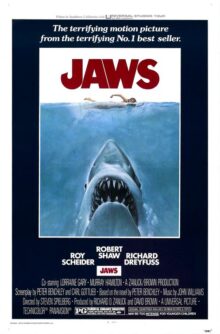
JAWS
Fifty summers later, the shark still bites — but this one's for grown-ups.
Should You Watch It?
Fifty years on, JAWS still earns its reputation. This is cutting-edge filmmaking for its era, built around a story that takes justice, courage, and sacrifice seriously — Chief Brody, Hooper, and Quint risk everything to protect a town that would rather protect its tourist dollars. That moral backbone is real, and it's why the film has lasted.
It's also genuinely rough going in places. The shark attacks are violent and bloody — a teenage girl's mangled body, a boy killed in full view of a crowd, men torn apart on the boat. Add crude language, drunkenness, teenage marijuana use, and an opening scene of implied skinny-dipping, and this is not a casual family movie night, PG rating notwithstanding.
If you're an adult who can watch tense, bloody set pieces without losing sleep, this is a landmark worth revisiting on a big screen. If you're picking a movie for kids, this one stays on the dock.
The Story
NO SPOILERS — WE KEEP THE SURPRISESMartin Brody has just relocated from New York City to the sleepy beach town of Amity Island, hoping for a quieter life for his wife and two boys. Instead, a massive great white shark begins attacking swimmers right as the town gears up for its biggest week of the year — the Fourth of July.
When Brody tries to close the beaches, the mayor and local business owners push back hard: no tourists, no money, no town. Torn between public safety and political pressure, Brody brings in an oceanographer named Hooper — and eventually a weathered shark hunter named Quint — to face a danger far bigger than anyone expected.
Is It Any Good?
Three stars means this is strong, era-defining filmmaking that still holds up, even if it shows its age here and there. The effects were groundbreaking for 1975 — the mechanical shark, nicknamed "Bruce," and the production's famously chaotic shoot are part of film history now. The score alone has haunted audiences for decades, and the film's sense of creeping dread hasn't dulled with time.
It remains quotable, tense, and expertly built, and it cemented Steven Spielberg's reputation as a major filmmaking talent. Some elements — the smoking, the dated beach-town texture — mark it as a product of its decade, but the craftsmanship and suspense are undiminished.
The Worldview
JAWS takes justice seriously. Underneath the shark-attack thrills is a story with a genuinely moral backbone — Brody, Hooper, and Quint risk their lives for people who mostly don't deserve the rescue, and the film treats heroism, bravery, and sacrifice as things worth admiring. That's a strong, biblical current running through a summer monster movie, and it's why the film earns real credit despite its content.
The film is honest about the cost of greed, too. The mayor and local business owners argue that public knowledge of the attacks will drive away tourists and ruin the town financially — a humanist logic that puts money and reputation ahead of human lives, especially children's. The film doesn't excuse this; it lets public opinion turn against them until they finally do right. The story doesn't engage religion directly, but it does frame the shark itself in near-mythic terms, a kind of face of evil moving through the water — nature, technology, and money all wrestling for control of the town's fate.
What lingers under all of it is fear of the deep and the courage it takes to face danger for someone else's sake. Scripture knows that fear, and that courage: "Greater love has no one than this, than to lay down his life for his friends" (John 15:13).
The Content Guide
The specifics — spoilers included by nature — so you can judge for your own family.
Dominant Worldview and Other Worldview Content/Elements
A moral worldview with a strong sense of justice in the face of economic and political pressures. Strong biblical worldview, with redemptive elements, promoting heroism, bravery, and sacrifice, it also contains a Humanist worldview as the Major and other town business owners argue that if the tourists hear about shark attacks and aren’t allowed to swim on Amity beaches, the tourists will take their money elsewhere, ultimately putting the island in financial ruin for the rest of the year. The story doesn’t explicitly discuss religion, but it does touch on the supposed nature of sharks and compares them to the face of evil. The plot explores the notions of nature vs. man, technology, and money
Foul Language
10 lighter obscenities and 11 instances of profanities or using the lords name in vain
Violence
Significant violence and gore from shark attack scenes – one teenager is attacked at the beginning in the water, but no gore shown. Her body is found on the beach, mangled and covered in crabs. A boy is attacked, dragged under, and killed off the beach with lots of blood. The shark attacks the boat multiple times: Hooper is attacked in a shark cage underwater, Quint is violently attacked and eaten by the shark, and Chief Brody is attacked on the boat
Sex
No sex is shown, however there is one scene in the beginning that implies teenagers are going skinny dipping. Some additional mild sexual suggestions in conversations
Nudity
No actual nudity is shown. One scene where a two teenagers go skinny dipping in the ocean, but their bodies are obscured by darkness and shadow
Alcohol Use
Alcohol, drunkenness is depicted in several scenes
Smoking and/or Drug Use and Abuse
Smoking is shown, as well as teenagers briefly shown smoking marijuana;
Miscellaneous Immorality
The town business owners and especially the major show a level of greed that continues to put beachgoers, and especially children at risk by pressuring the keep beaches open. However, they do eventually come around and do the right thing, once public opinion turns on them.
Talk About It
Four questions for the couch, the commute, or the couple bingeing it together.
The mayor and business owners keep the beaches open to protect the town's money, even after people have died. Where do you see that same trade-off — safety versus profit — playing out in real life?
1 Timothy 6:10Brody, Hooper, and Quint all put themselves in real danger to protect people who can't protect themselves. What does real courage cost, and what makes it worth paying?
John 15:13Brody is publicly shamed for not acting sooner, even though he was fighting political pressure the whole time. How do you tell the difference between fair criticism and unfair blame when someone is doing their best under pressure?
Proverbs 15:1The town eventually turns against the leaders who hid the danger, and those leaders finally do the right thing. What does it take for people — or you — to change course once you've been going the wrong way?
Proverbs 28:13The Final Word
JAWS earns its legend honestly — groundbreaking craft, a genuinely moral center, and a story about courage that still lands fifty years later. It also earns its caution: this is bloody, tense, and R-adjacent territory in a PG wrapper. Our answer stands: worth the trip — adults only. Looking for something for the whole family instead? Start with our latest family-friendly picks.