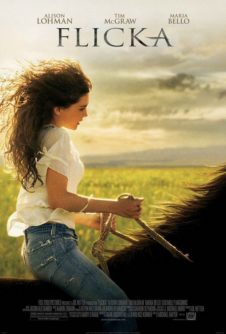
FLICKA
A warm family horse story with heart, conflict and a few quibbles.
Should You Watch It?
FLICKA is an entertaining, heartwarming and absorbing family movie. Its strongest quality is the way it celebrates family bonds and love as forces that can heal conflict between a father and daughter. Alison Lohman gives a spirited, versatile performance as Katie, and the supporting cast ably joins her.
The film is not flawless. It moves slowly in places, and some children may wish for more training and riding scenes with Katie and Flicka. The father is also made into the bad guy a little too often, even though his love and concern for his daughter are shown clearly.
The movie’s view of the West favors wild independence above civilization, so parents may want to discuss its historical ideas. Still, for an older child or adult looking for a positive family drama, WORTH THE TRIP.
The Story
NO SPOILERS — WE KEEP THE SURPRISESTeenager Katie McLoughlin returns from private school to her family’s ranch in Wyoming after an academic problem puts her graduation at risk. During a ride, a wild young Mustang saves her from a mountain lion. Katie brings the horse home, names her Flicka—“wild girl”—and begins trying to tame her.
Katie’s father strongly opposes keeping a Mustang on the ranch. As father and daughter clash over the horse, Katie must also face the consequences of her school troubles and decide what she is willing to risk for Flicka.
Is It Any Good?
Three stars means a good, worthwhile family film with noticeable limitations. FLICKA is ultimately inspiring, and its family drama is both absorbing and heartwarming. Alison Lohman gives Katie a spirited, versatile performance, while the rest of the cast provides able support, including country music star Tim McGraw.
The movie’s main weakness is its pacing. It is slow in spots, and children may want more scenes of Katie training and riding Flicka. Even so, the emotional conflict between Katie and her father gives the film a solid center.
The Worldview
FLICKA strongly values family bonds, love, traditional American values and a positive view of American history. The movie shows a father and daughter moving through conflict toward renewed respect and understanding. It also gives Howard, Katie’s brother, an important decision and an opportunity for soul searching.
The film’s larger worldview is more Romantic. In two or three important places, it celebrates wild independence above civilization, connecting the family story with the Wild West and comparing American pioneers to wild Mustang horses yearning to be free. That idea recognizes the desire for freedom but neglects the Christian reasons many people settled America: preaching the Gospel and establishing the dominion over the wilderness that God commands.
Parents can help their children hold both ideas together. Freedom matters, but it is not freedom from God’s purposes. Scripture says, “Go into all the world and proclaim the gospel to the whole creation” (Mark 16:15), and God also commanded humanity to “subdue” the earth (Genesis 1:28).
The Content Guide
The specifics — spoilers included by nature — so you can judge for your own family.
Content Summary
Light Romantic worldview with some very light implied environmentalism (but nothing really radical or in-your-face politically correct) that in two or three important places celebrates wild independence above civilization, especially in connecting the movie's modern family story with the Wild West, how the West was won and American pioneers, who are compared to wild Mustang horses and are seen as wild and independent creatures yearning to be free, with some strong moral and pro-American content, including family bonds and love heal a rift between a father and a daughter; about nine mostly light obscenities including one "heck" and three or four apparent "d" words that sound like dang and a few muffled dang words (it's often hard to tell but at least half of the words definitely sound more like dang) and six light exclamatory profanities such as "My God" and one "Dear God" that are said in times of stress; light family movie violence such as horse scares away mountain lion, mountain lion jumps on horse, horse injured, girl thrown from horse a couple times and comes down with strong fever after being in cold wet rain too long, and heroine hears that a wild horse is being mistreated by its new owner; no sex; no nudity; ranch hands may be drinking beer in at least one scene; no smoking; and, teenager avoids telling her parents right away about an academic problem she's had in school, teenager rebels against father's orders, movie seems to go a little too far in casting the father to be the bad guy but his love and concern for his daughter's welfare are shown clearly at times, and someone says, "Animals are a lot like us. . . . You just got to learn to listen to them."
Talk About It
Questions for the drive home, the dinner table, or the youth group.
Katie’s conflict with her father grows partly from her desire to make her own choices. How can children honor their parents while still speaking honestly about their hopes and gifts?
Ephesians 6:1–3 · Proverbs 15:1The film presents family love as strong enough to heal conflict. What does love look like when a family member has made a mistake?
1 Corinthians 13:4–7 · Colossians 3:13–14FLICKA connects the American West with freedom and wild independence. What is the difference between freedom and doing whatever we want?
Galatians 5:13 · 1 Peter 2:16The family must make difficult choices about work, education and responsibility. How can you seek God’s wisdom when deciding what you should do?
James 1:5 · Proverbs 3:5–6The Final Word
FLICKA offers older children and adults a warm, entertaining family drama about a girl, a horse and the bonds that can heal a family. Its slow spots and Romantic view of independence are worth discussing, but its heart is positive. For a family ready for a thoughtful horse story, WORTH THE TRIP.