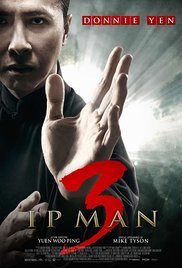
IP MAN 3
A moving family message wrapped in hard martial-arts violence.
Should You Watch It?
IP MAN 3 is an entertaining, well-made Chinese martial-arts thriller with a poignant center. Its strongest message is that spending time with the people you love matters more than fame, status, or even the title of Grandmaster. Ip Man’s quiet scenes with his terminally ill wife give the movie genuine emotional weight.
But the film’s main focus is still violence. Thugs attack a private school, threaten children, set fire to the school, and fight repeatedly with fists, kicks, sticks, and knives. The movie also includes nine obscenities, including one “f” word, along with kidnapping threats and other troubling material.
The film has real merit, but the −2 Family Content rating means it is not for children or young teens. Watch it at home, where discerning adults can control the experience.
The Story
NO SPOILERS — WE KEEP THE SURPRISESIn Hong Kong in 1959, famous martial-arts teacher Ip Man tries to protect his young son’s private school from thugs who want its property. When children are kidnapped, Ip Man and another father must work together to rescue them.
At the same time, Ip Man faces a martial-arts rival while his wife receives devastating medical news. His public duties and private responsibilities begin pulling him in opposite directions.
Is It Any Good?
Three stars means IP MAN 3 is a good, entertaining film with meaningful flaws. The martial-arts action provides plenty of spectacle, and the movie is well made as a Chinese thriller. Some scenes involving Ip Man’s wife are especially poignant, including quiet moments together at the hospital and at home.
The film is less successful as a biography. It changes historical details, including the timing of Ip Man’s relationship with Bruce Lee, and the actor playing Ip Man looks much too young for the character’s age in 1959. Still, the central message about love, family, and priorities gives the movie emotional substance.
The Worldview
IP MAN 3 presents a light moral worldview centered on family, standing against evil criminals, and being with loved ones. Ip Man ultimately values time with his wife more than fame or martial-arts recognition. The film also includes a positive reference to God, a visit to what appears to be a Buddhist shrine, martial-arts philosophy, and implied gambling.
The movie’s moral emphasis on protecting children, opposing corruption, and cherishing marriage aligns in part with biblical values. Its spiritual framework is less clear, however, because it places those values alongside Buddhist imagery and martial-arts philosophy rather than grounding them consistently in the Christian understanding of God.
The film also uses politically charged references to “foreign devils,” including a British police officer. That language reflects the movie’s historical and political setting but can sound like propaganda associated with Communist Party rhetoric. The biography is fictionalized, and the casting makes Ip Man appear much younger than the real martial-arts teacher would have been in 1959.
At its heart, the movie argues that love should outrank fame. Scripture similarly teaches, “God is love” (1 John 4:8).
The Content Guide
The specifics — spoilers included by nature — so you can judge for your own family.
Content Summary
Light moral worldview stressing taking a stand against evil criminals, family, being with loved ones, and a positive reference to God, with a man visiting and appearing to pray at a Buddhist shrine, but no Buddha statue in sight, some martial arts philosophy and some politically correct references to “foreign devils”; nine obscenities (including one “f” word and one “s” word) and zero profanities; lots of martial arts fighting includes thugs attack private school and school’s principal, but good guys defend it, several martial arts bouts, thugs kidnap children (threatening to sell the children into “slavery”), and two fathers fight to save children, thugs try to grab boy several times during fighting, two men fight with long sticks and then large knives, many strong punches and kicks are thrown, man’s arm deliberately broken during martial arts fighting, fighters hit their heads against walls and on solid floors, men go flying after being punched or kicked hard, policeman brandishing gun stops one fight, thugs set fire to school inside, but fire is quenched off screen, wife slaps husband for endangering their boy, thug threatens to kill boy, and boy in danger of falling off scaffold; no sex; no nudity; implied alcohol in a couple bar scenes where street fights and gambling occur; no smoking or drugs; and, attempted kidnapping of principal, thugs kidnap children and threaten to sell them into slavery, vandalism, corruption, implied gambling, rivalry.
Talk About It
Questions for the drive home, the dinner table, or the youth group.
Ip Man learns that time with loved ones matters more than fame. What competes with time for the people God has given you?
Ephesians 5:15–16 · Philippians 2:3–4Ip Man and his students protect a school from violent criminals. What does it mean to stand against evil without becoming evil ourselves?
Romans 12:21 · Ephesians 5:11The story includes illness, grief, and precious family moments. How can Christians care for someone who is suffering?
Galatians 6:2 · Romans 12:15The film refers to “foreign devils” and shows conflict between peoples. How does Scripture call us to treat people from other nations?
Acts 17:26–27 · Matthew 28:19The Final Word
IP MAN 3 is well made and sometimes deeply moving, especially when it places family above fame. Its frequent fighting, foul language, kidnapping threats, and troubling worldview elements make it unsuitable for children and young teens. For discerning adults, WAIT FOR HOME — ADULTS ONLY. For other family choices, see.