MARY AND THE WITCH’S FLOWER
Friends and family matter more than magic in this delightful adventure.
Should You Watch It?
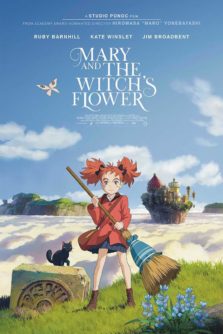
Mary and the Witch’s Flower is a beautifully told animated fantasy adventure with a strong moral center. Mary is likeable, big-hearted, and honest enough to recognize her mistakes. She learns that friends and family matter more than magical power, and she works to restore damaged relationships and the natural order of things.
The movie’s occult imagery deserves family discernment. Mary is called a witch, rides a flying broom, casts spells, and has a cat familiar. Those elements may trouble families who want younger children to avoid occult themes or who are concerned that children may not clearly distinguish fantasy from occult practice.
For most families, especially those with middle schoolers and older children, this is worth seeing with a conversation about the difference between fantasy magic and real-world spiritual beliefs.
The Story
NO SPOILERS — WE KEEP THE SURPRISESMary is a bored, red-headed girl living with her Great Aunt Charlotte near the woods. After following two cats into the forest, she discovers a shimmering blue flower and a broom hidden among vines.
The flower gives Mary magical power and carries her to Endor College, a school for magic run by Madam Mumblechook and Doctor Dee. There, Mary is praised as a gifted student and begins to discover that the school’s secrets are more troubling than they first appear.
Is It Any Good?
Four stars means this is a genuinely delightful film. The animation and fantasy adventure are engaging, and the story is told with exuberance and pluck. Mary is a compelling heroine because she is not seeking power for its own sake; she is a big-hearted girl trying to help, even when her efforts create more messes.
The movie’s strongest achievement is its moral clarity. Mary recognizes her mistakes and seeks to redeem and restore relationships. Her discovery that flattery is cheap and that friends and family matter more than magic gives the adventure a satisfying purpose.
The Worldview
Mary and the Witch’s Flower presents a strong moral worldview within an overtly occult fantasy setting. It exalts friendship, family, humility, responsibility, and the courage to admit when you have done wrong. Mary is initially drawn to praise because she feels clumsy and unhelpful at home, but she learns that flattering words and magical power cannot replace genuine love.
The film also presents magic as dangerous when it is pursued for power. Mary ultimately rejects the identity and abilities she has been given, declaring, “I don’t need magic.” The story’s moral direction is positive, though the witches, spells, flying broom, and cat familiar may make the fantasy difficult for some children to separate from occult ideas.
The film’s central longing is for belonging and faithful relationships rather than power. Scripture says, “A friend loves at all times” (Proverbs 17:17), a truth Mary learns through the people she is determined to protect.
The Content Guide
The specifics — spoilers included by nature — so you can judge for your own family.
Dominant Worldview and Other Worldview Content/Elements
Strong moral worldview with overt occult elements where heroine learns that learns that friends and family are more important than possessing powerful magic and she declares, “I don’t need magic”
Foul Language
No foul language
Violence
Light violence includes scientific experiments performed on animals and humans that appear dangerous but ultimately no one is harmed
Sex
No sexual content
Nudity
No nudity
Alcohol Use
No alcohol use or abuse
Smoking and/or Drug Use and Abuse
No smoking or drug content;
Miscellaneous Immorality
Heroine lies and steals a book and the antagonists kidnap and perform unethical experiments.
Talk About It
Questions for the drive home, the dinner table, or the youth group.
Mary learns that friends and family are more important than possessing powerful magic. What makes a friendship faithful and valuable?
Proverbs 17:17 · Philippians 2:3–4Mary recognizes her mistakes and tries to restore damaged relationships. What does genuine repentance look like in our own lives?
2 Corinthians 7:10 · James 5:16Mary is drawn in by flattering words. How can we tell the difference between sincere encouragement and empty praise?
Proverbs 26:28 · Ephesians 4:15The film uses magic as a source of power and danger. How should Christians think about the difference between make-believe fantasy and real occult practices?
Deuteronomy 18:10–12 · Philippians 4:8The Final Word
Mary and the Witch’s Flower is a delightful, morally positive adventure about choosing friends and family over power. Its occult elements call for discernment with younger children, but middle schoolers and older viewers can find much to enjoy and discuss. WORTH THE TRIP.