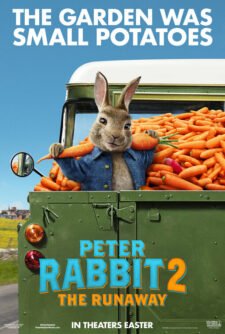
PETER RABBIT 2: THE RUNAWAY
Don’t Let the World Destroy Your New Nature in Christ
Should You Watch It?
PETER RABBIT 2: THE RUNAWAY is a lively, polished family adventure with a strong redemptive center. It celebrates family, friendship, forgiveness, making righteous judgments, rescuing others in trouble, and doing the right thing.
The movie’s central idea is especially meaningful: Peter struggles when others define him by his old mischief instead of recognizing the rabbit he has become. The story also includes a great deal of stealing, though Peter eventually learns from it and returns what was taken. Younger children may need help processing the slapstick violence, the theft, and the film’s suggestions about defining yourself on your own terms.
For most families, this is a worthwhile choice. Parents of younger children should watch with discernment.
The Story
NO SPOILERS — WE KEEP THE SURPRISESPeter Rabbit is still adjusting to life on the farm after Bea and Thomas marry. When Bea’s book about Peter attracts the attention of a wealthy publisher, new ideas about Peter’s character and future adventures begin to create trouble.
Feeling misunderstood, Peter meets Barnabas, an older city rabbit who leads a gang of animals stealing food from humans. Barnabas draws Peter toward a major farmers-market heist, and Peter brings his family and friends into the adventure.
Is It Any Good?
Four stars means this is an especially entertaining family film. PETER RABBIT 2 shifts from romantic fantasy to comedy, heist movie, adventure, and rescue story while remaining magical, funny, exciting, and suspenseful.
The combination of live-action humans and computer-generated animals is seamless. James Corden gives Peter a wide range of emotions and character traits, supported by the script. The film’s changing genres and energetic set pieces keep the story moving.
The Worldview
PETER RABBIT 2 has a strong moral worldview with Christian allusions and Christian allegorical elements. Peter’s struggle resembles the experience of a new Christian who has been redeemed and transformed but is still treated as the sinner he used to be. The film urges viewers not to let the world redefine them by their past.
The movie eventually rebukes stealing and includes characters who return stolen goods. It also extols family, friendship, forgiveness, righteous judgment, rescuing others in trouble, and doing what is right. These strengths are somewhat mitigated by possible Romantic aspects involving identity and self-esteem, along with a female pastor at a wedding.
The story also presents pro-capitalist ideas. Bea resists a large publisher’s attempt to modernize and reshape her old-fashioned, quaint, and uplifting books. Her struggle becomes a salute to small private business over impersonal corporate practices.
The film’s central longing is to live according to a redeemed identity rather than an old one. Scripture says, “Therefore, if anyone is in Christ, he is a new creation” (2 Corinthians 5:17).
The Content Guide
The specifics — spoilers included by nature — so you can judge for your own family.
Dominant Worldview and Other Worldview Content/Elements
Strong moral worldview with Christian allusions and Christian allegorical elements is about following your new redeemed and transformed identity and not letting the world redefine you as the bad person you were in the past before your salvation and the worldview also eventually rebukes stealing, involves characters who return stolen goods, and extols family, friendship, forgiveness, making righteous judgments, rescuing others in trouble, and doing the right thing, mitigated by possible Romantic aspects to the movie’s motif about identity (watch out for possible nods and implications to shaky ideas about self-esteem), plus a pastor at a wedding is a woman and some strong pro-capitalist elements where lead female character sells her book at her husband’s toy shop and overcomes a big publisher trying to entice her to modernize and change the old-fashioned and quaint qualities of her book ideas (her battle becomes sort of a salute to the free market ideals of small personal business fighting the large impersonal business of big corporations), and title character regrets stealing from a farmers market and returns the items to the rightful owner
Foul Language
No foul language
Violence
Lots of slapstick violence such as Peter Rabbit imagines a big fight between the
Sex
No sex
Nudity
No nudity
Alcohol Use
No alcohol use
Smoking and/or Drug Use and Abuse
No smoking or drugs, but a bunny rabbit eats too many jelly beans and gets a “sugar high,” then falls asleep when the sugar high ends, and this is repeated once;
Miscellaneous Immorality
Stealing but eventually rebuked, a little mouse says he and his wife have had 15 children in one month and wonders why two married human beings haven’t had any children since they’ve been married for a month, a character turns out to be a liar and a villain as well as a betrayer, and a man two or three times notes that another man has attractive eyes
Talk About It
Questions for the drive home, the dinner table, or the youth group.
Peter is hurt when others define him by his past. How can Christians remember who they are in Christ when others refuse to see their change?
2 Corinthians 5:17 · Ephesians 4:22–24Peter is drawn into stealing because he wants to prove himself. How can a desire for belonging pull us toward wrong choices?
1 Corinthians 15:33 · Proverbs 1:10Peter eventually recognizes his wrongdoing and seeks help. What is the difference between feeling bad about sin and turning from it?
2 Corinthians 7:10 · 1 John 1:9The film values family, friendship, forgiveness, and rescuing others. How can your family practice those virtues this week?
Colossians 3:12–13 · Galatians 6:2The Final Word
PETER RABBIT 2: THE RUNAWAY is a beautifully made, funny adventure with a gracious message about redemption and identity. Its slapstick violence and other minor concerns call for discernment with younger children, but most families can enjoy it together. Our answer is WORTH THE TRIP.