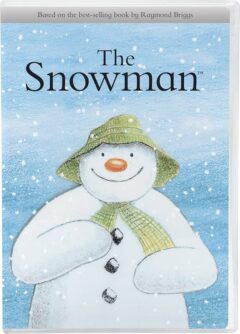
THE SNOWMAN
Wordless, wondrous, and made for walking in the air.
Should You Watch It?
Here is the decision, and it's an easy one. THE SNOWMAN is a timeless classic — told entirely without words, animated by hand, and carried by music that has lingered in memory for decades. In twenty-six quiet minutes it captures the pure wonder and adventure that can only be found in childhood.
It also touches, gently, on loss. The story ends bittersweetly, and the snowman's fate may upset a very young child who doesn't yet grasp what melting means. That is the whole of the caution here, and it's a small one.
So take the trip. Gather the family, settle in on a winter evening, and let this beautiful little film do what it has done for generations of children. Just be ready to hold a small hand at the end.
The Story
NO SPOILERS — WE KEEP THE SURPRISESA British boy named James wakes on Christmas Eve to find the world blanketed in snow. He races outside and spends the day building a snowman — hat, scarf, coal eyes, and a tangerine for a nose.
That night he wakes at midnight and looks out his window. The snowman is still there. But now it turns, and bows its hat. James opens the door, and the two shake hands — and a wondrous adventure begins that will carry them far from home before Christmas morning comes.
Is It Any Good?
Four stars, and they are earned. This is gorgeous hand-drawn animation in the service of the simplest of stories, told with no dialogue at all and all the more emotional for it. The gentleness of the craft is the point: every frame is warm, every movement tender.
The music is as timeless as the images, and the whole reaches a bittersweet close that leaves you with joy and nostalgia in equal measure. A wordless film that can move a child and a grandparent alike is a rare and lovely thing. This one will hold its special place at Christmas for as long as children build snowmen.
The Worldview
THE SNOWMAN carries a strong moral worldview, and it celebrates things worth celebrating: innocence, friendship, the ache of loneliness answered by companionship, and a bittersweet acceptance of loss and the cycle of life. There is no cynicism in it — only wonder, of the kind that belongs to childhood.
The film has its magical elements. A boy builds a snowman that comes to life on Christmas Eve, and by the end the story quietly asks whether the whole adventure was real or simply a vivid imagining — though it gently implies that it was real. This is the stuff of a child's dream, not the occult, and the ending's small sense of joy and nostalgia is its lasting gift.
Underneath the fun runs the film's real subject: that the loveliest things of childhood do not last, and learning to hold and then release them is part of growing up. Scripture knows this ache well, and answers it: "For everything there is a season, and a time for every matter under heaven" (Ecclesiastes 3:1). The snowman melts; the wonder remains.
The Content Guide
The specifics — spoilers included by nature — so you can judge for your own family.
Dominant Worldview and Other Worldview Content/Elements
A strong moral worldview with an emotional, wordless storyline that shows themes of innocence, friendship, loneliness, and a bittersweet acceptance of loss and the cycle of life. Some magical elements as the main character is a boy who builds a snowman who comes to life on Christmas Eve; the ending has the audience question if it was reality or simply a boy’s vivid imagination. However, it is implied that it was real. The ending is sad but leaves the audience with a small sense of joy and nostalgia from this boy’s adventure that perfectly illustrates the wonder that can only be found in childhood.
Foul Language
No foul language
Violence
The snowman and the boy fall while dancing
Nudity
No nudity
Alcohol Use
Alcohol and drunkenness are briefly shown. One scene where snowmen drink beer and wine at a party. One scene where an intoxicated man on a boat, sees the snowman and the boy flying and he looks at a bottle of wine, seeming to blame it for the sight
Smoking and/or Drug Use and Abuse
There is no smoking, but the snowman briefly puts a pipe in his mouth;
Miscellaneous Immorality
M The boy invites a magical snowman into his home, without his parents knowledge – and even their bedroom to go through their things as they sleep. He goes with the snowman to take a motorcycle and escapes his house at night to go on an adventure.
Talk About It
Questions for the drive home, the dinner table, or the youth group.
The snowman comes to life and delights James, but the friendship cannot last. What does the film teach about enjoying good gifts while we have them?
Ecclesiastes 3:1 · James 1:17James is lonely until the snowman befriends him. Who might be lonely around you this Christmas, and how could you be a friend to them?
Proverbs 17:17 · Hebrews 13:2The snowman melts, and the ending is sad. How can we face loss with both honest grief and real hope?
Psalm 30:5 · 1 Thessalonians 4:13The whole story is told without a single word. What can we learn from kindness and friendship shown through action rather than speech?
1 John 3:18The Final Word
Some films earn their place in a family's Christmas year after year, and this is one of them — twenty-six wordless, beautiful minutes of wonder and gentle sorrow. Little ones may need a hug when the snow gives way to morning, but that tenderness is part of the gift. Our answer is the same one we opened with: worth the trip.