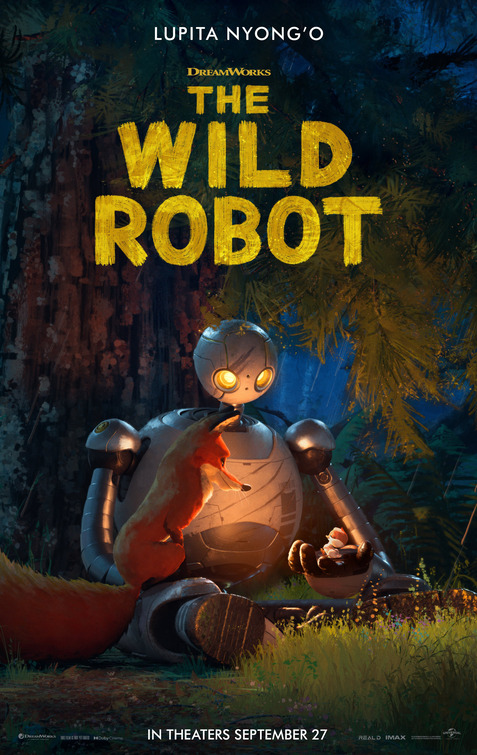
THE WILD ROBOT (AI DRAFT)
A robot finds family in the wilderness, then must face danger.
The Worldview
Worth reading — ages 8 and up. The animal deaths and armed climax call for a parent’s judgment, especially with a sensitive child.
THE WILD ROBOT celebrates kindness, patient care, cooperation and a family formed through love rather than sameness. Roz observes the island’s creatures, learns from them, and helps them through danger and a hard winter. The story’s moral center is generous, but its world has no God, prayer or Creator; wisdom comes through observation, community and nature.
Roz’s effort to answer fear with kindness gives you a natural opening to talk about how Christians are called to treat others. Scripture says, "If possible, so far as it depends on you, live peaceably with all" (Romans 12:18).
The Story
NO SPOILERS — WE KEEP THE SURPRISESWhen a storm-wrecked crate washes ashore, an otter’s curiosity switches on the robot inside. Roz is alone in a wilderness where the animals fear her, so she studies their ways and tries to survive. After an accident leaves a gosling in need of care, Roz takes on a mother’s work—and the island’s wary animals begin to help.
The Content Guide
The specifics — spoilers included by nature — so you can judge for your own reader.
- Chapters 1–5 The opening shows robot wreckage.
- Chapter 24, “The Accident” A rockfall kills a family of geese, leaving one egg alive.
- Chapter 43–45 Brightbill becomes upset about his origins and goes to the robot gravesite despite Roz's concern; they have a caring conversation.
- Chapter 46, “The Fight” A bear cub falls from a cliff, and Roz loses a limb rescuing it.
- Chapter 54, “The Winter” Animals freeze to death.
- Chapter 57, “The Fire” A lodge fire endangers a baby rabbit, whom Roz rescues.
- Chapter 59, “The Spring” The thaw reveals animal corpses.
- Chapter 63, “The Journey” A farmer shoots and kills Longneck, a goose leading Brightbill’s flock.
- Chapters 70–75, “The Hunt Begins” through “The Last Rifle” Armed robots pursue Roz and the animals. A bear is shot and injured, animals fight back, a rifle explodes, and geese use a rifle to destroy a robot.
A locator so a parent can pre-read the scenes that matter instead of the whole book.
Dominant Worldview and Other Worldview Content/Elements
Moral worldview extols kindness, adoptive care, friendship and cooperation through hardship, in a natural world with no reference to God.
Foul Language
Crude references include bird droppings and animals defecating to fertilize a garden; animals also call Roz a “monster” and say mean things about her.
Violence
Moderate, mostly stylized peril and science-fiction gun violence. The opening shows robot wreckage; a rockfall kills a family of geese and leaves one egg; a farmer shoots and kills a goose; animals freeze to death in winter; a bear cub falls from a cliff and Roz loses a limb rescuing it; a lodge fire endangers a baby rabbit, whom Roz rescues; bears attack Roz; and armed robots chase her and the animals. The fights injure animals and destroy robots, and Roz is badly damaged. Some of the violence is shown in illustrations.
Sex
No sex, romance, kissing or LGBTQ or gender-identity content confirmed in this volume.
Nudity
No nudity confirmed.
Alcohol Use
No alcohol use confirmed.
Smoking and/or Drug Use and Abuse
No smoking or drug use confirmed.
Miscellaneous Immorality
The animals initially fear and reject Roz, calling her a monster and speaking unkindly; the story shows them warming to her as they know her. Brightbill becomes upset about his origins and goes to the robot gravesite despite Roz’s concern; they have a caring conversation rather than a lasting rejection of his mother. Roz accidentally causes the geese’s deaths and is distressed by the harm. The animals fight the armed robots to defend Roz and their home.
Is the Writing Any Good?
Four stars: Peter Brown’s short chapters, direct and gently funny narration, and expressive grayscale illustrations make this a strong read-aloud and an inviting first full-length novel. Roz’s practical, observant voice gives the story its charm, while her growing care for Brightbill and the island community supplies real warmth. The slower stretches suit her patient process of learning; the sudden shift into a gun battle near the end may feel jarring, but the book’s emotional pull holds.
Talk About It
Four questions for the dinner table, the car, or a parent and teen reading it together.
The animals are afraid of Roz before they know her. What helps them change, and how might you show kindness to someone who is wary of you?
Romans 12:18 · Luke 6:27Roz cares for a gosling who is not her own. What does her care show about what makes a family?
Isaiah 49:15 · Psalm 68:5–6The animals share shelter and work together during the winter. Who might need your family’s help when life is hard?
Galatians 6:2 · Hebrews 13:16Roz learns by watching the creatures around her. Who helps you learn how to live well, and what good things do you see in them?
Proverbs 13:20 · Philippians 4:9The Final Word
THE WILD ROBOT is an imaginative, tender story about kindness, family and belonging, with animal deaths and a violent final chase that some children will find upsetting. It is a good choice for many elementary-age readers, and reading together gives you room to talk about its harder scenes. Our answer: Worth reading — ages 8 and up.