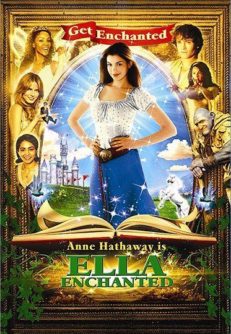
ELLA ENCHANTED
A grim, politicized Cinderella best watched at home.
Should You Watch It?
The appeal is easy to see. This retelling of Cinderella gives Ella a memorable problem: an obedience spell forces her to do whatever anyone tells her. Anne Hathaway makes Ella natural and very likeable, giving the movie its strongest source of warmth.
But the film spends more time advancing a socialist political message than entertaining children. Its race-and-class allegory turns characters into caricatures, while the story grows grim when a murderer plots against the prince and Ella is nearly forced to kill the person she loves. The magical elements, light language, bullying, and other concerns call for family discernment.
The practical answer: watch it at home if your older children are interested, but choose something else for young children.
The Story
NO SPOILERS — WE KEEP THE SURPRISESElla receives an obedience spell from her irresponsible fairy godmother. After Ella’s mother dies and her father remarries, her new stepmother and two stepsisters discover how to control her.
Determined to find her fairy godmother and reverse the spell, Ella leaves home. Her search draws her into a dangerous plot involving Prince Char, his evil uncle, and a struggle for the throne.
Is It Any Good?
Two stars means this movie has a promising premise and one especially appealing performance, but not enough consistent entertainment value. Anne Hathaway acts with effortlessness that never seems lazy or stagey. As Ella, she is always believable and natural, even when the script gives her standard material.
The political messages choke the movie and make it difficult to enjoy on other levels. The contemporary dialogue and postmodern allegory give the familiar Cinderella story a distinctive angle, but the characters become caricatures of progressiveness and greed. Once the plot accelerates, the tone becomes grim, and the story’s messages grow confused.
The Worldview
The film presents romantic love as the apex of living and tells viewers to look to themselves for answers. It also treats love and moral conscience as forces that eventually overcome an evil occult spell. Those ideas provide some moral shape, but the movie’s central message is not grounded in dependence on God.
The fairy-tale setting is filled with magical occult spells by fairies. The story also advances an overt anti-capitalist socialist message targeting business, privatization, and the wealthy, while preaching politically correct socialist egalitarianism. Ella becomes a dissenter who stages rallies, protests injustice, and represents “progressiveness,” while her stepsisters represent organized greed.
Race and class are expressed through fantasy groups such as ogres, giants, and elves, which represent various minorities. The characters speak as contemporary people, and the story includes slight suggestions of a feminist message, though that message is reversed by the conclusion. The film’s political allegory ultimately overwhelms its fairy-tale entertainment.
The story longs for freedom from control and for love to overcome evil. Scripture points beyond self-reliance and romance: “If the Son sets you free, you will be free indeed” (John 8:36).
The Content Guide
The specifics — spoilers included by nature — so you can judge for your own family.
Content Summary
Romantic worldview that instructs you to “look to yourself” for answers and that presents romantic love as the apex of living, with magical occult spells by fairies, and an overt anti-capitalist socialist message that targets business, privatization, and the wealthy, and preaches politically correct, socialist egalitarianism, as well as love and moral conscience eventually overcome evil occult spell; one light obscenity (butt) and one light profanity, with some bullying from older sisters; light action and slapstick violence includes ogres throw rocks at an elf, attempted poisoning, fighting, pratfalls, and soldiers of evil king scuffle with the good prince; no sex scenes, some kissing; no nudity; giants drink alcohol in a bar; no smoking; and, father says he is marrying for money, adults lie about child’s whereabouts, older sisters force younger sister to shoplift and frequently manipulate her, girls disrespect political leaders, evil king tries to force girl to commit murder. GENRE: Fantasy
Talk About It
Questions for the drive home, the dinner table, or the youth group.
Ella is bound to obey whoever gives her an order. What does real freedom look like, and where should we look for it?
John 8:36 · Galatians 5:1The film turns social and political conflict into a fairy-tale allegory. How should Christians pursue justice without reducing people to caricatures?
Micah 6:8 · James 2:1–4The story presents romantic love as life’s highest good. What good things can love give us, and why can only God satisfy our deepest longing?
Matthew 22:37–39 · Psalm 16:11Ella’s conscience helps her resist evil. How should conscience be shaped by God’s Word?
Romans 12:2 · Hebrews 5:14The Final Word
Ella has a likeable heroine and Anne Hathaway’s strongest performance, but its political allegory overwhelms its entertainment value and its darker turns may trouble younger viewers. For older children and teenagers, consider it at home, where you can guide the conversation. WAIT FOR HOME.