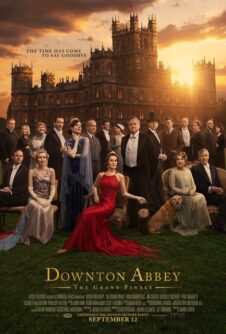
DOWNTON ABBEY: THE GRAND FINALE
A gracious, moving farewell — with a few worldly notes worth knowing.
Should You Watch It?
If you've loved this family and this house for years, this is the send-off you've been waiting for — thoroughly engaging, often moving, and at times genuinely profound. The film's heart is old-fashioned in the best sense: duty, service, respect for the past, and compassion for people even when they fail. Watching Mary's parents gracefully step aside so she can lead the estate, or her father salute a retiring butler's decades of faithful service, is the kind of quiet dignity you don't see much anymore.
It costs you a little, too. There's an implied night of fornication (with brief male nudity) after a scene of drunkenness, some mild language, and a gentle, sympathetic treatment of a closeted relationship that leans into today's more permissive cultural mood rather than challenging it.
If you know the series, don't miss this one. If you're new to Downton, start with the earlier films first — but either way, this is a trip worth taking with your older teens and up.
The Story
NO SPOILERS — WE KEEP THE SURPRISESIt's 1930. Mary, heiress to the Downton estate, faces public disgrace when her husband announces their divorce to the whole country. Back home in Yorkshire, her parents brace for a different kind of trouble: Cora's American brother arrives with news that the family fortune may be in danger. Meanwhile, the servants below stairs face their own quiet changes and farewells. As always at Downton, the upstairs crisis and the downstairs one are more connected than anyone expects.
Is It Any Good?
Four stars means this lands about as well as this franchise gets — engaging, moving, and, in places, genuinely profound. The film earns real emotional weight in its scenes of honor between master and servant, and in the grace with which the older generation steps back to let Mary lead. The story's compassion for its flawed characters recalls, at its best moments, the humane touch of classic dramas that treat even their knaves gently.
The catch: this is a movie for insiders. With so many characters and threads carried over from the series and two earlier films, newcomers may feel lost. It's not a flaw in craft so much as a cost of being the final chapter of a long story — one this review still finds worth the price of admission.
The Worldview
At its center, this film believes in something Scripture believes in too: duty, service, family loyalty, respect for those who came before you, and compassion for people even when they've failed. Mary's parents modeling humility as they hand over the estate, and her father honoring a servant's lifetime of faithful work, are the film's best moments — and they're morally serious in a way many films aren't.
Alongside that, the film carries some lighter, Romantic notions about social change — the idea that the past was too restrictive and should have been more tolerant of things like divorce and homosexuality. This shows up in a sympathetically drawn, secretly gay relationship between two men connected to the estate, and in the story's evident sympathy for a socialist character who gently mocks a more conservative one. None of it is graphic or overt, but it does color how the film wants you to feel about the changing mores of its era.
The film also brings in the real historical figure Noël Coward as a character — a celebrated, patriotic playwright whose own private life included homosexuality, though the film never references that directly, so most viewers won't connect the dots unless they already know his history.
Underneath the manners and the estate politics is an old, true longing: for a family to hold together, and for grace to cover what duty alone can't fix. Scripture names that longing plainly — "Above all, keep loving one another earnestly, since love covers a multitude of sins" (1 Peter 4:8).
The Content Guide
The specifics — spoilers included by nature — so you can judge for your own family.
Dominant Worldview and Other Worldview Content/Elements
Movie has a strong moral, uplifting worldview overall extolling duty, respect for the past, service, family, compassion, and hospitality for other people even when they fall, and respect between master and servant, with a generally positive view of England in 1930, but there are some light Romantic philosophical and cultural notions about social change that sometimes promote the idea that Western society in the past became too restrictive and should have been more tolerant of things like divorce and homosexuality, with light, brief and implied references to a homosexual relationship, plus a socialist woman lightly, in a friendly and comical way, teases a servant she respects, who’s a conservative man, about a particular social issue (the joke is that he better be careful because he’s starting to sound like a socialist on the issue)
Foul Language
No obscenities and three light MG profanities
Violence
No depicted violence, but a man threatens a con man if he ever hurts a woman the first man respects highly
Sex
Implied fornication in two scenes linked together, and it’s implied that an actor and his wardrobe man have a secret homosexual relationship (there’s some brief humor where a conservative man who knows both men misunderstands their relationship, and the two men are friends with the famous British playwright, songwriter, author, and actor Noël Coward, a patriotic Englishman who was secretly a homosexual (Coward becomes friendly with the family that owns the estate in the movie and the two homosexual men previously worked on the estate), but there’s no overt homosexual activity between the men, and the movie makes no reference to Coward’s private life, so viewers unfamiliar with Coward’s complete biography would not necessarily make that connection (also, some or many viewers might not even know who Coward is or was and how important an international figure he became in the 20th Century), plus a socialist woman off-handedly, in a friendly manner, mocks a conservative man’s anger about a minor social injustice (the woman is having a feud with an even more conservative fellow, and the movie sides with her feud)
Nudity
Upper male nudity in a scene of implied fornication as two unmarried people wake up in bed together
Alcohol Use
Alcohol use in several scenes and one scene depicts some light drunkenness where unmarried man seduces woman whose husband recently divorced her
Smoking and/or Drug Use and Abuse
Brief smoking;
Miscellaneous Immorality
A con man has cheated a rich man and his family out of lots of money.
Talk About It
Questions for the drive home, the dinner table, or the youth group.
Mary's parents gracefully step back so she can lead the estate, even after her own mistakes. What does biblical humility look like when handing responsibility to the next generation?
Philippians 2:3–4 · 1 Peter 5:5–6The film shows compassion for people "even when they fall," including Mary after her night with a con man. How does Scripture call us to extend grace to people who've stumbled, without pretending the stumble didn't matter?
1 Peter 4:8 · John 8:1–11The story shows society treating a husband's divorce differently than a wife's. What does the Bible say about God's heart for marriage, and how should the church treat those who've been through divorce?
Malachi 2:16 · Matthew 19:4–6The film treats a closeted relationship with quiet sympathy, reflecting today's more tolerant mood. How can Christians hold to biblical convictions about marriage and sexuality while still extending real kindness to people who see it differently?
1 Corinthians 6:9–11 · Colossians 4:6The Final Word
This is a warm, dignified goodbye to a family and a house many of us have loved for over a decade — full of duty, service, and grace toward the fallen, with just enough worldly compromise to warrant a grown-up conversation first. Our answer: worth the trip — teens and up. Bring the whole family once your teens are old enough to talk through what they've seen.