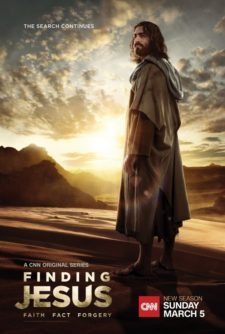
FINDING JESUS: FAITH. FACT. FORGERY.
A rare documentary that treats the Gospels as history worth investigating — and affirms them.
Should You Watch It?
Yes, and gladly. CNN's FINDING JESUS series does something rare for cable television: it takes the Gospel accounts seriously as history, sends archeologists and scholars — Catholic, Protestant, and Jewish — to dig into the evidence, and comes back affirming Jesus Christ, His miracles, and His Resurrection.
The two episodes under review are well cast, well edited, and dramatically recreated with real power. The Pilate episode traces new archeological evidence for a man the Bible paints with more nuance than history often allows. The Lazarus episode makes the case that a real man was raised from real death — and lets that miracle point straight to the empty tomb still to come.
There's nothing here to steer families away from. The violence is light and non-graphic, there's brief male nudity in the crucifixion scene, and the content otherwise is as clean as documentary television gets. Watch it as a family, and talk about it afterward — that's the point.
The Story
NO SPOILERS — WE KEEP THE SURPRISESSeason Two of FINDING JESUS sends historians, archeologists, and theologians hunting for hard evidence behind two figures at the edges of the Gospel story. "The Pilate Stone" follows the discovery of an ancient inscription that proves Pontius Pilate really existed — and asks what kind of man he truly was. "The Tomb of Lazarus" traces the story of the friend Jesus loved, and the miracle that would foreshadow Christ's own empty tomb. Where the evidence leads is the reason to watch.
Is It Any Good?
Four stars, and they're earned. Movieguide has reviewed many documentaries about Jesus over the years, and this CNN series ranks among the best produced. The casting is excellent, the expert interviews are tightly and thoughtfully edited, and the dramatic recreations carry real emotional weight rather than feeling like filler between talking heads.
What elevates the series above similar programs is its premise: it treats faith, fact, and forgery as three things worth sorting out honestly, rather than assuming from the start that the Gospels can't hold up to scrutiny. The result is genuinely entertaining television that never loses sight of its subject's stakes.
The Worldview
This is a documentary unafraid to land somewhere. Both episodes affirm the historical reality of Jesus Christ, the truthfulness of the Gospel accounts, and — most strikingly for network television — the reality of His miracles and Resurrection. The Pilate episode goes so far as to argue that Pilate's conviction of Jesus was necessary to the salvation story: without it, there is no cross, and without the cross, no justification, sanctification, or redemption sealed by the Resurrection. The Lazarus episode treats his raising as Jesus's greatest miracle and a direct foreshadowing of Christ's own resurrection, explicitly connecting it to the salvation offered through His death.
There is little here to push back against. The series doesn't flatten Pilate into a cartoon villain or explain away the miraculous — it lets the biblical text and the historical record speak, and both point the same direction.
At the center of both episodes sits the same ancient claim the series keeps circling back to: that death does not get the last word. Jesus said it plainly to Martha at her brother's tomb — "I am the resurrection and the life. Whoever believes in me, though he die, yet shall he live" (John 11:25).
The Content Guide
The specifics — spoilers included by nature — so you can judge for your own family.
Content Summary
Extremely strong Christian worldview affirming Jesus Christ, the Resurrection, salvation, faith, and the Bible; no foul language; light documentary recreations of action violence, but nothing scary or sickening; no sex; upper male nudity in the crucifixion; perhaps some wine drinking; no smoking or drugs; and, jealousy, envy, manipulation, power, and other manifestations by those who wanted to kill Jesus.
Talk About It
Questions for the drive home, the dinner table, or the youth group.
Pilate is shown as a man torn between political survival and the truth standing in front of him. Where in your own life do you feel that same pull, and how do you resist it?
John 18:37–38Jesus delays coming to Lazarus, and even Martha and Mary question His timing. How do you respond when God's help seems to arrive too late?
John 11:21–27The episode says the Resurrection required the cross, and the cross required Pilate's conviction. How does it change your view of the crucifixion to see it as part of a larger, necessary plan of salvation?
1 Corinthians 15:3–4 · Acts 4:27–28Lazarus is commanded to be unbound and set free after he's raised. In what ways does salvation mean more than new life — it means freedom?
John 11:44 · John 8:36The Final Word
This is exactly the kind of documentary Movieguide loves to commend: rigorous, well-made, and unashamed of where the evidence leads — straight to Jesus Christ. Our verdict stands: worth watching — ages 10 and up. Gather the family, watch it together, and let the discussion questions carry you past the credits.