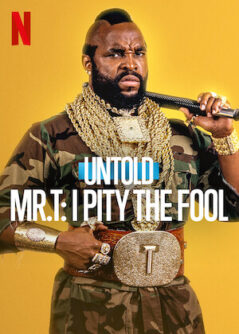
UNTOLD MR. T: I PITY THE FOOL
Behind the mohawk, a man wrestling with pride, pain, and grace.
Should You Watch It?
Yes. If you grew up knowing Mr. T as the mohawked, gold-chain-wearing star of ROCKY III and THE A-TEAM, this documentary offers an entertaining glimpse behind the larger-than-life persona. It features interviews with Mr. T where he shares stories about his childhood, rise to fame, and current community work.
His charisma, humor, vulnerability, and unmistakable personality make even familiar pieces of his story worth revisiting. The archival footage also provides a nostalgic look at just how enormous his cultural influence became. That said, this documentary only scratches the surface. Because of its brief runtime, it simply doesn't have enough time to explore any part of his life fully.
If you accept something more introductory, you likely walk away entertained and encouraged. If you look for a comprehensive portrait, you leave wanting more. Christian viewers may feel that absence especially, since Mr. T's faith journey receives limited attention despite being an important part of his life. Mr. T himself has criticized the documentary for minimizing his faith and other aspects of his story. That said, the movie remains worth watching but shouldn't serve as a holistic or accurate depiction of Mr. T's life.
The Story
NO SPOILERS — WE KEEP THE SURPRISESThis documentary tells the inspiring story of Laurence Tureaud, the Chicago-born bouncer who became the iconic Mr. T, from his difficult childhood and unlikely rise to fame to his fall from the spotlight and political activism. It touches on his Christian faith and the values that shaped his life, but largely glosses over the important role faith played in his journey through new interviews with Mr. T and his family, along with clips from his movies and television appearances.
Is It Any Good?
Two stars mean a good, watchable documentary with an extraordinary subject, but it's far too short to serve as the definitive biography its title suggests. The movie is engaging largely because its subject remains naturally compelling. The archival footage proves excellent, and the story moves briskly through Mr. T's journey from a bodyguard in Chicago to starring in ROCKY III, THE A-Team, and more.
The structure poses a problem. Covering such a remarkable life in roughly 50 minutes forces major chapters into brief mentions or leaves them out altogether. His faith journey takes a particularly hard hit, with only about 10 minutes devoted to it near the end. Mr. T himself criticizes the film for minimizing faith’s impact on his life.
The movie's balance also raises questions, especially in how it handles criticism of Mr. T’s personality and career. With so much life packed into so little time, this documentary sometimes feels more like a highlight reel than the full story.
The Worldview
The documentary delivers a Christian worldview through Mr. T's climb from poverty on Chicago's South Side to international fame. It credits his faith, family, and discipline for that climb, and argues that perseverance, responsibility, respect, and loyalty carry real weight in a man's life. Mr. T built his public image on toughness. He commanded respect and protected the people around him.
But the documentary turns sharper once that armor cracks. Near the end, Mr. T shares his cancer diagnosis, and he says it pointed him toward Christ. The documentary also covers Mr. T's activism for African-American rights, which some viewers might read through a politically correct lens rather than a biblical one. In the end, the toughest thing Mr. T ever built wasn't his body. It was his faith.
The Content Guide
The specifics — spoilers included by nature — so you can judge for your own family.
Dominant Worldview and Other Worldview Content/Elements
A strong biblical and worldview with the main character's faith being at the forefront of his life. Strong Christian elements where the main character openly discusses his Christian faith, including his trust in God and the role of prayer in his life. The documentary includes a reference to Joshua 1:9 and touches on how faith influenced his outlook, especially during his battle with cancer. Moral elements such as perseverance, respect, hard work, determination, and family values. Intense political activism by the main character for African-American equality in the 1980s
Foul Language
Five obscenities including, two "n" words, one ‘sh’ word, and one ‘b’ word
Violence
Mild violence including wrestling scenes from ROCKY III, clips from the main character's popular wrestling career. Discussions about street fights that the main charcater was involved in as a bodyguard but nothing is shown
Sex
No sex
Nudity
No nudity
Alcohol Use
No alcohol use
Smoking and/or Drug Use and Abuse
No smoking or drug use;
Miscellaneous Immorality
The main character with pride due to his fast rise to fame. Interviews with his daughter reveal dysfuntional family dynamics.
Talk About It
Questions for the drive home, the dinner table, or the youth group.
Fame gave Mr. T one of the most recognizable identities in American pop culture, and it handed him a real fight against pride. How can we, as Christians, fight pride when we feel it creep in? Proverbs 16:18
People often frame this story as a remarkable rise from difficult circumstances to extraordinary success. What does Scripture say about where our ultimate worth comes from? Matthew 6:19-21
Poverty, rejection, and later health struggles test Mr. T, and his ability to push through stands out as one of the most remarkable parts of his story. Where does the Bible's view of endurance differ from raw willpower? Romans 5:3-5
The Final Word
UNTOLD MR. T: I PITY THE FOOL presents an entertaining introduction to one of America's most recognizable cultural icons, carried by Mr. T's undeniable charisma and fascinating archive footage. Unfortunately, its short runtime leaves too much of his story unexplored, particularly his faith, charity, and life beyond Hollywood. Still, the documentary offers worthwhile reflection on perseverance, identity, humility, and the difference between finding significance in fame and discovering it in something deeper.