MOTHER TERESA: NO GREATER LOVE
A moving tribute to Christ-centered service among the poorest of the poor.
Should You Watch It?
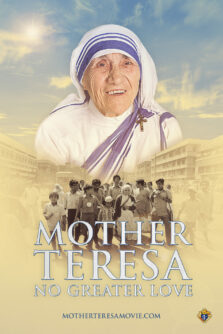
MOTHER TERESA: NO GREATER LOVE is a moving tribute to Mother Teresa, her charity work, and the people who continue it. The documentary repeatedly puts Jesus at the center of compassion, service, human dignity, and love for “the poorest of the poor.”
The film also presents a few perspectives that orthodox Protestants and other Christians may find objectionable, including references to Mother Teresa as an “intercessor” in Heaven and brief expressions of a non-judgmental approach that some viewers may see as blurring biblical moral standards. Those concerns are relatively minor and open to interpretation within a film that is otherwise strongly Christian, biblical, moral, and pro-life.
Some images of sick and dying people, people with missing limbs, and brief newsreel footage of war may disturb younger children or give sensitive children nightmares. For older children and adults, this is WORTH THE TRIP — OLDER CHILDREN AND ADULTS.
The Story
NO SPOILERS — WE KEEP THE SURPRISESThis documentary follows the charities Mother Teresa started and inspired for “the poorest of the poor,” beginning with the Missionaries of Charity in Calcutta, India. Visits to charitable works around the world are interwoven with Mother Teresa’s life story, silent dramatic reconstructions, historical footage, and her own reflections on faith and service.
The film also traces her growing public influence, her relationship with Pope John Paul II, and her advocacy for unborn babies.
Is It Any Good?
Three stars mark a solid, moving documentary with an inspiring purpose. The film combines visits to Catholic charities around the world with historical footage, silent dramatic reconstructions, and Mother Teresa speaking about her faith and charity work.
Its greatest strength is its tribute to Mother Teresa’s lifelong commitment to serving the sick, dying, poor, and needy for the love of Christ. The documentary is not presented as flawless theology, but its overall effect is hopeful, morally serious, and uplifting.
The Worldview
MOTHER TERESA: NO GREATER LOVE presents a very strong Christian, biblical, moral, and pro-life worldview from a Roman Catholic perspective. It exalts love, hope, human dignity, compassion, and service, especially toward the sick, dying, poor, and needy. Mother Teresa’s work is shown as service to Jesus, who is placed at the center of everything.
The documentary also presents points some Christians may question. It refers a few times to Mother Teresa as an “intercessor” in Heaven between people on Earth and Jesus. The film also includes brief expressions of a non-judgmental approach toward people in difficult circumstances, including poor mothers with children out of wedlock, homosexuals, and intravenous drug users dying of AIDS. The review notes that compassion should not dilute biblical moral standards or God’s justice. The film’s comments about helping people of other faiths may also suggest a universalism some Christians would reject.
Even with these concerns, the documentary strongly connects Christian faith with loving service. It presents compassion for vulnerable people as an expression of devotion to Christ, while Scripture says, “For there is one God, and there is one mediator between God and men, the man Christ Jesus” (1 Timothy 2:5).
The Content Guide
The specifics — spoilers included by nature — so you can judge for your own family.
Dominant Worldview and Other Worldview Content/Elements
Very strong Christian, biblical, moral worldview, told from a Roman Catholic perspective, showcases the charity work of Mother Teresa and highlighting her Christocentric attitude toward helping the poor and needy through very strong biblical, moral values, especially love, and through putting Jesus first in the process, partly by seeing Him and the image of God in the faces of the people being helped, plus there are a few references to Mother Teresa now being an intercessor in Heaven between people on Earth and Jesus (the Catholic Church makes a distinction between being an intercessor versus being a mediator, e.g., only Jesus can be a mediator), and there are at least two expressions of borderline antinomian attitudes about being non-judgmental that some Christians may find objectionable or disagree with
Foul Language
No foul language
Violence
Some images of dying people, sick people and people with limbs missing or deformed may disturb younger children and other sensitive viewers, and brief newsreel footage of war
Sex
No sexual content, but there are light references to helping needy single mothers with babies out of wedlock and prostitutes
Nudity
Some images of upper male nudity
Alcohol Use
No alcohol use
Smoking and/or Drug Use and Abuse
No smoking, but there’s a section on treating dying AIDS patients in the 1980s that acknowledges some victims were people who took illegal intravenous drugs;
Miscellaneous Immorality
There’s a short section on charities started by Mother Teresa in the 1980s to minister to dying AIDS patients that acknowledges most victims of the disease were men who engaged in homosexual practices or took illegal intravenous drugs.
Talk About It
Questions for the drive home, the dinner table, or the youth group.
Mother Teresa says hunger includes a hunger for love, dignity, and respect. How can your family show the dignity of people who are overlooked?
Genesis 1:27 · Philippians 2:3–4The film presents service to needy people as service to Jesus. What does Jesus say about caring for “the least of these”?
Matthew 25:35–40How can Christians show compassion to people without pretending that sin does not matter?
Galatians 6:1–2 · Ephesians 4:15The documentary connects faith with love expressed through action. What does genuine faith produce in a believer’s life?
Galatians 5:6 · James 2:14–17The Final Word
This moving documentary honors Mother Teresa’s Christian faith and lifelong service to suffering people. Its few theological and moral concerns deserve discernment, and its images of suffering may be difficult for younger children. For older children and adults, WORTH THE TRIP — OLDER CHILDREN AND ADULTS.