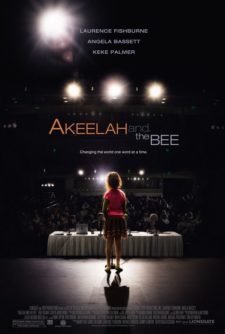
AKEELAH AND THE BEE
Make manifest the glory of God through courage and excellence.
Should You Watch It?
Yes. Akeelah and the Bee is an extremely uplifting, entertaining drama about an 11-year-old girl who feels out of place but discovers that her intelligence can serve something greater than herself. Keke Palmer is marvelous in the lead role, and the film’s strong moral worldview includes a moving reference to making manifest the glory of God.
The movie also celebrates education, perseverance, cooperation, and the possibility of rising above difficult circumstances. Its imperfections are minor but real: light foul language, weak parental figures, and a case of lying and disobedience that is only partially rebuked.
If you want an inspirational family drama for older children and adults, this is worth the trip.
The Story
NO SPOILERS — WE KEEP THE SURPRISESEleven-year-old Akeelah Anderson feels like she does not fit in at her middle school in a poor section of Los Angeles. Her classmates tease her intelligence, especially her spelling ability.
After Akeelah wins her school spelling bee, she decides she wants to compete all the way to the finals in Washington, D.C. With help from her principal, she enlists Dr. Joshua Larabee, a demanding, reclusive intellectual, as her tutor. Together, they face obstacles and unexpected sources of help.
Is It Any Good?
Four stars means this is one of the year’s best films: extremely uplifting, entertaining, heartfelt, and inspiring.
Doug Atchison contributes a well-written, award-winning script with interesting, unique characters. The excellent cast brings those characters to life, especially Keke Palmer, whose performance holds the story together. The other child actors also do superb work, while Laurence Fishburne, Angela Bassett, and Curtis Armstrong provide strong support in the major adult roles.
The spelling competitions add genuine drama, and the movie’s moving scenes build toward an inspirational conclusion.
The Worldview
Akeelah and the Bee presents a strong moral worldview with positive Christian implications. One important scene has Akeelah read a quotation about personal empowerment and achievement that says human beings should “make manifest the glory of God.” The quotation returns during the climax, but without the reference to God. The ending remains inspirational, though it would have been more powerful if that reference had been included.
The film exalts perseverance, education, cooperation, and using one’s abilities well. It also suggests that people can rise above difficult circumstances when they have a positive attitude about themselves and help one another. Its hopeful view of educational competition is powerful, though the film also contains a somewhat Romantic, liberal view of education. Weak or flawed parental figures make teachers and a principal especially positive role models, although those adults show respect for Akeelah’s mother.
The movie’s central call to use one’s gifts for a higher purpose connects with Scripture: “As each has received a gift, use it to serve one another” (1 Peter 4:10).
The Content Guide
The specifics — spoilers included by nature — so you can judge for your own family.
Content Summary
Strong moral worldview with some positive Christian implications, including a positive scene encouraging the heroine to "make manifest the glory of God," and a positive view of American culture and the American pursuit of excellence, mitigated slightly by a Romantic, liberal view of education, some weak or flawed parental figures, and a case of lying and disobedience that is rebuked; 12 obscenities (one "s" word, a few "h" and the rest light) and zero profanities; no violence, but distant and nearby sounds of sirens at night in heroine's urban setting; no sex, but children kiss cheeks twice; no nudity; no alcohol; no smoking; and, a case of lying and disobedience is only partially rebuked, father verbally browbeats son into winning, and movie portrays weak or flawed parental figures in favor of a teacher and a principal as positive role models, but teacher and principal show respect for heroine's mother.
Talk About It
Questions for the drive home, the dinner table, or the youth group.
Akeelah discovers that her abilities can bless others. What gifts has God given you, and how could you use them to serve?
1 Peter 4:10 · Romans 12:6–8The film presents education and competition as ways people can grow. How can you pursue excellence without making achievement your identity?
Colossians 3:23 · Galatians 1:10Akeelah receives help from unexpected people. Why does God often call us to depend on one another?
Ecclesiastes 4:9–10 · 1 Corinthians 12:21–26The movie connects human achievement with making manifest the glory of God. What would it look like to honor God through your abilities this week?
Matthew 5:16 · 1 Corinthians 10:31The Final Word
Akeelah and the Bee is inspiring, entertaining, and exceptionally well acted. Its light language and flawed examples call for parental discernment with younger children, but its moral vision is strong. For older children through adults, this is WORTH THE TRIP — OLDER CHILDREN AND UP.