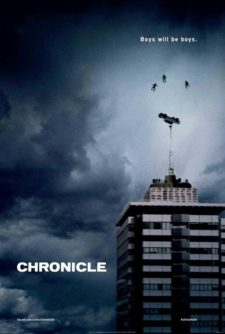
CHRONICLE
An inventive superhero thriller best reserved for discerning adults at home.
Should You Watch It?
CHRONICLE offers a fresh, fascinating angle on the superhero and found-footage genres. Its central moral idea is strong: power should be controlled and used responsibly. The film also creates real suspense as three teenagers discover what they can do and Andrew’s personal life begins to spiral.
But the movie’s merits come with substantial costs. It contains about 53 obscenities, five strong profanities, underage drinking, intense violence, abusive family material, and references to Buddhist monks. Its worldview mixes a positive moral premise with pagan and Romantic elements.
Because the source review finds real artistic and moral value but also advises serious caution, watch this one at home, and only if you are a discerning adult prepared for the content.
The Story
NO SPOILERS — WE KEEP THE SURPRISESAndrew Detmer is a lonely teenager living with an alcoholic, abusive father and a dying mother. While documenting his life with a video camera, Andrew reconnects with his cousin Matt and meets Steve at a party.
The three teenagers discover a strange hole in the ground containing a glowing meteor rock—or perhaps alien technology. Soon, they develop telekinetic powers. As they learn to use them, their abilities grow, and Andrew’s troubled life begins to pull those powers toward darker purposes.
Is It Any Good?
Three stars means CHRONICLE is a good, distinctive film with significant weaknesses. Its found-footage approach gives the story a unique perspective, and Andrew’s camera becomes an extension of his personality as he moves it with his mind.
The premise keeps viewers wondering what the three teenagers will do next. The film also presents a clear moral idea about power and responsibility, with Matt trying to help Andrew control himself.
Its limitations are substantial, however. The storyline is intense and emotionally dark, and the unusual perspective does not overcome the film’s foul language and edgy material.
The Worldview
CHRONICLE presents a mixed worldview. It has a strong moral premise that implicitly echoes the idea that great power brings great responsibility. Matt eventually wants to use his powers to help people, while Andrew’s suffering, anger, and desire for revenge turn his abilities toward destruction.
The film also includes brief positive Christian content through a Christian funeral. At the same time, it references Buddhist monks in the Himalayas and ends with images of a Buddhist temple in the snow-covered mountains. The source review notes that the film contains no specific Buddhist teachings that contradict the Bible or Christianity, but describes the overall worldview as mixed and pagan.
The story also includes teenage rebellion, partying, bullying, mean pranks, an alcoholic father, and a dysfunctional family situation. Its central question is what people do with power when character and self-control are lacking. Scripture warns, “Everyone to whom much was given, of him much will be required” (Luke 12:48).
The Content Guide
The specifics — spoilers included by nature — so you can judge for your own family.
Content Summary
Strong mixed pagan worldview with references to Buddhist monks in Tibet, a Christian funeral, and strong moral premise that implicitly echoes the idea, “With great power comes great responsibility,” mixed with Romantic, pagan elements of teenage rebellion, partying, and a dysfunctional family situation with an alcoholic father stressed by a dying wife; about 53 obscenities (mostly “s” words), five strong profanities, and 14 exclamatory light profanities; strong, sometimes intense violence includes teenagers with telekinetic powers fight one another, one causes lighting to kill one, one slams people against objects and moves police cars, he also causes explosion and fights with his father and slams teenager against pavement after lifting him up, teenagers hit with rubber balls, teenagers scare little girl with floating teddy bear in store, teenagers slams convenience store clerk against wall, shotgun goes off and causes spark at gas station that burns evil teenager and puts him into hospital, abusive father hits teenage son, character impaled by long thin object on statue, police surround evil teenager with guns a couple times, teenager uses power to drive truck off road; no sex scenes but drunk teenager goes upstairs with girl at a party but she comes running out after he suddenly vomited; no nudity; alcohol use, father comes home drunk, teenager gets drunk after starting to drink at party, and other implied underage alcohol use; no smoking or drugs; and, abusive father character, uncontrolled anger, teenage partying, bullying, mean pranks.
Talk About It
Questions for the drive home, the dinner table, or the youth group.
The film connects power with responsibility. Why is self-control necessary when someone has unusual gifts or abilities?
Luke 12:48 · Galatians 5:22–23Andrew’s pain and anger affect the way he treats other people. How should suffering shape our choices, and where can we seek help when we are hurting?
Psalm 34:18 · James 1:19–20Matt wants to use his powers to help people. What makes an act genuinely loving rather than merely impressive?
Philippians 2:3–4 · 1 Corinthians 13:4–7The film includes Christian and Buddhist references. How can we test a movie’s ideas against what Scripture teaches?
Acts 17:11 · 1 Thessalonians 5:21The Final Word
CHRONICLE is inventive, tense, and built around a worthwhile moral question. But its strong language, violence, underage drinking, family dysfunction, and mixed worldview make it a poor family choice. Watch it only at home, if at all, and only as a discerning adult. WAIT FOR HOME — ADULTS ONLY. For a cleaner family night, see.