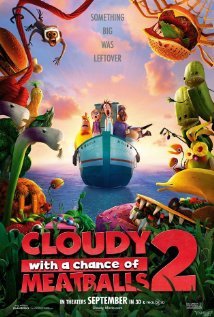
CLOUDY WITH A CHANCE OF MEATBALLS 2
A colorful, funny feast for the whole family.
Should You Watch It?
If your family wants a movie that is funny, imaginative, and morally constructive, this is an easy choice. The animation is colorful and inventive, the foodimals are delightful creations, and the story teaches children to value honesty, choose friends wisely, help good friends do what is right, and use gifts to serve others rather than exploit them.
The movie includes light cartoon violence, slapstick comedy, a few scary-looking creatures, and mild scatological jokes. Those elements are softened by the story’s sweetness and positive lessons. The result is a lively adventure that should leave children entertained and families with something worthwhile to discuss.
For a fun family movie night, WORTH THE TRIP.
The Story
NO SPOILERS — WE KEEP THE SURPRISESYoung inventor Flint Lockwood and his friends have saved the world from his out-of-control food machine. But when Flint’s childhood hero sends a cleanup team to Flint’s hometown, the inventor receives an unexpected job offer.
Then it appears Flint’s machine has survived and is creating huge food-animals called foodimals. Flint is sent on a secret mission to stop the machine before the foodimals reach the mainland.
Is It Any Good?
Four stars means this is an especially successful family entertainment. The film is cute, funny, and exciting, with colorful, clever animation that provides a feast for the eyes and the funny bone.
The foodimals are the movie’s visual triumph. Tacodiles, flamangoes, watermelophants, shrimpanzees, and other imaginative creations keep the adventure playful and surprising. A little strawberry creature is especially charming. The film also wraps its visual invention around positive lessons about friendship, honesty, and using creativity for good.
The Worldview
The movie strongly celebrates true friendship, honesty, loyalty to good friends, and helping friends avoid bad influences. It also presents inventions as tools meant to help and serve people, rather than selfishly taking advantage of them. The story’s central moral is that bad company corrupts good character, so people should choose their friends wisely.
The villain presents himself as a showman, inventor, businessman, and guru. He uses the Hindu greeting “Namaste” to suggest that everyone is one with the same essence, but the film portrays his use of it as pompous and insincere. Beneath the image, he is completely selfish, considers himself superior to everyone else, and treats people as tools. The film also contains strong American, pro-capitalist content.
The movie aligns with biblical teaching when it honors honesty, friendship, service, and moral discernment. Its call to avoid corrupting influences echoes Scripture: “Do not be deceived: ‘Bad company ruins good morals’” (1 Corinthians 15:33).
The Content Guide
The specifics — spoilers included by nature — so you can judge for your own family.
Content Summary
Very strong moral worldview extols true friendship, honesty, sticking by good friends, helping good friends avoid bad people and do the right thing, with strong American, pro-capitalist content, including using inventions to help and serve people rather than to take advantage of people or for selfish reasons, plus villain uses Hindu greeting, “Namaste,” but he comes off as pompous when he does it, and it turns out he’s also insincere about it; no foul language but some exclamatory remarks like “My gosh” and dialogues that sounds like “Crabcake!” plus some light scatological jokes such as sentient strawberry gets scared and strawberry jelly comes out of its bottom, but it’s sweet, so monkey eats it, a dirty diaper joke (but nothing shown), and a character is delivering a cow’s baby when he’s suddenly called away on an important mission; light cartoon violence includes scary food monster appears to attack people, “tacodile” monster roars at people, and they run from it, slapstick comedy, pratfalls, a couple groin hits (one occurs over the end credits), and villain ties people up and dangles them over a food shredder, but tables are turned, and it’s implied he dies instead; no sexual content; no nudity; no alcohol use; no smoking or drugs; and, greedy villain lies and tries to turn hero against his friends.
Talk About It
Questions for the drive home, the dinner table, or the youth group.
The film teaches that bad company can corrupt good character. How can you recognize friendships that help you do what is right?
1 Corinthians 15:33 · Proverbs 13:20Flint’s inventions can help people or be used selfishly. What gifts has God given you, and how could you use them to serve others?
1 Peter 4:10 · Philippians 2:3–4Why does honesty matter when friendships are under pressure? What does Scripture say about speaking truthfully?
Ephesians 4:25 · Proverbs 12:22The story values friends who help one another choose what is right. When has someone’s encouragement helped you make a better decision?
Hebrews 10:24–25 · Galatians 6:1–2The Final Word
This is a colorful, clever, and genuinely funny family adventure with strong lessons about friendship, honesty, service, and wise choices. Its mild cartoon peril and scatological humor should be manageable for most families. WORTH THE TRIP.