
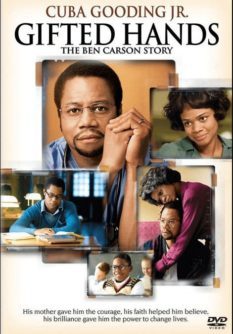
GIFTED HANDS: THE BEN CARSON STORY
A poor student becomes a world-famous surgeon by trusting God's gifts.
Should You Watch It?
Yes. This is the true story of a boy who was told he was stupid and became a world-renowned neurosurgeon — and it never hides where the credit belongs. Ben Carson's mother pushes her sons toward their God-given gifts instead of letting them settle into bitterness, and the film shows, plainly, that God has the cure for self-doubt, anger, and prejudice.
There's very little here to weigh against that. A couple of brief, hard moments — a fight, an attempted stabbing that Ben immediately regrets and cries out to God over, and some medical footage that could unsettle a young child — are the only cautions in an otherwise clean, inspiring film.
This is a movie you can watch together and talk about for years. Put it on family movie night.
The Story
NO SPOILERS — WE KEEP THE SURPRISESBen Carson is raised by a single mother who refuses to let him believe he's inferior. When he fails every question on a test and is mocked by his classmates, she insists he and his brother have gifts from God worth nurturing — and puts limits on television in favor of books. As Ben's grades climb, so does the resistance he faces. Hearing the story of a missionary doctor sets him on a path toward medicine — and toward becoming one of the world's most respected neurosurgeons.
Is It Any Good?
Four stars, and the film earns every one of them — this is called one of the best made-for-television movies ever produced. The structure moves from a framing surgery back through Ben's boyhood, tracking a believable arc from failing student to top of his class without rushing the transformation. The film doesn't flinch from the ugliness Ben faces — classroom ridicule, a teacher's public bitterness toward his white students for losing to him — but it also doesn't wallow. It simply follows Ben's growth, scene by scene, until the arc lands with real weight.
The Worldview
This film exalts something Scripture exalts: that our gifts come from God, and that using them well is an act of faithfulness, not self-promotion. Ben's mother is the moral center of the story — she refuses to let her sons define themselves by poverty or prejudice, and instead points them toward the gifts God has already placed in them. That conviction, lived out in a home with almost nothing, is the engine of everything Ben becomes.
The film is equally honest about the cost of anger. When Ben's temper nearly leads him to seriously hurt his best friend, the movie doesn't excuse it — Ben goes home and cries out to God for help overcoming his temper, and that repentance becomes part of his growth rather than a footnote. Prejudice, too, is named clearly and repeatedly, and the film's answer to it is neither despair nor retaliation but reliance on God.
There is nothing here that departs from a biblical view of gifts, calling, or the discipline of anger. The film's central conviction — that identity rooted in God outlasts every insult and every obstacle — echoes Paul's words: "But by the grace of God I am what I am" (1 Corinthians 15:10).
The Content Guide
The specifics — spoilers included by nature — so you can judge for your own family.
Content Summary
Very strong Christian worldview where children are encouraged to apply the gifts God has given them, and with God’s help overcome anger and prejudice, plus some pro-capitalist content; no offensive language; two brief scenes of violence, one is an attempted stabbing, deeply repented of, plus some scenes of medical procedures may be disturbing to children; no sex; no nudity; no alcohol; no smoking; and, teenage rebellion is dealt with and overcome.
Talk About It
Four questions for the couch, the commute, or the couple bingeing it together.
Ben's mother refused to let him believe he was inferior because of where he came from. Where does your identity come from, and how does knowing you're made by God change how you see yourself?
Genesis 1:27 · Ephesians 2:10After nearly hurting his friend, Ben cries out to God for help with his temper instead of hiding his anger. What does real repentance look like when we've let anger get the better of us?
James 1:19–20 · Psalm 51:10Ben faced prejudice again and again on his way to becoming a doctor. How does the film show him responding to injustice — and how does that compare with how Scripture calls us to respond?
Romans 12:17–21 · 1 Peter 2:23The movie's whole message is that using your gifts well honors God. What gifts has God given you, and how are you using them right now?
1 Peter 4:10 · 1 Corinthians 12:4–7The Final Word
Rarely does a film show so clearly how far faith, discipline, and a mother's refusal to give up can carry a child. This is inspiration with substance, and it belongs in your home. Worth the trip.









