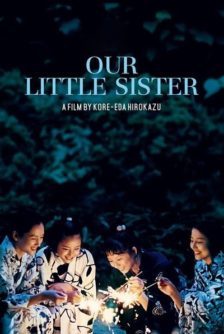
OUR LITTLE SISTER
A moving family drama worth seeing with older teens.
Should You Watch It?
OUR LITTLE SISTER is a gentle, beautifully crafted drama about sisters who form their own family after being abandoned by their parents. Its rich visuals, well-developed characters, and moving story give real weight to ordinary acts of love, responsibility, sacrifice, and forgiveness.
The film also asks younger viewers to process adult failures. It includes implied Buddhist worship, references to adultery, brief foul language, and light alcohol abuse. Almost every scene unfolds around a meal, which can make the 128-minute film feel stifling at times.
If you value quiet stories about family members learning to do what is right, this is worth seeing with teenagers and adults. Parents should use discernment for elementary-age children. For older teens and adults, the practical answer is: see it.
The Story
NO SPOILERS — WE KEEP THE SURPRISESThree sisters live together in their grandmother’s large house in Kamakura. Sachi, the responsible oldest sister, raised Yoshino and Chika after their parents left them. When their father dies, the sisters travel to his funeral and meet Suzu, their shy 13-year-old half-sister.
With no one left to care for Suzu, Sachi invites her to join their home. The sisters must now make room for a new family member while each confronts the ways she has coped with their parents’ absence.
Is It Any Good?
Three stars means this is a very good film with notable limitations. OUR LITTLE SISTER offers beautiful shots of the Japanese countryside, rich cinematic elements, and well-developed characters who bring the story to life. Each sister has distinctive qualities, and the plot is well crafted.
The story is moving and uplifting, with a strong moral center. Yet almost every scene is shot around a meal, and that repeated setting can become stifling. The film’s quiet approach will work best for viewers who enjoy character-driven drama over fast-moving action.
The Worldview
OUR LITTLE SISTER presents family love as a force that can help people move beyond the failures of their parents. The three older sisters care for their younger half-sister, put one another first, and learn that their parents’ mistakes do not define who they are. The film also portrays Christ-like qualities of forgiveness and repentance.
The sisters light a candle and pray every morning in silence. Their religion is never stated, but the practice implies Buddhism rather than Christianity. The film also includes references to adultery: their father left their family for another woman, and Sachi becomes involved with a married man before recognizing the wrongness of that choice.
The movie’s central moral strength is its picture of love creating accountability. Suzu’s presence encourages the older sisters to become better examples, showing how family relationships can call people away from self-centered choices.
Scripture likewise calls believers to put love and honor into practice: “Love one another with brotherly affection. Outdo one another in showing honor” (Romans 12:10).
The Content Guide
The specifics — spoilers included by nature — so you can judge for your own family.
Content Summary
Strong moral worldview, sisters show love and compassion for one another despite dysfunctional parents, and daughters honor their mother and father, although their parents left them to raise themselves, sisters make sacrifices by putting each other first and their desires second, plus sisters light a candle and pray every morning in silence, sister’s religion is never stated but it’s implied it may be Buddhism not Christianity, but there are Christ-like qualities of forgiveness and repentance portrayed; light language, one uses of the “s” word, light obscenities, plus younger sister gets sick from drinking, with implied vomiting and unpleasant sound effects; light violence, such as sisters argue and fight over clothes, and sisters shove each other in a nonthreatening way when upset; adultery implied but never shown, movie is based around a father who cheated on his wife and had another child with his mistress, and older sister dates a married man in secret, committing adultery too; light alcohol abuse, sister drinks wine and gets drunk in the middle of the day, sister drinks beer socially with different men, mother shares a glass of wine with daughters in their home; no smoking or drugs; and, greed, dysfunctional family and some bad role models.
Talk About It
Questions for the drive home, the dinner table, or the youth group.
The sisters have been shaped by their parents’ choices. How can you honor family members while still telling the truth about hurt and responsibility?
Ephesians 4:25, 32Suzu’s presence encourages the older sisters to become stronger role models. Who helps hold you accountable, and how can you receive that help?
Proverbs 27:17 · Galatians 6:1–2The sisters learn to put one another first. What does sacrificial love look like in your family this week?
Philippians 2:3–4 · 1 Corinthians 13:4–7The film presents forgiveness and repentance as ways forward after serious mistakes. What is the difference between feeling sorry and turning toward what is right?
2 Corinthians 7:10 · Luke 3:8The Final Word
OUR LITTLE SISTER is a beautiful, thoughtful drama about love, family, and choosing what is right despite the past. Its adult themes and content call for discernment, but older teens and adults may find much to appreciate. For a family movie with younger children, consider. WORTH THE TRIP — AGES 13 AND UP.