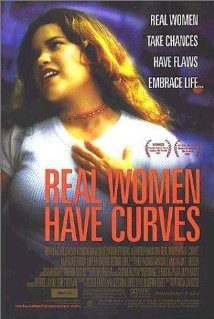
REAL WOMEN HAVE CURVES
An imperfect coming-of-age story best saved for older teens at home.
Should You Watch It?
Real Women Have Curves has a worthwhile center. Ana argues that women should be valued for their minds rather than unrealistic body ideals, and the film recognizes the hard work of mothers, sisters, and garment workers. Its story also takes seriously the pressures faced by first-generation Americans and the limited choices available to Chicanas.
But the movie is only moderately successful. The plot meanders, the mother-daughter conflict can feel cruel, and the finale leaves important emotional changes unexplained. More seriously for families, sexual content, profanity, and feminist and anti-Christian elements mar its positive messages.
The practical answer is to wait for home viewing, and limit it to older teenagers after parents have considered the content.
The Story
NO SPOILERS — WE KEEP THE SURPRISESAna Garcia is graduating from an exclusive Beverly Hills high school with a full scholarship to Columbia University. Her immigrant parents, however, expect her to stay close to home and help her sister Estela at a struggling dress factory in Los Angeles.
Caught between family obligations and the American dream, Ana must argue for her future while confronting her mother’s harsh opinions about her body, marriage, and place in the family.
Is It Any Good?
Two stars means a short, enjoyable film with meaningful ideas but substantial weaknesses. The low-budget production values enhance the story through unglamorous sets and non-Hollywood actors, most of whom are superb. The film also finds some fun in its celebration of women’s bodies and in the workers’ lives at the dress factory.
The plot sometimes meanders, and the mother-daughter conflict tips toward cruelty. The final resolution is especially disappointing because the father’s change of heart is not developed, while the mother’s absence makes Ana’s success bittersweet. One sweatshop scene also feels better suited to the stage, where the story originated.
The Worldview
The film celebrates family, hard work, educational opportunity, and women’s worth beyond physical appearance. Ana’s desire to pursue higher education is treated as a healthy risk, while the labor of her mother, sister, and fellow factory workers eventually receives greater appreciation. The movie also raises questions about the gap between garment workers’ pay and retail prices without becoming a full labor-versus-management polemic.
At the same time, its positive family values are taken to extremes. The story portrays Ana’s Mexican mother as persistently insulting and restrictive, which can make the family conflict feel cruel rather than lovingly comic. The film lightly pokes fun at immigrant Catholics’ dependence on religious icons, includes feminist elements, and presents Ana’s rebellion against sexual boundaries as part of her coming of age. The grandfather’s lie and Ana’s sexual encounter further weaken the film’s Christian framework.
The movie’s central longing is for freedom, dignity, and a future shaped by God-given gifts rather than social expectations. Scripture teaches that “there is neither male nor female, for you are all one in Christ Jesus” (Galatians 3:28).
The Content Guide
The specifics — spoilers included by nature — so you can judge for your own family.
Content Summary
Christian worldview celebrating family and extolling hard work, while lightly poking fun at immigrant Catholics’ dependence on religious icons with some feminist elements; 11 obscenities and one profanity; implied fornication and depicted seduction where teenage girl provides condom; upper frontal male nudity and female(s) in underwear in two scenes; and, grandfather lies to granddaughter’s parents, taking her out to meet boyfriend, mother repeatedly insults her daughter, girl ashamed of sister’s sweatshop, and girl gives up virginity.
Talk About It
Questions for the drive home, the dinner table, or the youth group.
Ana wants to pursue education even when her family expects her to remain at home. How can you honor family while also faithfully using the abilities God has given you?
Matthew 25:14–30 · Colossians 3:23–24The film argues that women should be valued for their minds rather than their bodies. How does Scripture describe the kind of beauty that lasts?
1 Samuel 16:7 · 1 Peter 3:3–4Ana’s family members work hard, but the movie also questions whether workers are paid fairly. What does the Bible require of employers and those with economic power?
Leviticus 19:13 · James 5:4The grandfather lies to Ana’s parents to help her meet her boyfriend. Can a good goal make a dishonest choice right?
Ephesians 4:25 · Proverbs 12:22The Final Word
Real Women Have Curves offers older teens a positive message about dignity, courage, and healthy risks, but its uneven storytelling and sexual content call for parental discernment. Watch it at home, not as an unexamined family pick. WAIT FOR HOME — OLDER TEENS. For other options, see.