
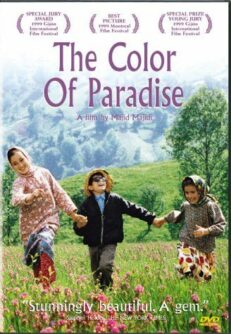
THE COLOR OF PARADISE
The light of God brings hope to a compassionate Iranian drama.
Should You Watch It?
The Color of Paradise is a deeply compassionate film about seeing human worth where others see only weakness. Its blind young hero, Mohammad, and his godly grandmother bring joy, tenderness, and moral warmth to a story shadowed by grief.
The film is also genuinely tragic. Its suffering is heartfelt, and an intense scene involving a person, a horse, and raging rapids may especially disturb animal lovers. The movie’s references to God are subtle, so Christian and Jewish parents should discuss their meaning with their children.
See it if your older children can handle serious sadness and you want a clean drama that points toward God’s mercy. For younger children, choose something lighter.
The Story
NO SPOILERS — WE KEEP THE SURPRISESMohammad is a blind boy finishing classes at a special school in Tehran. He hears the world with unusual sensitivity and finds joy in birds, flowers, his sisters, and his loving grandmother.
His father, Hashem, sees Mohammad as a burden and arrives reluctantly to take him home to their mountain village. When Hashem makes a difficult decision about his son’s future, the family’s fragile happiness is tested.
Is It Any Good?
Four stars means this is an excellent film, and the source review’s praise centers on its emotional power, moral seriousness, and performances. The joy and compassion brought by Mohsen Ramezani and Salime Feizi make the later tragedies especially wrenching.
The film’s Iranian mountain setting and Mohammad’s sensitivity to birds and nature deepen its atmosphere. Its subtle visual representation of God’s glory and mercy also gives the story a memorable spiritual dimension. This is a poignant, beautifully compassionate drama rather than light entertainment.
The Worldview
The film presents a strong moral worldview centered on a personal, monotheistic God who is present everywhere. It portrays God’s glory and mercy as the source of hope, peace, and life, while giving particular moral weight to compassion, family love, and care for the vulnerable.
The movie does not directly exhort viewers to worship Islam’s prophet or read the Koran. It does include some implied, mild references to Muslim faith. Christian and Jewish families can therefore watch without feeling directly proselytized, but parents should discuss the film’s references to God with their children.
The film’s deepest conviction is that human compassion can bring joy into suffering, but that God’s light alone provides ultimate hope. “For with you is the fountain of life; in your light do we see light” (Psalm 36:9).
The Content Guide
The specifics — spoilers included by nature — so you can judge for your own family.
Content Summary
Strong moral worldview with positive references to a personal, monotheistic God who is omnipresent, with some implied, mild references to the Muslim faith, including a character holding prayer beads & a visit to a Muslim shrine of some kind, but nothing more objectionable than that; 2 mild profanities (“for G-d’s sake”); intense scene where one person & a horse fall into raging rapids & another person jumps in to save the other person; no sex; no nudity; no alcohol use; no drug use; and, father mistreats his mother & his son & expresses doubts & complaints to his mother about God.
Talk About It
Questions for the drive home, the dinner table, or the youth group.
Mohammad notices beauty and life through senses others may overlook. How can God use our limitations, differences, or weaknesses for good?
2 Corinthians 12:9 · Psalm 139:14The grandmother responds to Mohammad with joy and compassion. Who in your life needs that kind of patient care from you?
Colossians 3:12 · Galatians 6:2The film presents God’s presence as a source of hope in tragedy. Where have you seen God’s mercy in a difficult season?
Psalm 46:1 · Lamentations 3:22–23Hashem sees his son as a burden. What does Scripture say about the value of people who are vulnerable or overlooked?
Matthew 25:40 · James 1:27The Final Word
This is a clean, beautifully compassionate drama with excellent performances and a clear longing for God’s hope. Its sadness is real, so watch it with older children and allow time to talk afterward. WORTH THE TRIP — OLDER CHILDREN AND ADULTS.









