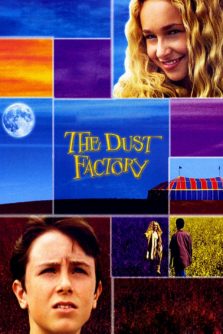
THE DUST FACTORY
Dust to dust — a gentle journey through questions of life and death.
Should You Watch It?
THE DUST FACTORY is a quiet, thoughtful film about death, life, purpose, and the future. Its questions are especially suited to young people wrestling with grief and the fear that life may be beyond their control. The film handles those questions gently, with very little actual violence and enough tension between good and evil to create interest.
Its strongest qualities are its redemptive direction, its well-constructed drama, and its acting. It also offers meaningful values and could provide material for a Bible study with an appropriate guide. But its spiritual framework is not fully Christian. The film gives too little attention to God and grace, while leaning into anthropocentric, existential, and Jungian ideas.
Teenagers may find the movie too slow and sweet, while pre-adolescents and older adults may respond more warmly. You can watch it with your family if you are prepared to discuss where its ideas align with Scripture and where they do not.
The Story
NO SPOILERS — WE KEEP THE SURPRISESRyan is a mute boy grieving the deaths in his family. After falling through a railroad bridge trestle with his grandfather and a young girl named Melanie, he finds himself in a beautiful netherworld where nothing grows and no one seems to move forward.
Melanie leads him to the Big Top, where people face a trapeze leap of faith. Ryan must wrestle with death, fear, belief, and the purpose of living as he searches for a way home.
Is It Any Good?
Three stars means this is a good, dramatically well-constructed film with a gentle pace and clear limitations. For a small, low-budget production, it creates a captivating allegory and sustains interest through the tension between good and evil.
The acting is well done. Armin Mueller-Stahl is described as a real gem, while Hayden Panettiere lights up the screen and personifies the movie's innocence of the soul. The movie may feel too slow and sweet for teenagers accustomed to more contemporary edginess, but its restrained approach suits its reflective themes.
The Worldview
THE DUST FACTORY takes death, life, and the meaning of existence seriously. It presents a beautiful netherworld with no growth, no progress, and apparently no hope. The film's central spiritual questions are valuable, especially for pre-teens and teens who may feel powerless in a destructive world.
The movie's redemptive elements include the recovery of Ryan's voice, the importance of facing fear, the movement from childhood toward maturity, and the struggle between good and evil. Ryan's grandfather functions as a wise guide, while Melanie represents innocence and the refusal to grow up. The Ringmaster is the evil force, and the review identifies Satan as the one who resides in the dust factory.
The film's weakness is its spiritual ambiguity. It suggests that Ryan might save himself, gives little direct attention to God and grace, and draws on anthropocentric, existential, and Jungian philosophy. Its Purgatory-type netherworld and symbolic images can invite useful discussion, but they do not present a clear biblical account of death or salvation.
The film asks what gives life meaning when death claims everyone. Scripture gives a deeper answer: Jesus says, “I am the resurrection and the life” (John 11:25).
The Content Guide
The specifics — spoilers included by nature — so you can judge for your own family.
Content Summary
Very light, redemptive worldview, slightly confused by ambiguous, anthropocentric elements, existential and Jungian philosophy, and the notion of a Purgatory-type netherworld; seven obscenities and no profanities; flashback of man killed by train, nothing gory shown, discussions of death, people jumping into dust or to heaven, boy falls off railroad bridge, and suggestion of drowning; two brief, innocent kisses; no nudity; and, possible alcohol use. GENRE: Fantasy
Talk About It
Questions for the drive home, the dinner table, or the youth group.
Ryan struggles with grief and the question of why people die. What questions about death can we bring honestly to God?
Psalm 13:1–2 · John 11:25–26The film suggests that Ryan must find power and his voice within himself. How is biblical strength different from saving ourselves?
Ephesians 2:8–9 · 2 Corinthians 12:9Melanie must face reality and grow up. What does it mean to mature without losing childlike trust in God?
1 Corinthians 13:11 · Matthew 18:3–4The movie portrays a struggle between good and evil. How does Scripture describe the enemy, and where should believers look for protection?
1 Peter 5:8–9 · Ephesians 6:10–18The Final Word
THE DUST FACTORY is a gentle, well-acted allegory that asks worthwhile questions about death and purpose. Its redemptive heart is real, but its spiritual ideas need careful discussion. For families ready to engage those questions together, it is WORTH THE TRIP.