VOYAGE OF TIME: THE IMAX EXPERIENCE
Breathtaking cosmic imagery, but better considered at home.
Should You Watch It?
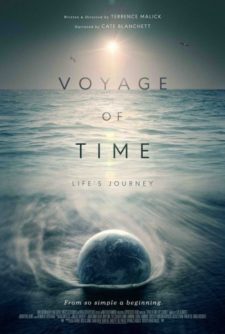
Terrence Malick’s 40-minute IMAX documentary offers genuine beauty. Certain shots are breathtaking, and its computer-generated renderings of cosmic wonders are truly stunning on an IMAX screen. Brad Pitt’s narration and the film’s spiritual language give the experience a sense of wonder.
But the movie never acknowledges God and presents a humanist account of the universe, moving rapidly through the big bang, evolutionary development, humanity, the sun’s destruction of Earth, and possible multiverses. It also gives little actual science to support its claims. The result is visually impressive but not a totally compelling journey.
For your family, this is best treated as a home-viewing choice rather than an essential theater trip. Parents should weigh the worldview, evolutionary references, and brief naturalistic nudity before watching with younger children.
The Story
NO SPOILERS — WE KEEP THE SURPRISESBeginning with a letter addressed to “Dear Child,” the film invites viewers on a journey of introspection and cosmic history. It moves from the universe’s beginnings through the development of life and the arrival of humanity, using IMAX imagery, computer-generated cosmic wonders, and Brad Pitt’s narration.
Is It Any Good?
Three stars means this is a beautiful but limited documentary. Malick creates breathtaking images, and the computer-generated renderings of cosmic wonders are especially stunning in IMAX. The music also borrows heavily from majestic hymns, adding to the film’s sense of magnitude and wonder.
The weakness is the journey itself. The movie fails to tell a succinct story and moves too quickly through enormous scientific and philosophical claims. With little science described, viewers must trust Malick and the scientists who aided his research and visualization. The result is visually memorable but not fully compelling.
The Worldview
The film presents a strong humanist worldview. It begins without acknowledging God and focuses largely on evolutionary theory, while offering little scientific explanation. It suggests that life develops through natural processes and ends by theorizing about the destruction of civilization and the birth of multiverses.
Still, the film’s beauty sometimes points beyond its stated perspective. It asks how humanity came from dust, calls life a miracle, and describes people as “born to the light” and children “of the good.” The majestic imagery of the universe can suggest that Creation did not happen by impersonal chance, even though the movie never makes that connection to God.
The film also includes moral and spiritual ideas about love. Yet those ideas are handled unevenly: one shot shows two whales cuddling while the narration says love stems from nature, immediately after a seal takes a large bite from a sunfish. Another editing choice shows dark-skinned Neanderthals followed by white children as the final stage of human progression, which logically looks racist, though the source says this was probably unintended. The review connects this problem to ethical flaws associated with Darwin’s theory, while stating that Malick himself is not racist.
The film’s wonder reaches toward a truth it does not name: “The heavens declare the glory of God” (Psalm 19:1).
The Content Guide
The specifics — spoilers included by nature — so you can judge for your own family.
Content Summary
Strong humanist worldview implying the creation of the universe without an intelligent designer, with most the movie focusing on evolutionary theory, but with some redemptive, moral references to love and miracles, including some spiritual language used such as a statement that humane are “born to the light”; no foul language; a seal takes a bite out of a fish; no sexual content; naturalistic nudity with some male Neanderthals, though private areas aren’t shown; no alcohol use; no smoking or drugs; and, positive references to “multiverses.”
Talk About It
Questions for the drive home, the dinner table, or the youth group.
The film uses spiritual language about being “born to the light” while never naming God. What does Scripture say about where light and life truly come from?
Genesis 1:1–3 · John 1:1–5The movie presents the universe through a humanist and evolutionary framework. How should Christians respond when something beautiful points toward truths the film itself does not acknowledge?
Psalm 19:1 · Romans 1:20The film calls life a miracle and speaks positively about love. How does the Bible define love, and how is biblical love different from simply treating love as a product of nature?
1 Corinthians 13:4–7 · 1 John 4:7–8The movie ends by imagining humanity’s destruction and possible multiverses. Where does Scripture place Christian hope beyond the end of this present world?
Revelation 21:1–5 · 2 Peter 3:13The Final Word
VOYAGE OF TIME offers breathtaking IMAX imagery and moments of spiritual wonder, but its humanist worldview, evolutionary claims, brief naturalistic nudity, and thin scientific explanation make it a better home-viewing choice. For family movie night, choose something else from our family-friendly picks.
WAIT FOR HOME.