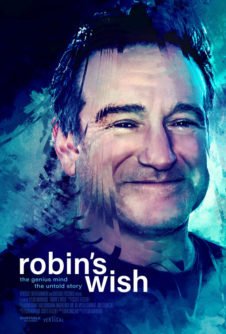
ROBIN’S WISH
A sobering, compassionate documentary about Robin Williams’s final years.
Should You Watch It?
Robin’s Wish is a sobering but compelling documentary about Robin Williams’s final years. His doctors, family, and lifelong friends share affectionate memories, while archival footage captures the comic legend making audiences laugh hysterically. Fans will find the footage especially rewarding.
The documentary also presents new information about the brain disease that affected Williams. His widow and doctors seek to educate the public about Lewy Body Dementia and its consequences, including dementia, hallucinations, paranoia, depression, and suicide. The film’s moral concern and its call to share hope and laughter give it real purpose.
The subject matter is serious. References to suicide and substance abuse, along with a reference to hypnosis and a few decorative Buddha statues, call for parental discernment with younger viewers. For teenagers and adults, this is a worthwhile documentary. Take the trip if your family can handle its difficult subject matter.
The Story
NO SPOILERS — WE KEEP THE SURPRISESRobin Williams was a comedic legend whose career moved from improv comedy to major motion pictures and serious acting. Behind the Hollywood persona was a man deeply involved with his community, neighbors, family, and friends.
Through interviews and archival footage, the documentary examines Williams’s final years, the medical battle he faced, and the answers his loved ones sought after his death. His widow, doctors, and lifelong friends remember the man behind the laughter.
Is It Any Good?
Four stars means this is a fully compelling documentary. Robin’s Wish offers an insightful look at Williams’s final years through the testimony of his doctors, family, and lifelong friends. Their sweet sentiments give the film warmth even as its subject remains sobering.
The archival footage is especially enjoyable for fans. It shows Williams working across decades in comedy and the entertainment industry, capturing his extraordinary ability to make people laugh.
The Worldview
The documentary presents a strong moral worldview centered on truth, compassion, and public awareness. Williams’s widow and doctors contend that his death resulted from Diffuse Lewy Body Dementia, a disease that affects people cognitively, generates hallucinations and paranoia, and may cause depression. The film seeks to help others understand the illness and its consequences.
It also promotes sharing hope and laughter with others. Christian elements appear when Williams references the Sermon on the Mount in archival footage and asserts that life is about following God. He stresses that fear should not cripple people. Williams and Dr. Ted Baehr discussed faith extensively, and Williams would try to attend Tim Keller’s Redeemer Presbyterian Church when he was in New York City.
The film also includes references to atheism in a stand-up routine, strong patriotic content describing Williams’s support for the American military and overseas troops, and images of a few decorative Buddha statues. Its central call to bring hope to others aligns with Jesus’ teaching: “You are the light of the world” (Matthew 5:14).
The Content Guide
The specifics — spoilers included by nature — so you can judge for your own family.
Dominant Worldview and Other Worldview Content/Elements
Strong moral worldview where Robin Williams’s widow and his doctors communicate that his death was a result of his Lewy Body Dementia and try to help educate other people about its consequences, references to sharing hope and laughter with other people, some Christian elements when Williams references the Sermon on the Mount in some archival footage and ends the documentary with the assertion that life is all about following God, some strong patriotic content describing Williams’ support for the American military and overseas troops in particular, plus images of a few decorative Buddha statues, and an Anti-Christian moment where Robin Williams references atheism in a stand-up routine
Foul Language
No obscenities and two light profanities
Violence
References of Robin Williams taking his own life by hanging
Sex
No sex but a married couple kisses a few times
Nudity
Upper male nudity in a couple of scenes, woman’s midriff shown in archival footage from the 1970s
Alcohol Use
Mention of alcohol abuse, but characters seek help for their addictions, and man picks up a glass of alcohol and takes a quick drink during a standup routine
Smoking and/or Drug Use and Abuse
No smoking but there’s mention of drug abuse;
Miscellaneous Immorality
Brief references to using hypnosis.
Talk About It
Questions for the drive home, the dinner table, or the youth group.
The documentary emphasizes sharing hope and laughter with other people. Who around you might need encouragement this week?
1 Thessalonians 5:11 · Romans 12:15Williams’s story raises questions about how illness can affect the mind and emotions. How can we respond with compassion when someone is suffering?
Galatians 6:2 · 2 Corinthians 1:3–4Williams refers to the Sermon on the Mount and says life is about following God. What does Jesus teach about living faithfully before God?
Matthew 5:1–16 · Matthew 6:25–34The film addresses fear and the damage it can cause. What does Scripture say about bringing fear to God?
Psalm 56:3–4 · 2 Timothy 1:7The Final Word
Robin’s Wish is both sobering and compelling. Its difficult subject matter requires discernment, but its compassionate portrait, memorable archival footage, and concern for people facing brain disease give it lasting value. For teenagers and adults, WORTH THE TRIP — MIDDLE SCHOOL AND UP.