THE CASE FOR CHRIST
A skeptic follows the evidence — and the facts win the case.
Should You Watch It?
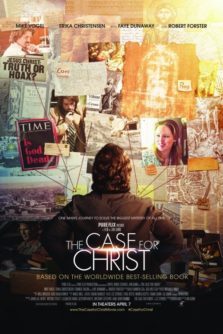
Yes — and not only if you're a believer. This is the true story of Lee Strobel, a Chicago Tribune journalist who set out to disprove his wife's newfound Christian faith by disproving the Resurrection itself, and instead found the evidence leading him somewhere he didn't want to go.
What makes it work is craft, not just conviction. The performances feel like real people under real strain, the direction is the filmmaker's best yet, and the investigation unfolds with the same procedural tension as a great journalism thriller. The film earns its case instead of asserting it.
There are a few things to watch for with younger viewers — a tense marriage under pressure, a man drinking to cope, one mild profanity — but nothing that should keep older kids or teens from the room. This one is worth the trip for the whole family, older children and up.
The Story
NO SPOILERS — WE KEEP THE SURPRISESLee Strobel is an atheist journalist on the rise, confident that facts and faith don't mix. When his wife, Leslie, becomes a Christian after a stranger's act of kindness saves their daughter's life, Lee is furious — and determined to prove her wrong. A colleague throws down a challenge: if you want to disprove Christianity, disprove the Resurrection. Lee takes the case, certain the evidence will vindicate him. It doesn't move the way he expects.
Is It Any Good?
Four stars means this is Movieguide's strongest recommendation, and the film earns it on craft alone. Mike Vogel and Erica Christensen make Lee and Leslie feel like a real couple under real strain, not talking points in costume. The direction is the filmmaker's best work to date, and the film has the pacing and tension of a genuine journalistic thriller — the source review compares it favorably to ALL THE PRESIDENT'S MEN, and even argues it may be the more honest film of the two, since it shows its work on what good, unbiased investigation actually looks like. It's a rare faith-based drama that respects both the audience's intelligence and the seriousness of the question it's asking.
The Worldview
This is a film built entirely around the claim that truth is worth chasing wherever it leads — and that the evidence for Christ's resurrection holds up under real scrutiny. It exalts justice, truth, marriage, family, biblical faith, redemption, and prayer, and it does so through a real investigation rather than a sermon. Lee Strobel doesn't convert because the movie tells him to; he converts because the facts, followed honestly, leave him nowhere else to go. That's a rare and valuable thing for a faith-based film to model: intellectual honesty as the doorway to belief.
The film's deepest conviction is that Jesus is worthy not just of belief but of worship and full commitment — morally, psychologically, and intellectually — and that His teaching illuminates truth, goodness, and beauty together. There's little here to push back on; the caution in this review is about content, not conviction.
The film's real subject is a man's stubborn resistance to a truth he doesn't want to be true — a resistance many will recognize in themselves. Scripture names both the search and its end: "You will seek me and find me, when you seek me with all your heart" (Jeremiah 29:13).
The Content Guide
The specifics — spoilers included by nature — so you can judge for your own family.
Content Summary
Very strong Christian, moral worldview extolling justice, truth, marriage, family, biblical faith, and prayer about a real-life atheist journalist, who challenged the historical, medical and legal evidence for and against the Resurrection of Jesus when his wife becomes a Christian and starts praying for his soul; one light obscenity during an argument; man gets angry at one point and turns over a table with a plant, man visits another man suffering wounds from a beating in the hospital and people discuss an accidental shooting incident involving a policeman; no sex; no nudity; alcohol use and man drinks too much a few times to the point of inebriation and drunkenness; brief cigarette smoking; and, [SPOILERS FOLLOW] a man is caught lying but is eventually exposed, a man is falsely imprisoned but is eventually freed, and atheist protagonist sometimes stubbornly goes out of his way resisting the evidence leading to the truth of Christianity, and it endangers his marriage.
Talk About It
Questions for the drive home, the dinner table, or the youth group.
Lee set out to disprove Christianity and instead found the evidence leading him toward it. Have you ever investigated something you doubted and been surprised by what you found?
Jeremiah 29:13 · John 8:32Leslie's faith puts real strain on her marriage before it heals it. What does it cost to follow Christ when the people closest to you haven't yet?
1 Peter 3:1–2 · 1 Corinthians 7:12–14Lee turns to drinking as his frustration builds. What healthier ways does Scripture offer for handling anger and doubt?
Ephesians 4:26 · Philippians 4:6–7The film argues that good journalism and honest faith both require following the facts wherever they lead. Why does that kind of honesty matter for how we hold our own beliefs?
Proverbs 18:17 · 1 Thessalonians 5:21The Final Word
Lee Strobel built a career on following facts, and this film trusts its audience enough to let the facts make the case for Christ rather than forcing it. It's well-made, well-acted, and genuinely moving — with just enough tension and adult content that younger children should sit this one out. Our verdict stands: worth the trip — older children and up.