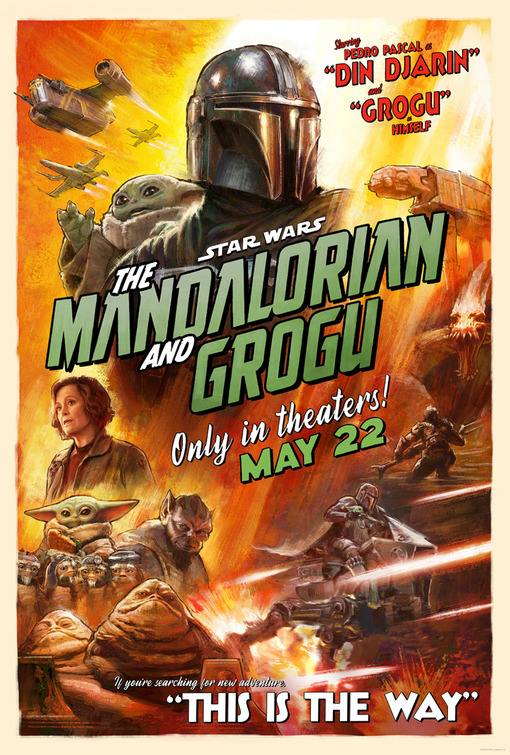
THE MANDALORIAN: Episode 3.7 and 3.8: Chapter 23 and 24: “The Spies” and “The Return”
Freedom is not free — and this finale earns every word of it.
Should You Watch It?
Here's the decision. These two closing chapters of Season 3 bring Din Djarin and Grogu's journey to a rousing, satisfying end — amazing action, real suspense, and the triumph of good over tyrannical evil. What the story exalts is worth exalting: teamwork, patriotism, honor, sacrifice, and a father raising an adopted son in compassion and discipline.
The one real caution is violence. Two small armies clash, heroes fight the villain and his personal guards, and the action is sustained and intense throughout both episodes. There's little else to flag — no sex, no nudity, and only two mild obscenities.
So if you have teenagers, or older children who can weather hard battle scenes with a parent alongside, this finale is worth your time. Just keep the youngest ones out of the room.
The Story
NO SPOILERS — WE KEEP THE SURPRISESThe Mandalorian people have scattered, and their homeworld of Mandalore lies desolate. In these two closing chapters, Din Djarin and Bo Katan reunite the tribes from across the galaxy and set out to reclaim it.
But a large Imperial Remnant has already taken the planet — armed with nearly indestructible armor and led by the returned Moff Gideon, who has sworn vengeance against Din and his adopted son, Grogu. With nowhere left to run, Din resolves to settle the feud once and for all. Can the Mandalorians expel the Empire from their homeland?
Is It Any Good?
Four stars, and a fitting bookend to Din Djarin and Grogu's journey. The two episodes deliver amazing action and real suspense, building to the triumphant battle of good overcoming tyrannical evil. Whether it's the intense firefights, the space dogfights, or the final confrontation, the craft holds up across all 90-plus minutes.
What lifts it above spectacle is heart. The lead characters model teamwork, sacrifice, and the hard work of putting aside differences for a common cause. And at its center is a genuine father-son relationship that gives the action stakes worth caring about. It's a strong, emotionally earned close to the season.
The Worldview
This finale carries a strong redemptive and moral worldview, threaded with patriotic, anti-totalitarian values. It promotes courage, honor, sacrifice, adoption, and teamwork. A female leader reunites her scattered people under one cause, according to their Creeds. Several tribes lay down their differences to reclaim their homeland from an evil tyrant and his army. And a warrior lays down his life so his comrades can escape — the kind of sacrifice the story treats as its highest good.
At the heart of it is a father instilling compassion and discipline in his adopted son, as Din officially adopts Grogu. When Moff Gideon taunts Bo Katan that Mandalorians are weak without their "trinkets," she answers, "Mandalorians are stronger together." The film means it.
Where it departs from a biblical view is in its spiritual furniture: there are light references to and uses of "the Force," the pantheistic religion of the Star Wars universe, and the villain uses that power and his own DNA to create clones of himself. These belong to the world of the story, not to the truth.
But the sacrifice at its core points somewhere higher. A warrior dying so others may live echoes the greatest love there is: "Greater love has no one than this, that someone lay down his life for his friends" (John 15:13).
The Content Guide
The specifics — spoilers included by nature — so you can judge for your own family.
Dominant Worldview and Other Worldview Content/Elements
A strong redemptive, moral worldview with patriotic, anti-totalitarian values promotes courage, honor, sacrifice, adoption, and teamwork, female leader reunites her people under one cause according to their “Creeds,” a father instills the virtues of compassion and discipline in his adopted son, a warrior sacrifices his life to allow his comrades to escape, several tribes put aside their differences to reclaim their former homeland from an evil tyrant and his army, with light references to and uses of “the Force,” the pantheistic religion of STAR WARS
Foul Language
One “d” obscenity and one “h” obscenity
Violence
Lots of strong action violence throughout both chapters includes two small armies fighting one another, hand-to-hand combat, intense shootouts, space dog fights, the heroes stab through the necks and arms of their enemies, a man is tasered to death, a man drives a space carrier onto the planet’s surface and causes a fiery chain reaction, a man dies in a fiery crash, and a man smashes a woman’s prized weapon into smithereens
Sex
No sex
Nudity
No nudity
Alcohol Use
No alcohol use
Smoking and/or Drug Use and Abuse
No smoking or drugs
Miscellaneous Immorality
A man uses “the Force” and his own DNA to create powerful clones of himself.
Talk About It
Questions for the drive home, the dinner table, or the youth group.
A warrior gives his life so his comrades can escape. Where in Scripture do we see this kind of sacrifice, and what does it teach us about love?
John 15:13 · Romans 5:7–8Bo Katan tells Gideon that "Mandalorians are stronger together." How does the Bible describe the strength that comes from standing with others rather than alone?
Ecclesiastes 4:9–12 · Hebrews 10:24–25Din adopts Grogu as his own son and raises him in compassion and discipline. What does Scripture say about adoption and the way a father should raise a child?
Ephesians 1:5 · Ephesians 6:4Several tribes set aside their differences to reclaim their homeland from a tyrant. When is unity for a good cause worth the cost of laying down old grievances?
Psalm 133:1 · Philippians 2:2–3The Final Word
This is a strong, big-hearted finale — spectacle with a moral spine, built around sacrifice, teamwork, and a father's love for his adopted son. The action is intense, so keep the youngest viewers out and watch the older children closely. For teens, adults, and families ready for it, this one is worth watching.