
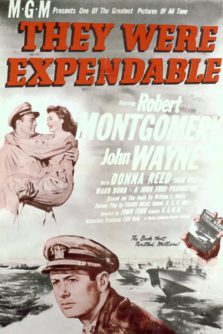
THEY WERE EXPENDABLE
John Ford’s stirring, patriotic tribute to wartime sacrifice.
Should You Watch It?
John Ford’s film is a stirring and patriotic tribute to the men who proved the need for PT boats in the Pacific Theater during World War II. It is also thoughtful, giving wartime service emotional weight rather than treating it as simple spectacle.
The film’s strongest moments include a poignant funeral eulogy for two fallen comrades and a sober closing message about the different kinds of sacrifice made during wartime. A love story adds tenderness, but war still brings separation and loss.
The source rates the film four stars and gives it a +3 Family Content rating. On that basis, WORTH THE TRIP is the answer for viewers seeking a well-made, patriotic war drama.
The Story
NO SPOILERS — WE KEEP THE SURPRISESDuring World War II, PT-boat leader Brick and his right-hand man, Rusty, serve in the Pacific Theater. Their courage and service help demonstrate the importance of PT boats in wartime.
A nurse falls in love with one of the officers, but the Japanese invasion of the Philippines changes what the characters hoped for. The film follows duty, love, loss, and the many forms sacrifice can take.
Is It Any Good?
Four stars means this is a highly accomplished film. The source calls it brilliantly made and praises its stirring, patriotic, and thoughtful treatment of wartime service.
The funeral scene, in which Wayne gives a moving eulogy to two fallen comrades in arms, is especially poignant. The ending also delivers a sober, poignant message about the different kinds of sacrifice that occur in wartime. An early role by Donna Reed adds a notable performance to the film’s human story.
The Worldview
The film honors courage, duty, comradeship, patriotism, and sacrifice. Its tribute to the men serving in the Pacific Theater treats wartime commitment as serious and costly, while its funeral scene recognizes the grief carried by those left behind.
The story also gives attention to personal love amid public duty. A nurse falls in love with one of the officers, but the Japanese invasion of the Philippines separates them. The film’s final message is sober: wartime sacrifice takes different forms, and not every sacrifice looks the same.
That emphasis on giving oneself for others connects with Jesus’ words: “Greater love has no one than this, that someone lay down his life for his friends” (John 15:13).
Talk About It
Questions for the drive home, the dinner table, or the youth group.
The film honors men whose service helped prove the need for PT boats. What does faithful service look like when the value of your work is not yet recognized?
Colossians 3:23–24 · Galatians 6:9The story presents different kinds of sacrifice in wartime. How can Christians recognize and honor sacrifices that do not look the same?
Romans 12:1 · Philippians 2:3–4A funeral eulogy remembers two fallen comrades. How should hope shape the way Christians grieve?
1 Thessalonians 4:13–14 · Psalm 34:18The film’s love story is changed by invasion and separation. How can people remain faithful when circumstances take away the future they expected?
Proverbs 3:5–6 · Romans 8:28The Final Word
John Ford’s film is patriotic without being thoughtless. It honors comradeship, grief, love, and the many sacrifices made during war. Its four-star quality and +3 Family Content rating make WORTH THE TRIP the clear answer.

