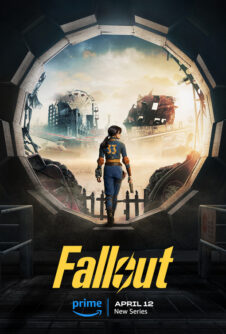
FALLOUT: Season One
Brilliant craftsmanship buried under excessive violence, language, and sex.
Should You Watch It?
Here's the trouble with Fallout: it's genuinely excellent, and that's exactly why it's dangerous to recommend. The production honors its source material with spectacular world-building, standout performances, and a script that knows exactly what it's doing. If craft alone decided the verdict, this would be an easy yes.
But craft isn't the only measure. Season One piles up scene after scene of extreme, stomach-turning violence — stabbings, dismemberments, a skull crushed on screen — alongside heavy profanity in nearly every episode, several sexual scenes, brief nudity, a nudity-filled pagan ritual, and ongoing drug use. None of it is incidental; it's constant.
The show even gives its heroine a real moral compass — she quotes and lives the Golden Rule while the wasteland around her loses its soul. That's worth noticing. It isn't worth the price of admission. Skip it.
The Story
NO SPOILERS — WE KEEP THE SURPRISESLucy MacLean was born in her underground vault and expected to die there — until raiders invade her home and drag her father out into the wasteland above. Forced to follow him into a shattered, dystopian version of America, she crosses paths with a long-lived "ghoul" and a knight of the powerful Brotherhood of Steel. Her search for her father soon tangles with a much larger fight over dangerous technology — and that's where we'll leave it.
Is It Any Good?
Four stars means the source found this about as well-made as television gets — and the details back it up. The world of the video game arrives fully realized: Pip-Boys, Nuka Cola, mutants, factions, and the propaganda art all rendered with care. Ella Purnell anchors the show as one of its few genuinely honorable characters, and Walton Goggins does striking double duty as a Hollywood star turned nuclear survivor. The writing, cinematography, and 1950s soundtrack are all called "fitting and sometimes stellar," and the franchise's grim refrain — "war never changes" — lands with real weight.
The same source notes a real cost, though: the violence, done with flesh-and-blood actors rather than game pixels, sometimes tips from disturbing into gratuitous, and the show occasionally reaches for shock where restraint would have served it better.
The Worldview
Fallout's moral center is Lucy. She was raised with something like 1950s American, broadly Christian values, and she carries them into a wasteland that has mostly abandoned morality altogether. She quotes and practices the Golden Rule from Matthew 7:12, and she never loses her decency even as nearly everyone around her does — a genuine bright spot inside a dark, graphic story.
That said, the show isn't consistent about it. Lucy's casual attitude toward sex sits oddly against the buttoned-up 1950s values she's otherwise written to hold — a reminder that period stories often reveal more about the era making them than the era they depict. And a pagan cult ritual, complete with a stripped-down ceremony, surfaces in Episode 6 without much moral commentary attached.
What the show gets right is worth naming plainly: a hero who keeps her conscience when the whole world has lost its own, and a father-daughter bond strong enough to walk through radioactive ruin for. That longing — for a lost father, for a world set right — points past the wasteland to a truer story: "his father saw him and felt compassion, and ran and embraced him" (Luke 15:20).
The Content Guide
The specifics — spoilers included by nature — so you can judge for your own family.
Dominant Worldview and Other Worldview Content/Elements
Strong moral worldview overall, with the female protagonist seeking to uphold the Christian, moral values that a 1950s American culture would have had and trying to find and rescue her father, mixed with some humanist survivalist themes where many people have lost their moral sensibilities amid hardships and horrors in a postapocalyptic wasteland, but the protagonist never loses hers and quotes and practices the Golden Rule from Matthew 7:12 consistently, which leads to at least one bright spot in this often dark and graphic tale, though she has an open pagan attitude toward sex that doesn’t fit in with the rest of her character, and there’s a pagan cult ritual in Episode 6
Foul Language
Episode 1 has two “f” words, four other obscenities, one GD, Episode 2 has at least 52 obscenities (mostly “f” words) and several profanities, Episode 3 has 22 obscenities (including about 14 “f” words) and one GD profanity, Episode 4 has at least six obscenities (including three “f” words) and one GD profanity, Episode 5 has three “f” words; Episode 6 has about 12 (including eight “f” words) and one GD profanity, Episode 7: has seven obscenities, including five “f” words, and Episode 8 has four obscenities, including three “f” words
Violence
Many, many scenes of often extreme bloody violence in every episode includes nuclear detonations across the U.S. where millions die, a man attacks a woman with a knife and a fight ensues in which he stabs her in the stomach and she cuts his face with a glass jar (blood on her abdomen as she pulls out the knife and blood flies from him when struck), a bloody battle ensues where many people are killed in gory detail, people stabbed with various sharp instruments and shot with various pistols and automatic weapons, a woman is stabbed in the eye with a fork, a man is gutted with a knife, a man’s throat is cut, a man is cut in half in an automatic door with blood spraying all over another, limbs are lopped off, a man with half his face slashed open attacks a woman, a man drowns another in a pickle barrel, many other various bloody fatalities are shown in great detail, an irradiated ghoul is dug up and comes out of a coffin and kills three men in bloody fashion, man throws a puppy into an incinerator, a dog attacks and kills a man to protect his master, dog brings a severed human hand to his master out of a nearby cave, an irradiated mutant bear attacks a heavily armored soldier, a skull crushing scene, and slow motion combat of all kinds, all with lots of blood
Sex
Episode 1 shows a newly married man and woman are shown having marital relations on their wedding night), the couple is shown in bed right after the fact, and the man gets out of bed naked (rear male nudity), and there’s a brief shot of a soldier abusing himself in an army barracks, Episode 4 shows a man and a pregnant widow about to commit fornication when her water breaks (some kissing and moaning with her sitting on his lap before the scene cuts), and a woman fears that a ghoul has sold her as “a sex slave,” but nothing happens, and in Episode 6 a young woman asks a man if he wants to fornicate while they’re in quarantine, then they have an awkward conversation about his genitals, but no sex occurs
Nudity
Scenes of rear male nudity in Episode 1, upper male nudity in a shower in Episode 6, and upper male and female nudity in Episode 6 where male and female cultists in a vault strip their jumpsuits off in a pagan ritual in an extended scene
Alcohol Use
Social drinking throughout
Smoking and/or Drug Use and Abuse
Persons inject themselves, inhale or otherwise take psychoactive drugs which have all kinds of effects, a raider on an enhancer drug becomes very hard to kill, a person shot with a dart loses control of their motor skills, a young man in the Brotherhood of Steel, a postapocalyptic paramilitary group, smokes a cigarette and passes it to another young man, and a ghoul takes a drug by mouth;
Miscellaneous Immorality
Loads of questionable moral choices are considered and made throughout the course of this blood and guts epic.
Talk About It
Four questions for the couch, the commute, or the couple bingeing it together.
Lucy keeps living by the Golden Rule even after the world around her has given up on decency. What keeps a person's conscience alive when everyone else's has gone dark?
Matthew 7:12 · Romans 12:2The wasteland runs on "humanist survivalism" — do whatever keeps you alive. How does that differ from a life shaped by trust in God rather than self-preservation?
Matthew 6:25–34Lucy's entire journey is driven by her love for her father. What does Scripture say about the pull of family love, and where does that longing ultimately point?
Luke 15:20 · Psalm 27:10The show's tagline is "war never changes." Do you agree — and what does the Bible say is the only thing that actually could change it?
Isaiah 2:4 · James 4:1–2The Final Word
Fallout earns every bit of its praise as filmmaking — sharp writing, strong performances, a world built with real care. But four stars of craft can't outweigh three points of excessive violence, language, sex, and drugs, and Movieguide's answer stays the same either way: skip it. Looking for something your whole family can actually watch together? Start here:.