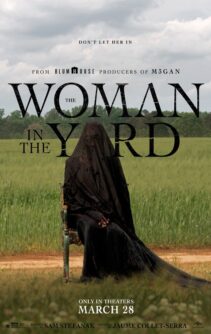
THE WOMAN IN THE YARD
A grieving mother's dark night — artful, disturbing, adults-only viewing.
Should You Watch It?
This is a horror film with something real underneath it. A widow, injured and unraveling, tries to hold her family together while a mysterious woman in black takes up residence on her lawn. The film is sincere about what it's exploring — the way grief, depression, and guilt can distort a mind until you can't trust what you're seeing, including in yourself.
That sincerity is the film's real strength, and it's shot with real craft. But it costs you something: strong violence, suicide presented as a live possibility, a figure that seems to encourage it, and a household where a mother loses her temper with her children and lies to them to keep them calm. The ending offers real hope — the children help pull their mother back from the dark — but that hope lands softer and less explicitly redemptive than it could have.
If you're an adult who can watch a serious film about depression without being undone by it, this is worth your time. If you're picking for children or younger teens, this isn't the one.
The Story
NO SPOILERS — WE KEEP THE SURPRISESWeeks after her husband's death in a car accident, an injured widow named Ramona is alone in a farmhouse with her two children, trying to hold ordinary life together — power outages, chickens, a stubborn teenage son — while intrusive, violent thoughts creep in at the edges. Then a strange woman in black appears on the front lawn, offering no explanation for who she is or why she's there. She isn't leaving. What she wants, and what she represents, is where the film is headed — and that's as far as we'll go.
Is It Any Good?
Three stars means this one earns real respect for craft, even if it doesn't fully cash it in. The film is artistically shot, and the performances are believable enough to carry a story told through the eyes of a narrator you can't entirely trust. The scares themselves are creepy but familiar — jump scares and unsettling images rather than anything genuinely new for the genre.
Where the film distinguishes itself is in tone: it takes a mother's grief and depression seriously rather than using them as a gimmick, and the slow unraveling of what actually happened the night of the accident gives the back half real weight. The ending, though, pulls its punches. The hope it offers is real but underdeveloped, and a story built this carefully around darkness deserved a light shone more clearly at the end.
The Worldview
At its core, this film is reaching for something true: that dark thoughts, left unchecked, can lead a person toward destruction, and that a vulnerable, grieving mind is especially at risk. Ramona seems to pray for strength at her lowest point, though the moment is ambiguous — no one names who she's praying to. The film ends with a glimmer of hope, built around the idea that the people who love us, especially our children, can help pull us back from the edge. That's a good and true instinct, even if the film never grounds it explicitly in God.
The mysterious woman in black complicates things further. She seems to represent the dark thoughts themselves, and at points she plays as something closer to demonic — a presence that shows up to encourage despair rather than merely embody it. The film gestures toward calling that darkness out for what it is, but stops short of naming the source of the light that could actually defeat it. That's the film's real shortfall: it knows the diagnosis but is shy about the cure.
Still, a mainstream horror film willing to take grief and depression seriously, and to end with hope rather than despair, is not nothing. Scripture names exactly the battle this film is circling: "We destroy arguments and every lofty opinion raised against the knowledge of God, and take every thought captive to obey Christ" (2 Corinthians 10:5). That's the fuller answer this film only half-reaches for.
The Content Guide
The specifics — spoilers included by nature — so you can judge for your own family.
Dominant Worldview and Other Worldview Content/Elements
Light metaphorical Christian and moral worldview, but not fully developed, about the darkness in our spirit, soul and mind that can lead us to destruction, but a widowed mother battling sever grief, depression and guilt is in a vulnerable and weakened mental state, the mother seems to pray for strength, but the prayer is ambiguous, though the movie ends with a glimmer of hope and the apparent lesson that people should not let dark thoughts overcome them (this message could have been strong and more overtly and, even better, more openly Christian, however), plus a mysterious woman in black who seems to represent dark thoughts can be interpreted as demonic
Foul Language
Two light profanities, one or two “f” words, four “s” words, and two other obscenities
Violence
Strong violence depicted, a vision of someone being stabbed in the back with a knife, threats with a gun, the swinging of a fire poker, a leg wound is shown gushing some blood, suicide becomes a real possibility but in the end doesn’t happen, a mysterious figure that may be demonic appears to encourage suicide, an image of bloody hands, verbal abuse of children, physical abuse of children is implied not shown, images of bloody chickens, a car wreck is shown but injuries not shown, there are some jump scares and scary images, and a dark character seems to have supernatural shadow-wielding ability
Sex
No sex shown
Nudity
No nudity
Alcohol Use
One scene where characters are drinking wine at dinner, and drunk driving may have possibly led to a fatal crash and injury
Smoking and/or Drug Use and Abuse
No smoking, but prescription drugs are shown, but not taken, but later it’s mentioned that the mother character takes “crazy person pills”
Miscellaneous Immorality
Mother bends the truth and lies about situations to her children throughout to “change the scary parts” (which is a central theme in the movie), teenage son is often disobedient and defiant toward his mother in a typical rebellious teenage manner, mother’s grief and depression make a bad role model for her children, and mother often loses her temper and is verbally abusive with the children, so the family dynamic is quite dysfunctional, but the movie ends on a possible ray of hope centered on the positive contribution children make in people’s lives.
Talk About It
Questions for the drive home, the dinner table, or the youth group.
Ramona lies to her children "to change the scary parts." When does protecting someone from the truth become its own kind of harm?
Ephesians 4:25 · Proverbs 12:22The film suggests dark thoughts can grow into something that threatens to consume a person. What does Scripture tell us to do with thoughts like that before they take root?
2 Corinthians 10:5 · Philippians 4:8The children end up being the ones who help pull their mother back from despair. Where have the people in your life carried you when you couldn't carry yourself?
Galatians 6:2 · Ecclesiastes 4:9–10The film ends with hope, but only softly points toward its source. Where does real hope in grief actually come from?
Psalm 34:18 · Romans 15:13The Final Word
This is a serious, well-crafted horror film about grief, depression, and the darkness that can grow in an unguarded mind — and it's not for kids or the faint of heart. There's real hope by the end, even if it lands softer than it should have. Our answer: worth the trip — adults only. Looking for something the whole family can watch together this week? Start here:.