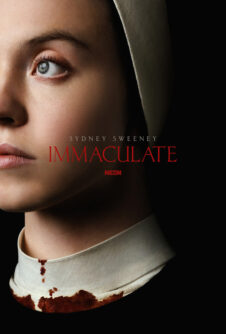
IMMACULATE
A grisly, anti-Christian horror story with a savage heart.
Should You Watch It?
Let's be plain from the start. This is a bloody horror movie whose whole engine is contempt — for the Catholic Church, and by the end for the Christian faith itself. It twists Scripture's warning about Satan appearing as an angel of light into a story where every religious figure is either a villain or a victim, and where the heroine's escape route runs through murder.
The violence is grisly and the ending is disgusting: a young nun who came to serve God finishes the film as a murderer and a baby killer, having apparently rejected her faith along the way. There's harsh language throughout. The film's own moral compass barely functions — it condemns the villains' warped theology while cheering a heroine who kills with malice, not just in self-defense.
There's no version of this that serves your family or your conscience. Our answer is simple: skip it.
The Story
NO SPOILERS — WE KEEP THE SURPRISESSister Cecilia, a young nun from Michigan, travels to Italy to give her life to an isolated countryside convent. My Lady of Sorrows exists to care for elderly nuns who are terminally ill or near death — hard, somber work she embraces despite feeling overwhelmed.
But the convent has been waiting for her. The cardinal, the lead priest Father Tedeschi, and the Mother Superior have a special role planned, and the hostility of the nuns around her hints at what's coming. When Cecilia discovers what these clergy really intend, she wants out — and they will do anything to keep her.
Is It Any Good?
Two stars, and here is what they mean: the filmmaking is competent enough to unsettle, but the movie is built to disgust and offend, and it succeeds at that more than anything else.
The craft on display is standard horror machinery — a creeping convent, a threatening escape, dread that builds toward a bloody climax. What sinks the film is coherence. Its moral viewpoint, as the source puts it, doesn't make much sense and seems confused: it presents the priest as a heretical villain, then asks us to side with a heroine who deliberately kills. The result is a picture that shocks without meaning much.
The Worldview
This film believes the church is a lie and the faithful are fools or predators. Its worldview is strongly humanist and anti-Christian — anti-Catholic in particular — and the source reads a radical feminist hostility toward the Christian faith running beneath the surface, more implied than stated outright.
The story takes 2 Corinthians 11:14 — that "Satan himself masquerades as an angel of light" — and puts it to work against the church rather than against deception. The convent's clergy pray to the Virgin Mary rather than to God, and the villains' scheme rests on a warped theology that names a manufactured child "our Savior," which empties the true meaning of Christ's sacrifice for sin.
To be fair to the film, it does present Father Tedeschi as a villain, so it doesn't simply endorse his heresy, and there are scattered Christian expressions and some moral content along the way. But the arc bends only one direction: the heroine appears to abandon her faith entirely, and her answer to evil is not a Christian one — it's the opposite. She becomes a murderer and, at the end, a baby killer, and the film sides with her.
The real Savior is not cloned from a relic. He was crucified once for our sins and raised, and the gospel calls us to answer evil not with malice but with faith working through love. "For neither circumcision counts for anything, nor uncircumcision, but only faith working through love" (Galatians 5:6).
The Content Guide
The specifics — spoilers included by nature — so you can judge for your own family.
Dominant Worldview and Other Worldview Content/Elements
Very strong Humanist, Anti-Christian, including Anti-Catholic, politically correct worldview about a young nun who loses her faith when the bishop, the lead priest and the mother superior in her new convent hide a terrible secret that makes them want to keep her in the convent against her will and leads her to become a murderer and a foul-mouthed baby killer, the villains have a warped theology about Jesus as Savior and the Catholic clergy in the movie pray to the Virgin Mary instead of to God/Jesus, and the movie seems to have a strong radical feminist viewpoint against the Catholic Church and Christianity (this content is more implicit than explicit), but there is some Christian, moral content and Christian expressions of faith (often from a Catholic perspective) in the movie, though, in the end, the heroine strongly seems to reject her previous Christian faith (her response to her evil antagonists is not a Christian one, just the opposite, it seems)
Foul Language
Six or seven obscenities (including four “f” words), one GD profanity, and one OMG profanity
Violence
Bloody violence include a woman’s tongue is cut off, a nun is buried alive, and she screams repeatedly, nun gruesomely breaks her ankle or leg on a steel prong of a large front gate, pregnant woman uses a bloody chicken’s carcass to make people think her baby in the womb is in danger of dying or has died, heroine uses a large crucifix to repeatedly stab the Mother Super in the head multiple times, heroine uses a wire to strangle the Cardinal to death (the wire cuts gruesomely into his neck), heroine uses a large ancient nail to stab to death an evil priest in the neck. and his blood gushes all over her, heroine takes a large stone to crush a newborn baby to death (movie does not show the stone hitting the baby’s body), a character commits suicide and falls to their death on concrete, the suicide victim’s body is turned, and their face is all bloody, a priest brands a woman’s feet with a red hot poker shaped as a cross
Sex
A joke about a sexual device, references to a pregnancy and the way in which you can tell whether a woman has had intercourse
Nudity
Partially hidden upper female nudity during scenes where woman wears a somewhat sheer nightgown or robe
Alcohol Use
Brief wine drinking at a church reception and at a meal
Smoking and/or Drug Use and Abuse
Brief smoking by priests and nuns in several scenes but no drugs;
Miscellaneous Immorality
Clergy leaders at a Catholic convent hide a terrible secret that would bring scandal to them if people knew about it, they also use deception, but so does the heroine, a nun is jealous and envious of the heroine, and the heroine is held captive against her will, but her response is to become a murderer and a baby killer, not just to defend herself.
Talk About It
Questions for the drive home, the dinner table, or the youth group.
The film borrows 2 Corinthians 11:14 — that Satan masquerades as an angel of light — but uses it as a weapon against the church. What was Paul actually warning about, and how do we tell a true light from a false one?
2 Corinthians 11:13–15 · 1 John 4:1The story's villains invent a "savior" from a relic. Why does the real gospel refuse any replacement for Christ's once-for-all sacrifice?
1 Corinthians 15:3–4 · Hebrews 10:10The heroine answers evil with murder, and the film treats that as her freedom. How does Scripture tell us to answer evil instead?
Romans 12:17–21 · Matthew 5:44This movie assumes faith is a trap and the faithful are fools. When you encounter stories that hold your beliefs in contempt, how do you respond with both conviction and grace?
1 Peter 3:15–16 · Colossians 4:6The Final Word
Some films are made well enough to unsettle and still aren't worth a moment of your time. This is one of them — grisly, anti-Christian, and morally incoherent, ending with a heroine who kills a newborn and abandons her faith. Our verdict stands as we opened it: skip it. Looking for something to watch together instead? Start with our latest family-friendly picks.