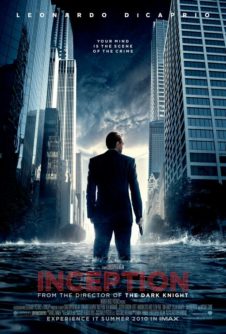
INCEPTION
A dazzling dream heist that gets lost in its own maze.
Should You Watch It?
Here's the decision. Christopher Nolan's dream-heist thriller delivers first-rate, often dazzling action and strong acting, and there's real feeling underneath it — a father clawing his way back to his two children. If you're an adult who enjoys puzzle-box storytelling and can sit through strong profanity and a heavy theme of suicide without it costing you anything, this one holds your attention.
But it costs something to get there. The plot piles dream within dream within dream so relentlessly that it drains the story's own jeopardy — you may find yourself dazzled but not moved. The profanity is gratuitous. The suicide subplot is genuinely disturbing. And the film's morality is muddled: its heroes are thieves who justify mind invasion and manipulation for a cause the movie barely bothers to explain.
This is a good movie, not a great one, and it's built for grown-ups. Take it in if the craft interests you and the content doesn't trouble your conscience — otherwise, let it pass.
The Story
NO SPOILERS — WE KEEP THE SURPRISESCobb is a mercenary spy who drugs wealthy or powerful targets and invades their dreams to steal secrets. He can't go home to his two young children in Los Angeles — he's suspected in his wife's death. A powerful client offers him a way back: instead of stealing an idea, Cobb and his team must plant one, deep in the mind of a young energy heir, through a scheme of dreams within dreams. That's as far as we'll go.
Is It Any Good?
Three stars means this: real craft, real limits. The action is first-rate and often dazzling, and the dialogue and performances are strong throughout. Nolan clearly knows how to build a set piece.
But the plot is overly complicated, and that complexity works against the movie rather than for it. Layering dream worlds inside dream worlds drains the jeopardy of its weight — it's hard to fear for characters fighting projections in a world that, by the film's own rules, isn't fully real. The third act's action runs long. The result is a movie that dazzles the eye more than it grips the heart, falling short of four-star territory.
The Worldview
This is a humanist film, not a spiritual one, and it knows it. Nolan gives his protagonist a genuinely sympathetic, even redemptive goal — Cobb wants nothing more than to get home to his children, and there's a real moral thread about stopping one company from controlling the world's energy policy. But that thread is thin; it's mentioned once and then buried under razzle-dazzle. The heroes remain, throughout, thieves who invade minds and manipulate people to get what they want, and the film never quite reckons with that.
The bigger problem is philosophical, not moral. The movie plays constantly with the question of what is dream and what is real, but there's no solid theology or philosophy underneath the question — it leaves viewers scratching their heads rather than genuinely wrestling with truth. That's moral relativism dressed up as ambiguity, and it's worth naming as such rather than mistaking it for depth.
Scripture takes the same question — what is real, what is illusion — and answers it, rather than leaving us in the maze: "For now we see in a mirror dimly, but then face to face" (1 Corinthians 13:12). The film can ask the question beautifully. It cannot answer it.
The Content Guide
The specifics — spoilers included by nature — so you can judge for your own family.
Content Summary
Light humanist worldview with some references to humanist dream psychology theories and some strong moral, light redemptive elements of protagonist trying to get back to his children and stop an energy company from being so big that it controls the world’s energy policies, but the protagonist has these moral concerns as part of a group of industrial spies invading people minds to steal secrets and manipulate them, plus movie plays with the nominalistic, sometimes pagan and sometimes humanist question of what is dream and what is reality, where do they begin and end, but there’s not really a solid theology or philosophy behind its questioning, so viewers are left scratching their heads or left to their own thoughts about the subject; 12 obscenities (but no “f” words), nine strong profanities and four light profanities; nearly constant action violence with some blood but not really graphic or gory such as many images of people shooting at one another, man gets shot in chest and there are images of a small splotch of blood on his shirt that grows larger, and he coughs a few drops of blood in one scene especially, explosions, chases, vehicles damage other vehicles, fighting, shots in slow motion in several scenes of van falling off a bridge and into the water, distraught woman on ledge invites her husband to join her and then jumps off the ledge herself to her implied death, buildings crumble, kiosks of food and objects for sale explode, buildings bent on top of one another in a dream, building crumbles around man as he’s shooting and fighting other “people” in a dream; no sex scenes; no nudity; alcohol use; no smoking but people are drugged to get information out of them or manipulate them; and, stealing and industrial espionage justified, moral relativism, lying, betrayal.
Talk About It
Questions for the drive home, the dinner table, or the youth group.
Cobb's team invades people's minds and steals secrets, but the movie asks us to root for him anyway because he wants to get home to his children. Can a good desire ever excuse a bad means of pursuing it?
Romans 3:8 · Proverbs 21:2The film leaves the question of "what is real" open at the end, with no theology underneath its questioning. How does Scripture answer the difference between illusion and truth?
John 8:32 · 1 Corinthians 13:12Cobb is haunted by guilt over his wife's death, and that guilt keeps pulling him backward. What does the Bible say about the difference between guilt that destroys and guilt that leads somewhere good?
2 Corinthians 7:10 · Psalm 32:3–5The client justifies the whole scheme by claiming one company might grow too big and control the world's energy policy — but the film barely explains why that matters. How should we evaluate a claimed "greater good" that isn't clearly defined?
Isaiah 5:20 · Proverbs 4:26The Final Word
Nolan gives adults a genuinely dazzling ride — sharp action, strong performances, and a father's ache to get home to his kids. He also gives them a plot so tangled it drains its own tension, gratuitous profanity, and a heavy suicide subplot that lingers. So here's our answer, the same one we opened with: worth the trip — adults only. If you're planning a family movie night instead, start with our latest family-friendly picks.