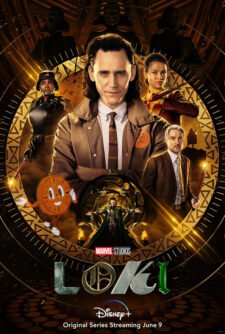
LOKI: Episode 1.1 and 1.2
Lively, funny science fiction with moral questions for discerning families.
Should You Watch It?
These first two episodes are a lot of fun. They are funny, satirical, whimsical, witty, lively, and playful, with many funny lines and crazy situations. Tom Hiddleston and Owen Wilson are both great, as is the rest of the cast.
The episodes also ask stimulating questions about free will, time, good and evil, moral responsibility, and whether a morally flawed person can change. That thoughtful material comes with four obscenities, one light profanity, strong but non-gruesome action violence, brief upper male nudity, and a humanist framework involving powerful, god-like beings and a multiverse.
You can watch these episodes with older children and adults if your family is prepared to discuss those concerns. For younger children, parents should exercise discernment. WORTH WATCHING — MIDDLE SCHOOL AND UP is the practical answer.
The Story
NO SPOILERS — WE KEEP THE SURPRISESAfter stealing the Tesseract during the events of AVENGERS: ENDGAME, Loki lands in the Gobi Desert and is arrested by the Time Variance Authority for violating the “Sacred Timeline.”
A TVA agent named Mobius offers Loki a choice: be erased from Reality or help stop a dangerous time variant suspected of being another version of Loki. The mission draws Loki toward questions of power, identity, free will, and whether a villain can change.
Is It Any Good?
Four stars means these episodes are highly entertaining and confidently made. They are funny, satirical, whimsical, witty, engaging, lively, and playful. The many funny lines, crazy situations, action, and roller coaster twists and turns make the opening episodes a lot of fun.
Tom Hiddleston and Owen Wilson are both great, and the rest of the cast is strong as well. The script adds stimulating philosophical conversations without losing its energy. The source hopes the series can maintain this high level and the same pace of wit, humor, action, and twists.
The Worldview
The first two episodes present a light humanist worldview built around a multiverse and a fictional Time Variance Authority controlled by three powerful, god-like, “all-knowing” beings. The story does not directly attack belief in God, and the source review finds no significant worldview problems in these episodes. Still, the multiverse framework and the Time Keepers can function as substitutes for a Creator, while the statement that “No one bad is truly bad, and no one good is actually truly good” sounds ambivalent about the biblical doctrine of sin.
The episodes include strong moral and light redemptive elements. Mobius confronts Loki about his lust for power and his willingness to hurt people, then hopes Loki might find a higher purpose and help stop a dangerous villain. Loki admits that he is morally flawed, but the episodes leave open whether confession will lead to genuine change. Loki also calls himself a god and “the God of Mischief,” while describing advanced technology as “magic” in an ironic allusion to science fiction author Arthur C. Clarke’s idea that advanced technology can seem like magic.
The source review also reports concerns about later episodes potentially exploring “gender fluidity” and possibly connecting to occult ideas in the next Doctor Strange movie. Those reports concern the broader series, not the first two episodes reviewed here.
The longing for redemption is real, but the episodes do not ground it in the biblical God. Scripture says, “for all have sinned and fall short of the glory of God” (Romans 3:23).
The Content Guide
The specifics — spoilers included by nature — so you can judge for your own family.
Dominant Worldview and Other Worldview Content/Elements
Light humanist worldview supports the belief in a multiverse, a belief that’s been used by atheists to eliminate the need for a God or religion, but the first two episodes don’t focus on this, though they do create a fictional Time Variance Authority created by three mysterious, powerful, god-like, “all-knowing” beings who control the Authority to protect the “sacred timeline” of all the multiverses, with some strong moral, light redemptive elements where the Time Variance Authority is trying to stop an apparent villain from creating chaos for some nefarious purpose (the villain has killed some of the Authority’s time soldiers/enforcers aka “minutemen”), some brief discussion about purpose, and one continuing character gets the morally challenged title character to admit his moral flaws (whether that confession will get him to change is another question), but the continuing character says at one point, “I can’t offer you salvation, but maybe I can offer you something better” (it’s implied that the something better is a chance to do good and stop a villain) and says at another point, “No one bad is truly bad, and no one good is actually truly good,” a statement that seems a little ambivalent about the biblical doctrine of sin or immorality, plus the title character refers to himself as a god and calls himself “the God of Mischief” (also, the title character views his advanced technology as a form of “magic,” but the use of the term is an ironic allusion to science fiction author Arthur C. Clarke’s idea that any advanced technology will seem like “magic” to other people, especially someone from a lesser advanced culture)
Foul Language
Two obscenities (one “h” word and one “d” word) in Episode 1.1 and two “d” obscenities and one OMG profanity in Episode 1.2
Violence
Some strong and light action violence such as ray guns are used to make people die by disintegrating (not gruesome, however), the title character is threatened with execution, the title character is arrested and restrained by soldiers, the mysterious villain in the first two episodes sets fire to a field filled with seeping oil which starts to burn two time soldiers to death and hurts another time soldier who tries to crawl away, and there’s some other fighting with the mysterious villain
Sex
No sex
Nudity
Upper male nudity in Episode 1.1 when title character is arrested and forced to strip and put on a prison uniform
Alcohol Use
No alcohol use
Smoking and/or Drug Use and Abuse
No smoking or drugs;
Miscellaneous Immorality
Title character lies repeatedly and steals a powerful device, title character has stolen some money and jumps out of a passenger airplane to escape, and title character is exposed as a person capable of killing and exposing people to danger without caring, but his behavior is implicitly rebuked.
Talk About It
Questions for the drive home, the dinner table, or the youth group.
Mobius presses Loki to admit his moral flaws. Why is honest self-knowledge important, and how is confession different from genuine change?
Psalm 51:17 · 1 John 1:9Loki wants power over all of Time and Reality. What does Scripture warn us about the desire to control and exalt ourselves?
Proverbs 16:18 · Mark 10:42–45The episodes ask whether a morally flawed person can change. What does the Bible say about becoming a new creation?
2 Corinthians 5:17 · Galatians 2:20The Time Keepers are presented as powerful, “all-knowing” beings. How is the God of Scripture different from created powers or imagined substitutes for God?
Isaiah 44:6 · Acts 17:24–25The Final Word
These first two episodes offer excellent entertainment, sharp humor, lively performances, and worthwhile questions about morality and redemption. The language, violence, nudity, and humanist elements call for family discernment. For older children and adults, the answer is WORTH WATCHING — MIDDLE SCHOOL AND UP.