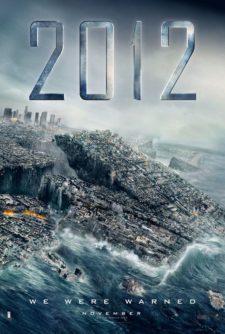
2012
An exciting disaster epic about family, sacrifice, and second chances.
Should You Watch It?
If you want a large-scale disaster movie with genuine emotional urgency, 2012 delivers. Its special effects create real chaos, while the cast brings desperation and feeling to a story about a family trying to survive the destruction of the world.
The film's strongest elements are moral. It honors family, self-sacrifice, compassion, bravery, and making amends before it is too late. It also contains brief Christian and redemptive moments, including references to faith and a positive line quoting the first line of Psalm 23.
The cost is significant. The movie contains plenty of foul language, intense moments, and some troubling treatment of Christian imagery. Teens and adults who can handle those concerns may find the film worthwhile; younger children should be approached with discernment. For teenagers and adults, 2012 is worth the trip.
The Story
NO SPOILERS — WE KEEP THE SURPRISESJackson Curtis is a writer whose devotion to his work has contributed to his divorce. During a family vacation to Yellowstone National Park with his children, Noah and Lilly, Jackson learns that the planet is facing a global catastrophe.
World governments have secretly built enormous arks to preserve a remnant of humanity, along with important people, animals, plants, and artifacts. Jackson, his children, and his ex-wife, Kate, must race toward safety as governments confront an impossible question: who can be saved?
Is It Any Good?
Four stars means 2012 succeeds as entertainment despite some flaws. The special effects are impressive, and the movie does an excellent job creating real chaos, intense excitement, desperation, and urgency. The cast also does a good job evoking real emotion.
The film is not flawless. Some developments seem contrived and clichéd, and the amount of foul language is excessive. Still, the family-centered story, emotional performances, spectacular destruction, and moral conflicts make this an effective disaster movie.
The Worldview
2012 presents the end of the world through a scientific and speculative disaster framework tied to the Mayan calendar. The film is also a modern-day equivalent to the story of Noah’s Ark: multiple arks are built, and animals are brought aboard, presumably two by two. The movie includes some Christian, redemptive moments, such as references to faith, bravery, compassion, self-sacrifice, and the first line of Psalm 23.
Its strongest beliefs concern family and selflessness. The characters face moral conflicts over who deserves rescue, and the film criticizes selfishness and greed in the selection process. It also emphasizes abandoning trivial disputes and making amends before it is too late. Several characters choose sacrifice so that others may live.
The film departs from a biblical worldview by treating predictions based on the pagan Mayan calendar as part of its premise, even though such predictions have no truth. It includes two Buddhist monks and destroys two Christian monuments, including the Vatican and a statue of Jesus. The film also suggests that nature may determine who survives, rather than presenting humanity as accountable to God.
The Bible gives a different hope for the world's end: Jesus Christ will return to judge the living and the dead and will make all things new. “He will wipe away every tear from their eyes, and death shall be no more” (Revelation 21:4).
The Content Guide
The specifics — spoilers included by nature — so you can judge for your own family.
Content Summary
Strong moral worldview with some Christian, redemptive moments including some allusions to Noah’s ark, a positive reference to the first line of Psalm 23, and a couple other nods to Christian faith, but with some silly, false predictions regarding the pagan Mayan calendar and two characters are Buddhist monks, plus two Christian icons are destroyed, including the Vatican and a statue of Jesus, but the filmmakers reportedly were too afraid to destroy any Muslim artifacts, which seems terribly politically correct; at least 21 obscenities and 14 profanities, includingb several strong ones; plenty of intense action violence with scenes of entire cities destroyed and near escapes; a mention of a woman sleeping with one man while dating another and some light kissing; upper male nudity; social drinking; no smoking; and, vast depiction of selfishness and greed with regards to the selection of who gets a seat on the arks leaving Earth, plus a crack appears between the hands of God and Adam in the Sistine Chapel ceiling, symbolically suggesting that God’s life-giving support of Man has been withdrawn somehow.
Talk About It
Questions for the drive home, the dinner table, or the youth group.
The film places family above old disputes and personal grievances. What relationships in your life need forgiveness or reconciliation before it is too late?
Ephesians 4:31–32 · Matthew 5:23–24Several characters sacrifice their own safety for others. What does Christian self-sacrifice look like in ordinary life?
John 15:13 · Philippians 2:3–4The ark raises the question of who deserves to be saved. How does the Bible describe the source of salvation?
Ephesians 2:8–9 · Titus 3:5The movie imagines the world's destruction through the Mayan calendar. Where should Christians place their confidence when thinking about the end of the world?
Matthew 24:36 · Revelation 21:1–4The Final Word
2012 offers spectacular disaster filmmaking, real emotion, and a strong call to family, compassion, and selflessness. Its profanity, intense moments, and treatment of Christian monuments require discernment. For teenagers and adults, WORTH THE TRIP — TEENS AND ADULTS. For younger viewers, consider something else.