
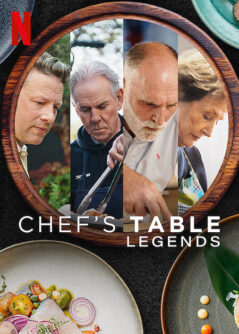
CHEF’S TABLE: LEGENDS: Episode 1.1: “Jamie Oliver”
A beautifully made rags-to-riches story — strictly for grown-ups.
Should You Watch It?
If you're an adult who loves a well-told story about someone finding purpose, this episode delivers. Jamie Oliver's rise from a struggling, dyslexic kid in his father's pub to a chef using his fame to teach children to cook and eat well is genuinely moving, and it's shot and assembled with real craft.
The cost is the language. Eleven obscenities, five of them "f" words, run through the hour — enough that Movieguide flags extreme caution. There's also a mild strain of self-focus in how Jamie talks about his own ambitions, even while pursuing generous goals.
For adults, this is a rewarding hour about mentorship and healthy living. For families, the profanity makes it a pass. Watch it yourself; keep the kids elsewhere.
The Story
NO SPOILERS — WE KEEP THE SURPRISESLong before he was a household name, Jamie Oliver was a dyslexic kid who struggled in school but came alive in his father's pub kitchen. This episode traces how a chance encounter with a BBC film crew turned into a hit cooking show, a bestselling cookbook, and a mission far bigger than recipes: teaching a new generation to find joy in cooking and eating well.
Is It Any Good?
Four stars, and here's what earns them. The episode is, in the reviewer's words, "incredibly well made," with strong production values throughout. The one rough patch is the opening: old footage is stitched together with jarring editing and mismatched music cuts. Once past the intro, though, the storytelling settles into something genuinely entertaining and well put together.
The episode's moral center is its real strength — Jamie's drive to help struggling young people and teach healthier eating comes through clearly. The one craft-adjacent wrinkle worth naming: Jamie's own narration leans self-focused even while describing generous work, which the source reads as a mild thematic tension rather than a filmmaking flaw.
The Worldview
This episode's moral center is worth celebrating. Jamie Oliver's driving purpose — helping vulnerable young people who struggle the way he did, and teaching the next generation to eat and cook well — reflects real, biblical concern for the vulnerable and for future generations. There's even a small note of light Christian content: Jamie says cooking "saved him," and that experience is what pushes him to give back.
Alongside that, the episode carries a strain of light Romantic values — Jamie is shown pursuing his own wants and desires even as he does good, a self-focus the reviewer notes without condemning. The episode also wades into political territory, showing Jamie's efforts to secure British government funding for school lunch programs, including meetings with former Prime Minister Tony Blair, who is portrayed as supportive of Jamie's vision. The documentary is also notably vague about why Jamie eventually had to sell his restaurants — a gap in candor rather than a moral failing, but a gap nonetheless.
Underneath the ambition and the setbacks is a simple, good longing: to take something you were given — a love of good food, a hard-won skill — and hand it to those who have less. Scripture names that instinct plainly: "Freely you have received, freely give" (Matthew 10:8).
The Content Guide
The specifics — spoilers included by nature — so you can judge for your own family.
Content Summary
<p class="p1"><span class="s1">(BB, C, Ro, LL, V, A, D, M):<span class="Apple-converted-space"> </span></span><b>
Dominant Worldview and Other Worldview Content/Elements
</b><span class="Apple-converted-space"> </span>Strong moral worldview reflecting biblical values, including wanting to help vulnerable young people having trouble in school and helping future generations learn to eat more healthy, with some light Christian content where famous chef says cooking “saved him” and made him desire to help other people, especially the vulnerable and future generations, mixed with some light Romantic values about dealing with emotional issues; <b>
Foul Language
</b><span class="Apple-converted-space"> </span>11 obscenities (including five “f” words), one light profanity, a few bleeped obscenities in a recorded TV program, the word dunce is mentioned, chef says he “made the Bible for school food,” and there’s talk about a TV series called THE NAKED CHEF, a double entendre, because the program featured a young chef trying to “strip” cooking to its “bare” essentials to show people how to cook delicious meals without using a bunch of pots and pans; <b>
Violence
</b><span class="Apple-converted-space"> </span>No violence against humans, but there are examples of people cutting, chopping, slapping, and smashing food/ingredients (such as dough, meat, veggies, etc.); <b>
Sex
</b><span class="Apple-converted-space"> </span>No sex scenes or sexual immorality, but there are a few instances of a couple (dating at the time, but would eventually marry) kissing, hugging and holding hands, plus instances of a man with his arm around his friend (a man) and the man dances with multiple women during a party montage; <b>
Nudity
</b><span class="Apple-converted-space"> </span>No nudity; <b>
Alcohol Use
</b><span class="Apple-converted-space"> </span>Comments about wanting to run/work at a pub, one instance of cooking with white wine, a few instances of people holding and drinking alcoholic beverages such as champagne, but viewers don’t see much drinking; <b>
Smoking and/or Drug Use and Abuse
</b><span class="Apple-converted-space"> </span>An instance of smoking tobacco; and, <b>
Miscellaneous Immorality
</b><span class="Apple-converted-space"> </span>One example of reporters “attacking” Jamie Oliver by writing critical articles about him, and documentary is vague about why the featured chef had to sell all his restaurants.</p>
Talk About It
Questions for the drive home, the dinner table, or the youth group.
Jamie says cooking "saved him" after struggling in school. What has God used in your own life to give you purpose you didn't expect?
Jeremiah 29:11Jamie takes something he loves and uses it to help struggling teenagers find their footing. What gifts has God given you that you could hand to someone who needs them?
Matthew 10:8 · 1 Peter 4:10The episode admits Jamie's ambitions are partly about his own wants, even while doing good for others. Can you serve people well and still be chasing your own desires at the same time? How do you tell the difference?
Philippians 2:3–4The documentary stays vague about why Jamie's restaurants failed. Why do you think stories about success often skip over the hard parts of failure?
Proverbs 12:19The Final Word
Jamie Oliver's story is a genuinely good one — a struggling kid who turned a hard-won skill into a mission to help others. Watched with adult eyes, it's four stars of well-made, purposeful television. But the language means this one isn't for the family couch. Our answer stands: worth the trip — adults only. Looking for something the whole family can watch together? Start with our latest family-friendly picks.

