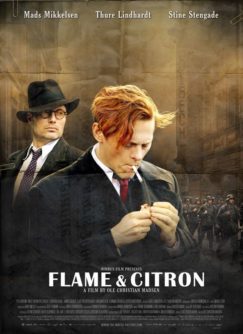
FLAME & CITRON
A gripping Danish war drama best reserved for discerning adults.
Should You Watch It?
FLAME & CITRON offers a gripping story about two Danish Resistance fighters who confront evil, betrayal, and the moral cost of killing during World War II. Its strongest material comes from the questions it raises: Is killing justified in war? What happens when supposed allies may be traitors? How should a person act when motives and loyalties are unclear?
But the film does not resolve those questions through God or Scripture. Its ending is tragic and ambiguous, and the movie includes much bloodshed, with assassinations shown clearly and often in close-up. One graphic sex scene between an unmarried couple adds another serious concern.
Because the film is only moderately successful as entertainment and carries −2-level content, watch it at home only if you are a discerning adult prepared to discuss its moral confusion and graphic material.
The Story
NO SPOILERS — WE KEEP THE SURPRISESDuring World War II, Flame and Citron are two friends who join the Danish Resistance against occupying Nazi forces. Following orders from their boss, they assassinate high-ranking German officers and Nazi supporters.
As Flame becomes involved with a woman whose loyalty is uncertain, the friends discover that their targets may not be who they thought. Their mission becomes a struggle to identify evil, trust their allies, and live with the consequences of their actions.
Is It Any Good?
Two stars means FLAME & CITRON is gripping but substantially flawed. Its intriguing plot is loosely based on two real Danish Resistance fighters, and its questions about war, loyalty, and moral responsibility can provoke thoughtful conversation.
The film also has plot holes. Flame’s bright red hair makes him conspicuous in a town where no one else has that feature, yet the Nazis never discover his identity even while seeking a red-haired assassin. The ambiguous ending may be intentional, but the film never reaches clear moral conclusions or fully reveals the truth behind the characters’ actions.
The Worldview
FLAME & CITRON presents a strong humanist worldview with a solid moral center. Flame and Citron wrestle with killing in wartime and recognize a difference between killing Nazis and killing their own allies. The story also portrays Citron refusing a grocer’s money while taking groceries to feed his family, showing that he does not want to see himself as a criminal.
The film includes a positive Christian reference when a character says the Lord’s Prayer while thinking he is about to be shot. Yet the characters struggle to determine morality without reference to God or Scripture, and the ending leaves betrayal, motives, and responsibility unresolved. The movie treats moral questions seriously but does not provide a firm foundation for answering them.
The film’s concern with guilt and the need for moral clarity points beyond human judgment. Scripture says, “Your word is a lamp to my feet and a light to my path” (Psalm 119:105).
The Content Guide
The specifics — spoilers included by nature — so you can judge for your own family.
Content Summary
Strong humanist worldview with a solid moral center as characters wrestle with killing in the context of war and a positive Christian/biblical reference as character says the Lord’s Prayer when he thinks he’s about to be shot, but movie’s ending is ambiguous; five obscenities and two profanities; very strong violence includes multiple, graphic instances of characters being shot with much blood; one scene of depicted sexuality; upper male nudity; much drinking of alcohol in pubs; constant smoking; and, betrayal, deception, stealing groceries to feed family, and some other moral ambiguities.
Talk About It
Questions for the drive home, the dinner table, or the youth group.
When, if ever, do people believe violence is justified in war? What limits does Scripture place on human vengeance and justice?
Romans 12:19 · Romans 13:1–4The characters struggle to know whom they can trust. How can Christians pursue truth when motives and loyalties are unclear?
Proverbs 12:22 · Ephesians 4:25Citron takes groceries to feed his family but refuses the grocer’s money. What does this moment suggest about conscience, need, and wrongdoing?
Proverbs 30:8–9 · Ephesians 4:28The film raises questions about guilt but does not resolve them through God or Scripture. Where does the Bible say moral clarity and forgiveness come from?
Psalm 51:10–12 · 1 John 1:9The Final Word
FLAME & CITRON is gripping and morally provocative, but its graphic violence, sexual content, smoking, drinking, and unresolved worldview make it unsuitable for children and young teens. For discerning adults, watch it at home rather than making it a family outing: WAIT FOR HOME — ADULTS ONLY. For gentler choices, see.