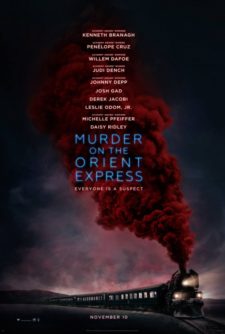
MURDER ON THE ORIENT EXPRESS (2017)
A dazzling mystery for adults, weakened by its troubling moral conclusion.
Should You Watch It?
This is the rare studio mystery that feels like a major cinematic event. Kenneth Branagh’s direction and magnetic performance as Hercule Poirot work beautifully with an all-star cast, stunning imagery, a magnificent score, and a screenplay with real emotional and moral resonance.
The film takes murder, vengeance, forgiveness, and justice seriously. Its treatment of a righteously vengeful murder makes viewers feel the anguish of taking a human life, regardless of how evil the victim was. But the ending weakens the movie’s moral foundation: relativism triumphs over the truth and justice the mystery promises to uncover.
Adults who appreciate elegant, serious filmmaking may find this worth seeing. For families with children or young teens, the content and moral conclusion make this a poor choice. The practical answer: adults may take the trip, but this is not a family movie.
The Story
NO SPOILERS — WE KEEP THE SURPRISESFamed detective Hercule Poirot, grieving his wife’s death, accepts a friend’s offer to travel from Istanbul to Europe aboard the luxurious Orient Express.
A dozen unusual passengers surround him, including an actress facing fading glory, an opinionated doctor, and a nervous missionary. When a boorish passenger with a shady past is found stabbed to death—and the train is trapped by an avalanche—Poirot must determine which of his fellow travelers is hiding the truth.
Is It Any Good?
Four stars means this is outstanding entertainment with genuine artistic achievement. Branagh holds the screen magnetically as Poirot, while the all-star cast delivers vivid performances. The screenplay gives the familiar mystery emotional and moral resonance rather than treating it as mere puzzle-solving.
The film’s imagery is stunning, and Patrick Doyle’s magnificent score adds a tragic undertone to the story’s most painful revelations. Haris Zambarloukos creates scenescapes that look like Thomas Kincaid paintings come to life. Shot with the option of 70mm presentation, the result is dazzling, alternately fun to watch and hard to shake.
The Worldview
The film takes truth, justice, sin, judgment, and forgiveness seriously. Its murder mystery asks what justice should look like when a villainous victim has caused devastating harm. Overt Christian and biblical elements include talk of sin, a priest in the opening sequence, a Christian missionary among the passengers, and forgiveness playing a key role in the climax. The film also includes a Muslim imam in the opening sequence and allusions to being judged by a jury of one’s peers.
The movie understands that murder remains morally weighty even when the victim is evil. Its tragic treatment of vengeance acknowledges the pain carried by those involved. Yet the ending turns away from the moral logic built earlier, allowing relativism to undermine truth and justice. That antinomian conclusion introduces false theology and leaves the film’s moral vision weaker than its questions deserve.
The film’s central longing is for justice that can reckon honestly with evil and suffering. Scripture says, “Let justice roll down like waters, and righteousness like an ever-flowing stream” (Amos 5:24).
The Content Guide
The specifics — spoilers included by nature — so you can judge for your own family.
Content Summary
Strong moral worldview involving a murder mystery and pondering what is true justice, with some overt Christian, biblical elements and allusions (including talk of sin, there’s a priest character in the movie’s opening sequence, and one character has become a Christian missionary, plus forgiveness plays a key part in the climax), allusions to being judged by a jury of one’s peers, plus some Romantic elements and some false theology at the end, including an antinomian ending that undermines the morality taught earlier in the movie and there's a Muslim imam character in the opening sequence; eight obscenities ("d" and "h" words), two strong GD profanities and two light exclamatory profanities, plus some coy but not graphic innuendoes and sneers by one playboy character, showing a cavalier playboy attitude toward relationships; some brief strong and light violence includes a couple of gunshots that only graze their victims rather than really hurting them, a couple fistfights that also involve attempts between the antagonists to hit each other with blunt objects, flashbacks to the kidnapping murder of a child, a flashback reveals how the murder occurred implying a series of stab wounds that are not shown as they happen, a corpse is shown very bloody with a chest cavity opened from afar and above, a woman pulls a gun on herself, but it has no bullet when she pulls the trigger, references to the murder of a 3-year-old girl that greatly affected her family and those around her, and the murder of a villainous victim is shown as still having a devastating effect on the people involved; no depicted sex, but man is with what is revealed to be a prostitute while making wisecracks implying they’re fornicating; no nudity; social drinking of alcohol shown throughout this movie set in the 1930s; some occasional cigarette smoking and a character seems addicted to barbiturates because of past trauma; and, lots of deception and duplicity among many characters to hide the truth about a murder from a private detective and the authorities.
Talk About It
Questions for the drive home, the dinner table, or the youth group.
The film asks what true justice looks like when terrible wrongs have been committed. How should Christians pursue justice without taking vengeance into their own hands?
Romans 12:19 · Micah 6:8Several characters hide the truth behind deception and duplicity. Why does truth matter even when telling it may be painful or costly?
Ephesians 4:25 · John 8:32Forgiveness plays an important role in the climax. How is biblical forgiveness different from pretending that evil never happened?
Colossians 3:13 · Romans 12:17–21The ending places relativism above truth and justice. What does Jesus say about truth, and why does that matter when people disagree about right and wrong?
John 14:6 · Isaiah 5:20The Final Word
MURDER ON THE ORIENT EXPRESS is dazzling, moving, and beautifully made. Its strong performances and moral questions make it compelling for adults, but its violence, profanity, and relativistic ending keep it away from children and young teens. Our answer is WORTH THE TRIP — ADULTS ONLY. For family viewing, choose something else.