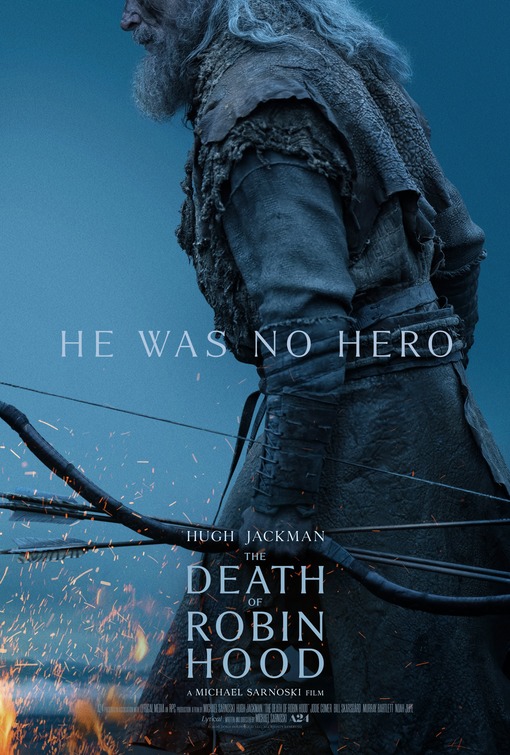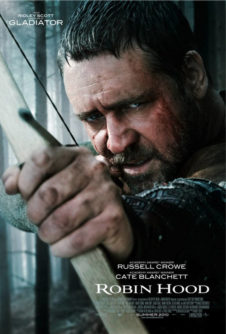
ROBIN HOOD
A competent, morally serious legend clouded by revisionist history.
Should You Watch It?
This Robin Hood has real strengths. It presents liberty, private property, loyalty, patriotism, Christian charity, and resistance to oppressive taxation. Its echoes of the Magna Carta connect the legend to principles that helped shape England and the United States.
But the film also works against its own moral center. It portrays Muslims as defenseless victims in brief moments, includes a line that sounds socialist and utopian, and allows some lying and deceit to go unrebuked. Strong medieval action violence, profanity, sexual innuendo, alcohol use, and drunkenness add further concerns.
The answer is clear for families: adults with discernment may find enough positive content to make the trip worthwhile, but children and young teens should not watch it.
The Story
NO SPOILERS — WE KEEP THE SURPRISESIn 1199, Robin Longstride returns to England after fighting in France. After encountering a dying knight, Robin assumes the man’s identity and carries his sword and the king’s crown back to England.
At the knight’s estate, Robin finds Marion facing poverty, heavy taxation, and an uncertain inheritance. Meanwhile, an English traitor works with secretly landed French troops to prepare an invasion. Robin, Marion, Friar Tuck, and others are drawn into defending the people and England.
Is It Any Good?
Three stars means this is a competent film with worthwhile moments, though its strengths are limited by serious flaws. The movie offers fun action and a compelling connection between Robin Hood’s legend and the history of England.
The effort to add historical realism to a mythical legend makes the story overly serious and complicated. The filmmakers telescope complex history into a two-hour movie, requiring significant revisions to fit the legend into that setting. Earlier Hollywood versions were more entertaining and cinematically pleasing, according to the source review.
The Worldview
The film presents a strong Christian and moral framework alongside conservative, patriotic values. Robin Hood and Marion are shown as chivalrous Christians who pray. The story supports liberty over oppression and high taxation, loyalty, patriotism, helping the needy, private property, and Christian charity. Robin’s statement that “Every Englishman’s home is his castle” expresses its defense of property rights.
The film also contains serious contradictions. Its treatment of a Crusades-era incident presents Muslims as innocent victims while leaving out historical background the source review considers important. The end credits repeat that perspective. A final comment about everyone sharing equally in nature’s fruits sounds socialist and conflicts with the film’s earlier defense of liberty and private property.
Robin also lies to return to England and is asked to lie to help Marion. These actions create moral relativism, though the film balances them with repeated condemnations of oppression, treason, theft, and unjust taxation.
The film’s concern for justice and the oppressed points toward a biblical truth: “But let justice roll down like waters, and righteousness like an ever-flowing stream” (Amos 5:24).
The Content Guide
The specifics — spoilers included by nature — so you can judge for your own family.
Content Summary
Strong, but slightly confused, Christian, moral worldview with some strong conservative, implied capitalist values such as liberty, private property (Robin Hood says every Englishman’s home is his castle) and admonishments not to tax the people so high, very strong patriotic elements, and some overt politically correct revisionist history and liberal politics, including a line of dialogue at the end that sounds Communistic, socialistic and a couple brief, ultimately false Pro-Islamic elements, one at the beginning of the movie and one over the end credits, that turn Muslims into defenseless victims; two or three obscenities (one of which is in French but not translated), three strong profanities and a couple light profanities; strong medieval action violence such as arrows hit soldiers, arrows pierce a few necks, sword fights, battles between medieval armies, men and people catch on fire as castles, fortresses and villages are besieged, villain’s soldiers try to burn civilians alive in a structure but fail, soldiers knocked off horses, people in danger of drowning, etc.; implied fornication in two scenes/shots and a few lightly crude innuendoes and glances; upper male nudity, out of focus rear male nudity, and some female cleavage; alcohol use and drunkenness (including Friar Tuck clearly likes his alcohol-infused mead); no smoking; and, treason, stealing and high taxes but mostly rebuked, but some lying and deceit are not rebuked.
Talk About It
Questions for the drive home, the dinner table, or the youth group.
Robin defends liberty against oppressive taxation. What responsibilities come with freedom, and how should leaders treat the people they govern?
Galatians 5:13 · Romans 13:3–4The story includes Christian charity toward people in need. What does Scripture require of us when we see neighbors facing hunger or poverty?
James 2:14–17 · 1 John 3:17–18Robin lies in several situations, even while doing some good things. Can a good goal make a dishonest action right?
Ephesians 4:25 · Proverbs 12:22The film connects justice with England’s liberties. What does biblical justice require beyond resisting unfair rulers?
Micah 6:8 · Amos 5:24The Final Word
Robin Hood offers adults a morally serious adventure with genuine Christian, patriotic, and liberty-minded values. Its revisionist history, contradictory politics, moral ambiguity, and strong content make it unsuitable for children and young teens. For discerning adults, the answer is WORTH THE TRIP — ADULTS ONLY. For a family alternative, see.