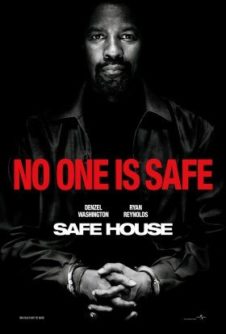
SAFE HOUSE
Sacrificial action with moral weight — for discerning adults.
Should You Watch It?
SAFE HOUSE is absorbing rather than great. Its two dynamic male leads carry a tense spy thriller filled with effective action, paranoid momentum, and questions about right and wrong in the spy and killing business.
The film also offers moral, patriotic, and redemptive elements, especially through its themes of sacrifice for the greater good. Director Daniel Espinosa handles the violence with some restraint, keeping the worst killings off-camera. But the movie still contains plenty of very strong action violence, some strong foul language, and an implied sexual relationship.
If you are a discerning adult or a mature, media-wise older teenager who can handle those concerns, SAFE HOUSE is worth considering. For children and young teens, choose something else.
The Story
NO SPOILERS — WE KEEP THE SURPRISESTobin Frost, a former master CIA agent, has apparently spent a decade selling secrets to enemy nations. Now he is running for his life through Cape Town, South Africa, pursued by assassins because he possesses a secret list of terrorist spies in the CIA.
Frost turns himself in at the U.S. consulate, believing he will be safe. Instead, officials take him to a safe house run by Matt Weston, a bored field operative. When the safe house is attacked, the two men flee together and must decide whether they can trust each other.
Is It Any Good?
Three stars means SAFE HOUSE is absorbing, tense, and skillfully made, but not great. The action is effective, and director Daniel Espinosa brings class and restraint to his American directing debut. The visual style is distinctive, using jump cuts and flashy camera moves to heighten the paranoid tension.
The film’s two dynamic male leads also give the thriller energy. Its strongest moments come when the action is joined to discussions of right and wrong, sacrifice, and responsibility. Still, the movie remains a conventional action thriller rather than a fully exceptional one.
The Worldview
SAFE HOUSE presents a light mixed pagan worldview alongside strong patriotic and redemptive elements. Its moral center is the idea that someone may offer his life for the greater good. The film also raises questions about corruption, surveillance, loyalty, and whether government power is being used rightly.
The movie’s moral philosophizing is one of its strengths. It treats sacrifice as meaningful and gives its spy story a relatively pro-American outlook. It also emphasizes trust and the possibility of doing the right thing inside a corrupt system. At the same time, the story includes lying, double-crossings, and metaphorical back-stabbings, while its Romantic elements include an implied relationship between a main character and his live-in girlfriend.
The film’s central longing is for people to choose truth and sacrifice over self-preservation. Scripture gives that kind of love its clearest shape: “Greater love has no one than this, that someone lay down his life for his friends” (John 15:13).
The Content Guide
The specifics — spoilers included by nature — so you can judge for your own family.
Content Summary
Light mixed pagan worldview with some strong and patriotic elements and redemptive content extolling offering up one’s life for the greater good, but with some strong Romantic elements; 13 or 14 obscenities (including one or two “f” words) but no profanities; very strong and strong action violence includes numerous fistfights, kickings, beatings, stabbings, point blank shootings; male lead is seen shirtless in a shower and while getting out of bed next to his girlfriend, whom he’s verbally described as living in cohabitation; upper male nudity; brief casual alcohol use in a couple scenes; no smoking or drugs; and lying, double-crossings, metaphorical back-stabbings.
Talk About It
Questions for the drive home, the dinner table, or the youth group.
The film presents sacrifice for the greater good as morally important. What makes a sacrifice loving rather than merely dramatic?
John 15:13 · Philippians 2:3–4The story raises questions about right and wrong in espionage, killing, and surveillance. How should Christians think about power, secrecy, and the treatment of people made in God’s image?
Micah 6:8 · James 3:17The two central men must decide whether they can trust each other. What does biblical wisdom say about testing trust while still practicing forgiveness?
Proverbs 14:15 · Colossians 3:13The content includes lying and double-crossings. When is truth-telling especially difficult, and why does Scripture still call us to speak truthfully?
Ephesians 4:25 · Proverbs 12:22The Final Word
SAFE HOUSE offers absorbing action, stylish tension, and a serious moral interest in sacrifice and corruption. Its strong violence, language, and implied sexual relationship make it unsuitable for children and young teens. For discerning adults and mature older teenagers, the answer is WORTH THE TRIP — ADULTS ONLY. For a safer family choice, see.