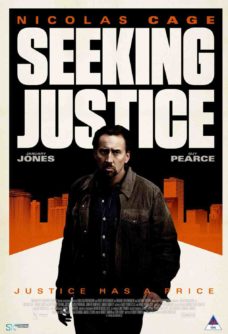
SEEKING JUSTICE
A muddled vigilante thriller that mistakes cynicism for justice.
Should You Watch It?
The answer is no. Seeking Justice is a by-the-numbers B thriller with an illogical plot, uninspired direction, and performances that never give the material the needed intensity. Nicolas Cage appears to be sleepwalking through the film, while January Jones plays his wife with a dispassionate distance.
The movie begins with a potentially serious moral question: can vigilante violence ever provide justice? But its viewpoint shifts from accepting vigilantism, to attacking it, to treating it as simply part of the way things are. That confusion makes the film neither a satisfying thriller nor a clear warning.
The strong language, intense violence, and brief sex scene add further reasons for concern. Skip this one.
The Story
NO SPOILERS — WE KEEP THE SURPRISESWill Gerard is a New Orleans high school English teacher who teaches pacifism. After his wife is raped, a vigilante offers to kill the attacker—but demands that Will kill another sex offender in return.
Will agrees at first, then tries to escape the arrangement. Threats, phone calls, and dangerous demands pull him deeper into a vigilante group whose reach extends into his marriage, work, and freedom.
Is It Any Good?
One star means this film’s weaknesses overwhelm its premise. Seeking Justice is lazy, by-the-numbers filmmaking with an illogical plot and faulty reasoning by characters who repeatedly endanger themselves foolishly.
The digital photography gives the New Orleans setting and underground-justice story an antiseptic tone instead of the needed grittiness. Roger Donaldson’s direction is uninspired. Nicolas Cage gives a downbeat performance that makes him look as though he is sleepwalking, while January Jones is ludicrously dispassionate as his wife.
The Worldview
The film has strong Romantic underpinnings and a heavy revenge theme. It begins with the idea that vigilantism may offer an answer to crime, appears to reject that idea, and then ultimately accepts vigilante justice as part of the way the world works. This creates a confused view of justice rather than a morally coherent one.
The movie includes some mild moral elements as Will tries to resist the idea that vigilantism provides acceptable answers. But the ending undercuts that resistance when police cover up the truth and erase the case involving Will’s fight against the vigilantes. Corrupt police and revenge further muddy the film’s moral framework.
Scripture rejects personal vengeance: “Beloved, never avenge yourselves, but leave it to the wrath of God” (Romans 12:19).
The Content Guide
The specifics — spoilers included by nature — so you can judge for your own family.
Content Summary
Strong but muddled Romantic worldview that accepts vigilante justice then attacks it then accepts it as part of the way things are, with a confused false view of justice, corrupt American police, and some moral elements; 21 obscenities and 10 or more profanities; strong violence includes a rape scene that’s more implied and discussed than depicted, hero’s wife grabbed by an assailant and dragged into her car’s back seat which implies a rape, vigilantes kill the attacker and approach the rape victim’s husband to demand he kill a criminal in return as a fellow act of vigilantism or they will threaten his wife and his livelihood, several people get (some shot in the head), two men fighting fall down an escalator and crash through a glass window, man shown with shard of glass sticking through his neck, a villain is hit hard by a car while chasing the hero amid highway traffic and his body is shown being dragged, foot chase causes numerous cars to swerve or crash, man falls off an overpass into oncoming traffic and his body hits a windshield; briefly depicted sex scene between man and wife in bed; no nudity; alcohol use; no smoking or drugs; and, revenge, vigilante justice not really rebuked, police cover up truth.
Talk About It
Questions for the drive home, the dinner table, or the youth group.
Why is personal revenge different from justice carried out by proper authorities?
Romans 12:19 · Romans 13:1–4What happens when people use a good-sounding goal to justify sinful actions?
Proverbs 14:12 · Romans 3:8How should Christians respond when authorities are corrupt or fail to act rightly?
Micah 6:8 · Psalm 82:3–4What does pacifism require, and how should it be tested against biblical teaching?
Matthew 5:9 · Romans 12:18The Final Word
Seeking Justice has a potentially serious question about revenge and justice, but its lazy filmmaking and muddled worldview overwhelm any moral value. Strong language, violence, and sexual content make the choice still harder. Our answer is clear: SKIP IT. Consider these alternatives instead: