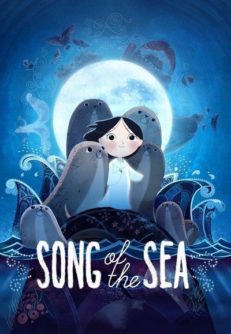
SONG OF THE SEA
A beautiful sea journey with Christian echoes and confusing folklore.
Should You Watch It?
Song of the Sea is a beautifully crafted Irish animated feature with a tender center. Its story follows a brother and sister trying to return to their father, and it ultimately offers redemptive qualities, healed family relationships, and some overtly positive Christian references.
The difficulty is the mixture. Irish folklore, magical creatures, a tragic sea deity, and Christian references do not always fit together clearly. The film also includes light profanities, brief peril, and references to pagan mythology, so younger children may need more guidance than the gentle animation suggests.
If you are choosing for older children or adults, this is a worthwhile trip with discernment. For younger children, choose something clearer and less spiritually confusing.
The Story
NO SPOILERS — WE KEEP THE SURPRISESBen lives with his family in a lighthouse home beside the sea. After his mother’s mysterious disappearance, Ben struggles with his sister Saoirse, who does not talk.
When their grandmother brings the children to live with her in the city, Ben decides they must return to their father. The two children run away and begin a long journey home, encountering magical creatures and uncovering mysteries connected to their family and the sea.
Is It Any Good?
Three stars means this is a strong, worthwhile film with noticeable weaknesses. The animation is beautiful, and the Irish setting, magical journey, and positive family outcomes give the story emotional appeal.
The problem is clarity. The film combines selkies, a fairy world, Mac Lir from Irish folklore, and strong references to Ireland’s Christian heritage. These elements become confusing and do not always seem related to one another. Ben also can be difficult to identify with because of the gruff way he sometimes treats Saoirse.
The Worldview
Song of the Sea presents a mixed worldview. It draws heavily on magical creatures and Irish and Scottish folklore, including selkies, fairy creatures, and Mac Lir, a tragic sea deity in Irish folklore. The story also presents a world in which modern life has rejected both magic and Ireland’s Christian heritage.
At the same time, the film includes positive Christian references in an Irish Catholic context. It refers to Jesus and Mary, shows Christian altars, and includes a “holy well” that looks like a church inside. The story values family reconciliation, and the father ultimately reunites with his children as family relationships are healed.
The film’s central longing is for home and restored family. Scripture also points beyond earthly restoration to the Father’s welcome: “But while he was still a long way off, his father saw him and felt compassion” (Luke 15:20).
The Content Guide
The specifics — spoilers included by nature — so you can judge for your own family.
Content Summary
Mixed pagan worldview about magical creatures from Irish and Scottish folktales, with some positive Christian references in a Irish Catholic context, including references to both Jesus and Mary, including Christian altars and a “holy well” looks like a church inside, plus father reunites with his children and family relationships are healed; three light profanities (including “Oh my God” and a “Dear God”), and boy says, “Jesus, Mary and Joseph” out of frustration; violence includes characters almost drown in the sea, fairytale creatures turned to stone, children threatened; no sex; no nudity; references to alcohol use and going to a bar to meet a friend; pipe smoking; and, brief references to Halloween, children run away, mother leaves family.
Talk About It
Questions for the drive home, the dinner table, or the youth group.
Ben blames Saoirse for their mother’s disappearance. How can grief affect the way we treat the people closest to us?
Ephesians 4:31–32 · Colossians 3:13The children run away because they want to return to their father. What does this story show about the importance of home and family?
Luke 15:20–24 · Ephesians 6:1–4The film combines Christian references with pagan mythology and magical creatures. How can you practice discernment when a story mixes ideas that do not all agree?
1 Thessalonians 5:21–22 · Philippians 4:8Family relationships are ultimately healed. What does genuine forgiveness look like in your family?
Matthew 18:21–22 · Ephesians 4:32The Final Word
Song of the Sea is lovely to look at and sincere about family healing, but its mixture of folklore, pagan mythology, and Christian references can be confusing. For older children and adults who can watch with discernment, it is WORTH THE TRIP — OLDER CHILDREN AND ADULTS.