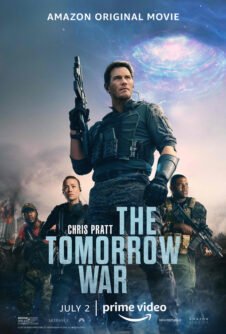
THE TOMORROW WAR
Visceral science fiction with a powerful pro-family heart — for adults only.
Should You Watch It?
This is a superb science-fiction thriller with a strong moral center. Once it gets moving, the film delivers visceral action, emotionally powerful and uplifting moments, and funny lines that relieve some of the serious drama and nearly constant danger.
Its best material celebrates family, marriage, sacrifice, reconciliation, second chances, and positive parent-child relationships. The hero’s determination to save his daughter gives the second half a powerful emotional drive. The film also values individual action when institutions fail.
But the R rating is earned. The movie contains very strong violence, including soldiers being pierced, crushed, impaled, stabbed, and killed by frightening alien monsters. It also contains extensive foul language, including one “f” word, three GD profanities, and one Jesus profanity.
If you are an adult seeking exciting science fiction with redemptive family themes, watch it with discernment. Do not choose it for children or young teens.
The Story
NO SPOILERS — WE KEEP THE SURPRISESDan Forester is a biology expert and former soldier enjoying life with his wife and nine-year-old daughter when soldiers from the future suddenly interrupt a televised soccer match.
They announce that humanity needs help defeating invading alien monsters. Dan is drafted because of his scientific knowledge and military experience, then sent into the future to retrieve biological material and serum vials that could help create a toxin against the creatures.
Is It Any Good?
Four stars means this is a superb thriller that succeeds as both action spectacle and emotional family drama.
The movie takes a while to get going, but its early scenes establish plot developments that pay off later. Once the action begins, the film offers plenty of visceral excitement, emotionally powerful uplifting moments, and genuinely funny lines. The musical score is sometimes repetitive but often heart-pounding.
The film’s strong moral themes give the action more weight. Its focus on family, restoration, sacrifice, reconciliation, and second chances provides an emotional foundation beneath the nearly constant battles.
The Worldview
The film strongly celebrates family, marriage, restoration, positive parent-child relationships, reconciliation, sacrifice, and second chances. Its redemptive emphasis is especially clear in the hero’s focus on saving his daughter and in the reconciliation between a father and son. Light references to Christmas appear in the opening sequence.
The story also celebrates American individuality. The hero, his estranged father, and three friends decide that the United Nations and the world’s governments cannot be trusted to act with enough strength or competence, so they take action themselves. The film’s worldview is less comfortable when it introduces an environmentalist plot development relying on apocalyptic global-warming claims that the source review calls false and debunked by many scientists examining empirical evidence.
The movie’s central longing is to save and restore family relationships through sacrifice. Scripture says, “Greater love has no one than this, that someone lay down his life for his friends” (John 15:13).
The Content Guide
The specifics — spoilers included by nature — so you can judge for your own family.
Dominant Worldview and Other Worldview Content/Elements
Very strong moral, pro-family worldview celebrates family, marriage, restoration, positive parent-child relationships, a father’s relationship to his daughter, and reconciliation between a father and a son (including the hero is focused on saving his daughter), with some strong redemptive elements promoting second chances and sacrifice, and there are light references to Christmas in an opening sequence, plus story has a Pro-American celebration of the individual against big government and against the United Nations when the hero, his estranged father and three friends decide that the U.N. and the world’s governments can’t be trusted to have the strength and the competence to do the right thing, so they take action to save the world themselves at the end, but story regrettably does have an environmentalist plot development that relies on false apocalyptic global warming theories about global warming melting a large glacier
Foul Language
At least 68 obscenities (mostly “s” words with one “f” word), three GD profanities, one Jesus profanity, two light profanities (one OMG and one “God”), and 9-year-old girl tells her father that scientists discovered an important medicine by looking at some worms and “poop”
Violence
Some very strong violence and lots of strong action violence of soldiers fighting hordes of large, vicious, scary alien monsters that can fling bony spikes to pierce people’s bodies, monsters hurl these spikes in multiple scenes, monsters grab people and impale people with their large claws and chomp people with their large sharp teeth, soldiers’ bodies get crushed and smashed by monsters, soldiers frequently fire automatic weapons at alien monsters, soldiers use weapons to rip off heads of a few monsters, a toxin can cause bodies of monsters to dissolve or explode, humans flung against large objects, two or more characters are stabbed in stomach by monsters, soldiers fall to their deaths, alien monster green blood spews onto some soldiers occasionally, etc.
Sex
One character makes a comical sexual reference about a female celebrity
Nudity
No nudity
Alcohol Use
No alcohol use
Smoking and/or Drug Use and Abuse
No smoking or drugs;
Miscellaneous Immorality
Hero is estranged from his father, but they are reconciled by the end.
Talk About It
Questions for the drive home, the dinner table, or the youth group.
The hero’s love for his daughter drives his sacrifice. What does sacrificial love look like in your family, and how does Jesus define it?
John 15:13 · Philippians 2:3–4The film values reconciliation between a father and son. What makes reconciliation difficult, and what first step might reflect Christ’s forgiveness?
Ephesians 4:31–32 · Colossians 3:13The story portrays second chances as opportunities for restoration. Where do you need perseverance, humility, or a willingness to begin again?
Lamentations 3:22–23 · Philippians 3:13–14The characters act when institutions seem unable to solve the crisis. How should Christians balance personal responsibility with respect for authority and wise cooperation?
Romans 13:1 · Galatians 6:5The Final Word
This is thrilling, funny, and emotionally grounded in the value of family, sacrifice, reconciliation, and second chances. Its strong profanity and brutal monster violence make it unsuitable for children and young teens. For discerning adults, WORTH THE TRIP — ADULTS ONLY. For family viewing, choose something gentler.