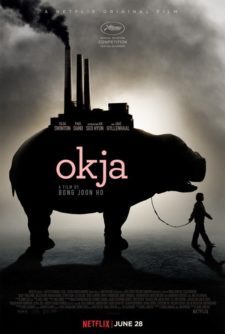
OKJA
A heartfelt giant-pig adventure with adult-only content.
Should You Watch It?
OKJA is an entertaining, action-packed film built around a deeply endearing relationship. Mija’s love for her giant pet pig gives the movie its emotional center, while the story’s themes of love, loyalty, and sacrifice provide genuine moral weight.
That relationship comes at a steep content cost. The film includes strong foul language, extreme violence, heavy bloodshed, and graphic images of pigs being abused and tortured for food. Its humanist, environmentalist, and anti-capitalist worldview also strongly opposes eating meat.
Adults who can handle those elements may find the film moving and worthwhile. Families with children or young teens should choose something else. The practical answer: watch OKJA only if you are a discerning adult prepared for its disturbing content.
The Story
NO SPOILERS — WE KEEP THE SURPRISESMija, a young girl in South Korea, lives with her grandfather and cares for Okja, a remarkable genetically modified super-pig. Ten years earlier, a large corporation created Okja as part of a revolutionary meat-product program.
When the corporation comes to claim its prized animal, Mija refuses to give up her beloved companion. Her determination draws her into a dangerous struggle involving the corporation and animal-rights activists.
Is It Any Good?
Three stars means OKJA is a good, entertaining film with meaningful strengths but serious limitations. Its action is intense and fast-moving, and the relationship between Mija and Okja is sometimes heartfelt and endearing.
The giant pig is a CGI creature some have compared to E.T., but this is far from a relatively family-friendly friendship story. The movie uses violence, bloodshed, and graphic animal abuse to make its point, which may overwhelm the emotional connection at its center.
The Worldview
OKJA has a dominant humanist, environmentalist, anti-capitalist worldview. A large corporation creates giant super-pigs to dominate the meat industry and gain more riches, while the animal-rights activists oppose that system. The film strongly argues against eating meat.
The movie removes or challenges the corporation’s profit-driven treatment of animals, but it does so through a primarily humanist rather than explicitly biblical framework. Its strongest moral elements are the principles of love, loyalty, and sacrifice shown through Mija’s relationship with Okja, including Mija’s willingness to risk her life for her pet.
The film’s concern for suffering animals can connect with Scripture’s call to treat creatures with care: “Whoever is righteous has regard for the life of his beast, but the mercy of the wicked is cruel” (Proverbs 12:10).
The Content Guide
The specifics — spoilers included by nature — so you can judge for your own family.
Content Summary
Strong humanist, politically correct, environmentalist worldview with anti-capitalist sentiments where a large corporation creates a handful of giant super-pigs to dominate the meat industry and gain more riches, and CEO of corporation has no change of heart and lets one pig live only in exchange for gold, with some moral, redemptive elements extolling principles of love, loyalty and sacrifice through a young girl’s relationship with a large genetically produced pig, and girl risks her life for her pet numerous times; at least 39 obscenities (including 27 or so “f” words); too much extreme and disturbing violence, and strong violence includes girl’s large pet is brutalized (including a disturbing scene where the animal is used as a breeding pig off-screen), other disturbing images of animal abuse, dead giant pigs hang from a ceiling, pigs caged in unsanitary conditions with nowhere to run, sleep or relax, frightening image of a pig strapped down to a machine to be used for meat products, men fight and punch each other on streets, characters hit objects as they try to escape or are chased, girl ends up with a black eye and bloody scratches on her head, heavy bloodshed, images of dead and bloody pigs in factory, man drinks blood from a dead pig, villains use guns and explosives; no human sexual content but there’s a scene of implied animal breeding practices
Talk About It
Questions for the drive home, the dinner table, or the youth group.
Mija risks her life for a beloved animal. What do love and sacrifice look like in your own relationships?
John 15:13 · Philippians 2:3–4The corporation treats living creatures as products for profit. How should Christians think about stewardship and responsibility?
Genesis 1:28 · Proverbs 12:10The film strongly opposes eating meat. How can you discuss a disputed issue with conviction while showing grace to believers who reach different conclusions?
Romans 14:1–4 · Romans 14:13Animal activists are willing to do almost anything to protect animals. When does zeal for a good cause need to be governed by wisdom and love?
James 1:19–20 · 1 Corinthians 13:1–3The Final Word
OKJA offers an entertaining, heartfelt bond between a girl and her giant pet pig. But strong language, extreme violence, bloodshed, disturbing animal abuse, and an intense worldview make it unsuitable for children and young teens. For discerning adults, it is WORTH THE TRIP — ADULTS ONLY. For family viewing, choose another title.