PRINCESS POWER: Episodes 3.1 thru 3.3
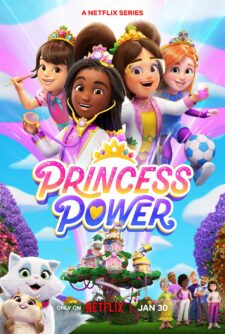
Four little princesses, one sweet promise: help those in need.
Should You Watch It?
Here's the honest picture. These first three episodes of Season Three are exactly what you'd hope a small child's cartoon would be: bright, warm, well-made, and built around a promise to "help those in need." There's no violence, no foul language, nothing to flinch at. If you're choosing what to put on for a little one, these three are a genuine gift.
The catch isn't in the episodes we're reviewing — it's next door. Later in this same season, the series includes a same-sex couple, and Episode Five features a same-sex wedding between two women. That's a conversation many families aren't ready to have with a preschooler, and Netflix makes it easy to keep rolling.
So the practical answer: these three episodes are worth watching, and worth enjoying — just stay at the remote and decide episode by episode rather than handing over the whole season.
The Story
NO SPOILERS — WE KEEP THE SURPRISESKira, Bea, Rita, and Penny are four young princesses who rule friendly little "fruitdoms" — and who keep a "pinky tea promise" to help those in need.
In Episode One, a coronation ceremony hits a snag when their fruit silo is damaged and the seeds run short, sending the princesses toward a mysterious Cave of Sparkle Seed Secrets. In Episode Two, someone — or something — is stealing raspberries from Princess Rita's berry patch, and two local girls need those berries for a good cause. In Episode Three, fifty blueberry pies must reach a special event, and everything that can go wrong does.
Is It Any Good?
Three stars, and they're earned by craft. The production values are high, the animation is bright and colorful, and every episode delivers a song. Each installment sets up a clean, self-contained problem — a broken silo, a berry thief, a pie disaster — and lets the princesses solve it with creativity and teamwork.
That structure is the show's strength: a small child gets a satisfying challenge and a satisfying resolution every time, wrapped in humor and music they'll want to hum along with. It's not aiming at grown-ups, and it doesn't need to. For its intended audience, it does its job with polish and charm.
The Worldview
What these three episodes celebrate is genuinely good, and worth naming first. The whole engine of the show is helping people. Every episode turns on the princesses' promise to "help those in need," and the lessons that follow are ones any Christian parent would gladly reinforce: work together, don't give up, care for your neighbor. Episode One even includes a small but real picture of the gospel's grammar — after the princesses slip away without telling their parents, they return, apologize, and are forgiven.
Those are strong things to hand a young child, and this series hands them warmly.
The caution lives in the wider season. The show carries politically correct content, and later Season Three episodes include a same-sex couple — Episode Five stages a same-sex wedding between two women. Nothing of that appears in Episodes 3.1 through 3.3, which is why these three earn a clean bill; but a parent choosing this series should know what's coming and decide accordingly.
At its best, the show keeps circling one lovely instinct: notice the person in trouble and go help. Scripture points to the same instinct and roots it deeper — "let us not grow weary of doing good" (Galatians 6:9), and let love for neighbor be as real as love for ourselves (Mark 12:31).
The Content Guide
The specifics — spoilers included by nature — so you can judge for your own family.
Dominant Worldview and Other Worldview Content/Elements
Strong moral worldview, with each episode centered around helping someone in need and working together, plus Episode 3.1 has a redemptive scene of forgiveness
Foul Language
No foul language
Violence
Light violence such as a princess drops 50 pies she’s transporting and a machine spews out 50 replacement pies so fast that they fall to the ground
Sex
No sex or sexual immorality in Episodes 3.1 to 3.3, but a later Season Three episode has a same-sex wedding between two women
Nudity
No nudity
Alcohol Use
No alcohol use
Smoking and/or Drug Use and Abuse
No smoking or drugs;
Miscellaneous Immorality
In Episode 3.1, the princesses leave their island without telling their parents, but apologize when they return and are forgiven.
Talk About It
Four questions for the couch, the commute, or the couple bingeing it together.
The princesses make a "pinky tea promise" to help those in need. Who around us needs help right now — and what would keeping that kind of promise look like for our family?
Galatians 6:9–10 · James 2:15–16In Episode One, the princesses leave without telling their parents, then say sorry and are forgiven. Why is saying sorry so important, and how does God treat us when we come back to Him?
1 John 1:9 · Luke 15:20The princesses solve big problems by working together instead of alone. When is it hard to ask for help — and why did God make us to need each other?
Ecclesiastes 4:9–10When the pies fall and the plans fall apart, the princesses don't give up. How do we keep trying when things go wrong?
Galatians 6:9The Final Word
These three episodes are the good stuff: colorful, kind, funny, and built on a promise to help people. That's why they're worth watching — with one hand on the remote, because the season around them isn't as clean as these three are. Enjoy them together, and keep choosing episode by episode. Want more to fill the queue? Try our latest family-friendly picks.