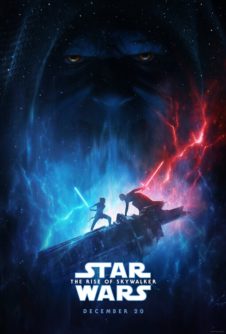
STAR WARS: THE RISE OF SKYWALKER
Spectacular space opera with powerful hope—and serious worldview concerns.
Should You Watch It?
This is a spectacular, emotional conclusion filled with acts of mercy, sacrifice, reconciliation, and hope. The third-act character development is among the stronger writing in the STAR WARS saga, and the climactic conflict gives Rey, Kylo Ren, and Emperor Palpatine genuine emotional weight.
The film’s positive moral content is complicated by its false New Age, pagan worldview. The action violence is substantial, though much of it is presented as science-fiction spectacle. There are also eight obscenities and one brief, gratuitous kiss inserted during a victory celebration.
If you are a discerning adult who can engage those concerns thoughtfully, the film offers worthwhile themes and satisfying entertainment. For children and young teens, choose something else. The practical answer: WORTH THE TRIP — ADULTS ONLY.
The Story
NO SPOILERS — WE KEEP THE SURPRISESThe rebellion faces a renewed threat when Emperor Palpatine, believed to have died years earlier, returns with a fleet of planet-killing Star Destroyers. Princess Leia sends her Jedi apprentice Rey and Rey’s friends to locate the secret Sith base.
Meanwhile, Han Solo and Leia’s son Ben—now called Kylo Ren—has made contact with Palpatine and is pursuing his own plans for Rey and the galaxy. The rebels must find a way to resist the coming Final Order.
Is It Any Good?
Four stars means this is satisfying, engaging filmmaking with spectacular visual storytelling. The movie rises above paint-by-numbers plot mechanics and some serviceable acting to deliver an exciting, emotional ending.
Daisy Ridley, Adam Driver, and Ian McDiarmid help raise the stakes as the final showdown approaches. Mark Hamill gives the story a strong assist, while cleverly edited scenes featuring the late Carrie Fisher add emotional weight. The film has one or two dropped storylines, and the new dynamic among Rey, Finn, and Poe does not duplicate the special chemistry of the original trilogy. Still, the third-act character development is powerful.
The Worldview
The film’s strongest ideas are mercy, sacrifice, reconciliation, repentance, and hope. Mercy helps solve a major plot problem, a son reconciles with his father, and people and aliens rise up against an evil ruler who pursues absolute power and kills even those closest to him. The story’s redemptive and morally uplifting elements give its ending real emotional force.
The central spiritual vision, however, is not biblical. Supernatural power resides not in a Personal God but in a living, impersonal energy called the Force. Trained Jedi can use this power for good or evil, heal people and animals, and perform extraordinary feats. The film also includes Eastern mysticism, including the idea that Jedi bodies using the Light Side simply vanish when they die.
The STAR WARS saga draws on Eastern folklore, New Age ideas, fairy-tale patterns, and space-opera adventure. Its conflict between the Light Side and the Dark Side presents moral choices, but it does so within a dualistic spiritual system rather than a relationship with the God of Scripture. The film’s emphasis on hope is valuable, but biblical hope rests in God’s character and promises: “May the God of hope fill you with all joy and peace in believing” (Romans 15:13).
The Content Guide
The specifics — spoilers included by nature — so you can judge for your own family.
Dominant Worldview and Other Worldview Content/Elements
Strong, somewhat eclectic or mixed, New Age, dualistic pagan viewing supernatural power as residing in a living, impersonal energy “Force” (instead of a Personal God) that, if you get trained in using this “Force,” you can have more and more supernatural power to do good or do evil, and to even heal other people and animals who are wounded, with some Eastern mysticism where the bodies of Jedi Knights using the Light Side of the Force simply vanish when they die, slightly mitigated by strong redemptive, morally uplifting values and content that include sacrifice, mercy solves a major plot problem at one point, son reconciles with his father, resurrection and repentance occur, hope is a major theme in the movie, and people and aliens rise up against an evil selfish wannabe dictator who pursues absolute power over the lives of others, to the point of killing even those closest to him, plus a politically correct lesbian kiss between two women is inserted into a victory celebration to appease hedonists
Foul Language
Eight obscenities (“h” and “d” words with one “a**” word) and no profanities
Violence
Lots of strong and light action violence includes explosions, people battle with science fiction blaster guns and “rifles,” people fight with lightsabers or laser swords, character looks mortally wounded from a lightsaber wound, people use the Force while fighting, characters using the Force make gigantic leaps and jumps while fighting, space ships explode in whole or in part when hit by laser weapons, a planet is destroyed by a super-powerful version of such a weapon by a large spaceship, character is pushed into a chasm by a villain, villain uses Force to attack spaceships and people with electrical, lightning power
Sex
No sex scenes but there’s an image of two women kissing during a victory celebration
Nudity
No nudity
Alcohol Use
Alcohol use in the background in one scene perhaps as heroes walk through an alien bar of some sort
Smoking and/or Drug Use and Abuse
No smoking or drugs;
Miscellaneous Immorality
Nothing else objectionable.
Talk About It
Questions for the drive home, the dinner table, or the youth group.
The film presents hope as a major theme. How is biblical hope different from merely wishing for a better outcome?
Romans 15:13 · Hebrews 6:19Mercy helps resolve a major problem in the story. When has someone’s mercy changed the direction of a conflict in your life?
Micah 6:8 · Ephesians 4:32The story includes reconciliation between a son and his father. What makes reconciliation difficult, and what does God ask of us when reconciliation is possible?
Colossians 3:12–13 · Romans 12:18The Force can be used for good or evil. How does Scripture describe the source of true spiritual power?
2 Timothy 1:7 · Ephesians 6:10The Final Word
This is an exciting, emotional finale with meaningful themes of mercy, sacrifice, reconciliation, and hope. Its New Age worldview and mature content require thoughtful judgment. For discerning adults, WORTH THE TRIP — ADULTS ONLY. For younger viewers, consider these.