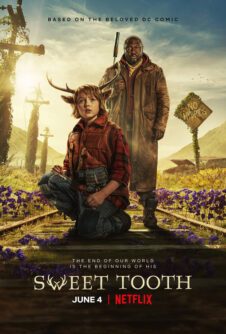
SWEET TOOTH: Season One Overview
Beautifully made post-apocalyptic adventure with adult-level content.
Should You Watch It?
The first season of Sweet Tooth is well constructed and genuinely engaging. Its post-apocalyptic setting feels carefully built, and its different storylines eventually come together in satisfying ways. Gus’s positive outlook stands out in a world where fear, violence, and selfishness are common.
The series also asks serious moral questions. Should a sick neighbor still be welcomed? What may people do in the name of safety? Is stealing medicine justified when it may protect the vulnerable? Those questions give the adventure weight, and the show values kindness even when its world is deeply dark.
The cost is substantial. Violence is common, children are placed in peril, and doctors resort to unethical methods. This is best reserved for discerning adults rather than children or young teens. If that audience fits your home, Sweet Tooth is worth watching with thoughtful discussion.
The Story
NO SPOILERS — WE KEEP THE SURPRISESA devastating plague has swept through the world. Humans born after it have animal-like features and are immune to the virus.
Gus, a half-human, half-deer boy, has spent a decade sheltered by his father. When that protected life ends, Gus leaves home to search for his mother, who may explain why he was born this way. Along the way, friends and foes introduce him to the dangers and moral rules of a changed society.
Is It Any Good?
Four stars means this season is strongly recommended for its entertainment quality. The story is engaging, and the series makes effective use of its post-apocalyptic settings, including suburban neighborhoods, untouched forests and plains, and sterile hospitals.
Its episodic storylines connect through an overarching plot. The way the characters’ lives become connected is satisfying, and the eventual payoff is well worth it. Each episode runs roughly 45–50 minutes and focuses on a different character’s life after the epidemic.
The Worldview
Sweet Tooth presents a light moral worldview in which kindness is valued. Gus’s hopeful outlook contrasts with the fear and self-protection around him, and the series invites viewers to consider what they would do in difficult situations. It also presents questions about welcoming sick neighbors, protecting others, stealing medicine, and whether good ends can justify unethical methods.
The series removes any simple moral order from its world. Chaos governs society, people turn on one another, a private military hunts human-animal hybrids, and doctors seeking a cure resort to unethical methods. Environmentalist themes appear, and a same-sex homosexual couple appears in one group image.
The series’ central moral insight—that kindness matters when humanity is at its worst—aligns with Scripture’s call to compassion. “Be kind to one another, tenderhearted, forgiving one another” (Ephesians 4:32).
The Content Guide
The specifics — spoilers included by nature — so you can judge for your own family.
Dominant Worldview and Other Worldview Content/Elements
Light moral worldview overall where kindness is valued, but it’s set in a dark plague-ridden world where chaos is the only law at play, where people born after the plague are born with animal-like features and are immune to the virus, where people will turn on each other at a moment’s notice and kill without question, where a group of private military hunt down human-animal hybrids and seek to exterminate them, and where doctors who are trying to find a cure to the disease resort to unethical methods in a very ends justify the means approach, plus there’s some environmentalist themes, and there’s a same-sex homosexual couple in one group image
Foul Language
The series contains some obscenities and profanities
Violence
Acts of violence are common, and the characters often use it in order to keep themselves safe, punching, throwing and gunfights are common, someone uses a beartrap as a deadly weapon, people stab other people, children are in peril, and a horse kills a woman
Sex
No sexual content
Nudity
No nudity
Alcohol Use
A couple drinks wine
Smoking and/or Drug Use and Abuse
A man smokes a cigar, man needs to take medicine for an unknown pain, but Gus eats it all, and Gus inhales some flower pollen and has a hallucinogenic dream;
Miscellaneous Immorality
Man steals medicine from private militia intent on wiping out animal-human hybrids.
Talk About It
Questions for the drive home, the dinner table, or the youth group.
Gus’s kindness stands out in a world shaped by fear. When is kindness difficult, and how can your family practice it toward vulnerable people?
Ephesians 4:32 · Colossians 3:12The series asks whether a sick friend or neighbor should still be welcomed. How should Christians balance concern for safety with love for others?
Matthew 22:37–39 · Galatians 6:2Some characters use questionable means to pursue goals they believe are good. Can a good goal make a wrong action right?
Romans 3:8 · Micah 6:8Gus must learn how to live in an unfamiliar society. What does wisdom look like when you face pressure from the people around you?
Proverbs 4:23 · James 1:5The Final Word
Sweet Tooth is beautifully constructed, engaging, and thoughtful about kindness in a broken world. Its frequent violence, dark setting, and difficult moral material make it unsuitable for children and young teens. For discerning adults, the answer is WORTH WATCHING — ADULTS ONLY. For other family viewing, see.