
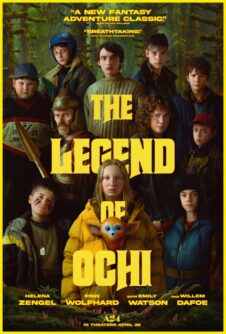
THE LEGEND OF OCHI
A wounded creature, a broken family, and a miracle worth the climb.
Should You Watch It?
Here is the good news first: this is a beautiful, strange little film with a whole heart. Writer/director Isaiah Saxon builds his world with real puppetry and gorgeous outdoor photography, and he lands on an ending that extols family, reconciliation, and motherhood — the kind of finale that earns its tears rather than begging for them.
The caution is smaller but real. A father is played for comedy and harshness before he's redeemed, the film leans Romantic and mildly feminist in how it frames wisdom between mother and father, and its attitude toward Christianity is ambiguous — the father hunts what he calls "demons," while the mother speaks of "miracles." There are also a couple of scary nighttime hunt scenes, one "s" word, and a strong profanity.
None of that erases what the film gets right. For families with older children who can sit with a little fear and a little theological fuzziness, this is a rich, rewarding watch — one worth seeing.
The Story
NO SPOILERS — WE KEEP THE SURPRISESYuri is a shy teenager living on a remote island near Romania's Carpathian Mountains, where her loving but comically militant father has raised her to fear and hunt mysterious creatures he calls demons — creatures he blames for endangering the family's livestock. He organizes local boys, led by Yuri's adopted brother, to hunt them, and Yuri tags along.
Then, alone after one hunt, Yuri finds a baby creature — wounded, frightened, and far from harmless. She decides to help it find its way home. What that costs her, and what it gives her family back, is where the story goes from here.
Is It Any Good?
Four stars means this is genuinely excellent filmmaking, and the source of that praise is specific: the setting is strange and beautiful, the outdoor photography is stunning, and the puppetry bringing the creatures to life is expert and lifelike — a real achievement in an age of digital shortcuts. Saxon is especially strong once Yuri climbs into the mountains to find the creatures' habitat.
The film's greatest strength is its ending — a reconciliation and reunion sequence built to bring a tear or two, where a fractured family comes back together and a mystical, grounded connection with the creatures is established. It's the kind of finish that makes the whole journey worth it.
The Worldview
At its center, this film believes in family — in reconciliation between a father and daughter, a husband and wife, and in motherhood as something worth honoring. That's the movie's strongest note, and it's struck clearly: the mother twice calls the family's restoration a "miracle," and the ending is built entirely around reunion rather than division.
Around that center, though, the film adds some things a discerning family should weigh. There's a light Romantic and feminist framing — the father is harsh and mistaken, the mother wiser and more compassionate — paired with an environmentalist sensibility toward the mysterious creatures that, while tempered by the mother's genuine care, leans more toward nature-as-teacher than toward a biblical view of stewardship. The film's attitude toward Christianity is also unsettled: the father is fixated on hunting "demons," a church service appears briefly, and yet the language of "miracle" is applied to a resolution that owes more to empathy and understanding than to any stated faith. It's not hostile to Christianity — just uncertain what to do with it.
Still, the ache this film is chasing — a family split by fear, healed by understanding — echoes something Scripture names directly: God's promise to "turn the hearts of fathers to their children" (Malachi 4:6). A film that gets that far, even imperfectly, has gotten somewhere real.
The Content Guide
The specifics — spoilers included by nature — so you can judge for your own family.
Dominant Worldview and Other Worldview Content/Elements
Strong moral, pro-family worldview where a separated family reunites and reconciles and where motherhood is extolled, marred by some Romantic, feminist, environmentalist elements, the father is harsh but concerned for his daughter, and the movie has a slightly ambiguous attitude toward Christianity where the father is fixated on killing demons but the ending is miraculous (in fact the word “miracle” is cited at least twice by the mother), and there’s a brief image of a church service
Foul Language
One “s” obscenity, a GD profanity and an OG exclamatory profanity
Violence
Light, somewhat scary violence includes a lengthy scene at night where a middle-aged man leads a group of boys and his teenage daughter on a hunt for creatures he calls demons that threaten livestock (the hunt is scary), some rifles are fired, teenage girl befriends a wounded baby creature (the creatures look like a species of monkeys that communicates by musical sounds, the girl bandages the baby’s wounded paw with difficulty, the girl tries to get some food for the baby at a local grocery story, but they cause a ruckus, and the teenage grocery boy gets out a rifle to fire, the girl and the baby crash through a glass window and run away, baby creature bites teenage girl’s arm, and it becomes infected but her mother cures the wound, and human encounters with the creatures in third act are scary since neither the people nor the animals know what the other is going to do (the people have guns and the animals have sharp teeth)
Sex
No sex
Nudity
No nudity
Alcohol Use
A man seems to be drunk in one scene
Smoking and/or Drug Use and Abuse
No smoking or drugs;
Miscellaneous Immorality
The heroine’s father is a little harsh, comical and mistaken, but he’s genuinely concerned for his daughter and family reconciliation occurs when he discovers the truth.
Talk About It
Questions for the drive home, the dinner table, or the youth group.
Yuri's father calls the creatures "demons" out of fear, but he's genuinely trying to protect his family. How can love and fear get tangled up together, and how do we untangle them?
1 John 4:18The mother calls her family's reunion a "miracle." What makes a reconciliation feel miraculous, and what role does forgiveness play in getting there?
Malachi 4:6 · Luke 15:20Yuri chooses compassion toward a creature everyone else fears. Where does Scripture call us to show mercy to what we don't understand, or what makes others afraid?
Proverbs 12:10The film treats the natural world with real tenderness. How is that similar to, and different from, what the Bible calls us to as stewards of creation?
Genesis 2:15 · Psalm 24:1The Final Word
This is a beautifully made, tenderhearted film with real craft behind its puppetry and its landscapes — and a finale that will leave you glad you came. It also carries a few things worth knowing beforehand: some scary hunt scenes, a little profanity, and a foggy relationship to faith. Our answer stands: worth the trip — older children and up.

