
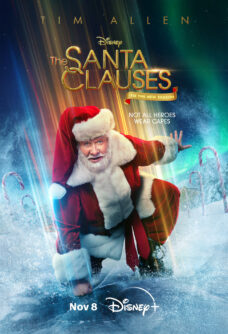
THE SANTA CLAUSES: Episodes 2.1 to 2.3
Warm, funny Christmas fun — with a witchcraft subplot to watch.
Should You Watch It?
Here's the decision. The first three episodes of THE SANTA CLAUSES: Season Two are genuinely warm, funny, and heartwarming. Tim Allen's wisecracks as Santa and as a father are hilarious, and he exudes real warmth as he juggles crazy family situations and the quirks of the North Pole. The worldview is pro-family, with positive references to Christmas — including a brief nod to the original Saint Nicholas and the real meaning of Christmas.
But a subplot pulls the other way. Scott's daughter, Sandra, struggling with new magical powers her parents don't understand, turns to the local witch rather than to her mother and father. It's a minor thread in Episode Two and a major one in Episode Three. The show treats it comically — lightly mocking the powers — but not strongly enough, and it doesn't clearly denounce witchcraft.
So this is one to watch first, or watch together. There's real delight here, but the witchcraft thread deserves a parent's eye and a conversation. Wait and see.
The Story
NO SPOILERS — WE KEEP THE SURPRISESScott Calvin has named his son, Cal, to succeed him as Santa Claus. There's just one problem: Cal is afraid of heights — and has some crazy ideas about the future. As Scott tries to train him, his teenage daughter, Sandra, wrestles with strange new North Pole powers that let her hear every animal around her, and neither Scott nor his wife, Carol, understands what's happening.
Meanwhile, a set of accidents unleashes the worst Santa who ever lived: Magnus Antas, a 15th-century tyrant the elves once trapped away. Freed at last, the Mad Santa wants his power back — and the North Pole with it.
Is It Any Good?
Three stars, and they're well earned. The comedy lands, the heart lands, and Tim Allen anchors both. His timing as a wisecracking Santa is as sharp as ever, but the show's secret weapon is warmth — the way he plays a father muddling through impossible family situations while running the North Pole. These first three episodes are full of funny, entertaining, heartwarming scenes.
The larger canvas helps too: a nervous heir, a daughter coming into powers she can't control, secretive elves, and a genuinely menacing villain in the Mad Santa give the season more to chew on than easy holiday filler. It's an accomplished piece of family television that would rate higher still without its problem subplot.
The Worldview
At its core, this is a warm, pro-family story. It honors marriage, parents, and children, and it points — however lightly — to Christmas, including a brief but positive reference to the original Saint Nicholas teaching the real meaning of the season and the birth of Jesus. That's the show's better instinct, and it's worth celebrating in a holiday series.
The trouble is Sandra's storyline. Overwhelmed by powers her parents can't understand, she turns not to her mother and father but to the local witch, La Befana, for lessons in witchcraft. The series plays this for laughs, and the comedy lightly mocks the use of such powers — but not strongly enough, and the show stops short of clearly denouncing witchcraft. Whether the season eventually condemns it remains to be seen.
That's the tension worth naming for your family: a story that rightly exalts home, faithfulness, and Christmas, while treating occult power as a source of help rather than harm. Scripture doesn't leave that ambiguous. It calls God's people away from such practices and toward Him alone: "There shall not be found among you anyone who practices divination or tells fortunes... or a sorcerer" (Deuteronomy 18:10). The deeper answer to Sandra's loneliness isn't a witch's lessons — it's the family, and the God, who made her.
The Content Guide
The specifics — spoilers included by nature — so you can judge for your own family.
Dominant Worldview and Other Worldview Content/Elements
Strong moral pro-family worldview with positive references to Christmas, including a positive but brief reference to the original Saint Nicholas, the first Santa, teaching the real meaning of Christmas, including the birth of Jesus, marred by a subplot where Santa’s teenage daughter is struggling with her new magical North Pole powers but turns to the local witch rather than her parents (treated comically, so the subplot lightly mocks using such powers, but not strongly enough)
Foul Language
No foul language in Episode 2.1, three light exclamatory profanities in Episode 2.2, and no foul language in Episode 2.3
Violence
Some light, often comic, violence such as reindeer kicks an elf, Santa drives sleigh upside down and his son passes out, female gnome falls into some shelves, female gnome slaps her boss for acting crazy, female gnome angrily breaks a cane over her knee, people are comically startled two or three times, female gnome kidnaps and gags the Easter Bunny, adult witch teleports a book in her house, but it hits a group of shelves and knocks everything down, angry female gnome kicks the Easter Bunny in the shins
Sex
No sex
Nudity
No nudity
Alcohol Use
Brief wine drinking at a dinner in one episode
Smoking and/or Drug Use and Abuse
No smoking or drugs;
Miscellaneous Immorality
Mother becomes jealous of daughter’s female mentor, elves hide truth from Santa and his family, villain has his assistant kidnap the Easter Bunny.
Talk About It
Four questions for the couch, the commute, or the couple bingeing it together.
Sandra is lonely and overwhelmed, so she turns to the witch instead of her parents. Where do we go when we feel unseen at home — and where does Scripture tell us to turn first?
Psalm 27:10 · Proverbs 3:5–6The show treats witchcraft as a bit of fun. Why does the Bible take it so seriously, and how would you explain that to a younger sibling or child?
Deuteronomy 18:10–12 · Galatians 5:19–21Scott is training his son to take over one day, even though Cal isn't ready. How does God prepare and strengthen us for callings that feel too big?
Philippians 2:13 · 2 Corinthians 12:9The show's warm heart is family loyalty at Christmas. What does it look like for your family to honor and lean on one another the way this story does at its best?
Ephesians 6:1–4 · Romans 12:10The Final Word
There's a lot to love here — Tim Allen's warmth, real laughs, and a genuinely pro-family Christmas heart. But the witchcraft subplot, played for laughs and left unrebuked, keeps us from waving the whole family through. So watch it first, or watch it together, and talk it out: wait and see. Looking for something to enjoy in the meantime? Try our latest family-friendly picks.


