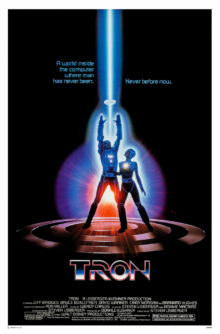
TRON (1982)
A visionary science-fiction adventure with a biblical heart.
Should You Watch It?
Yes. Disney’s Tron is a philosophical science-fiction masterpiece with thoughtful storytelling, engaging characters, strong production values, and themes that remain relevant decades after its release.
The film’s virtual world becomes more than a setting for action. It explores the difference between Creator and creation, the danger of denying a higher reality, and the courage required to confront evil. Its Christian and biblical imagery is unusually clear, including a self-sacrificial battle against a devouring, satanic force.
You will need to weigh brief language, action violence, scary images, kissing, and an implied love triangle. Some program injuries and deaths may disturb younger or sensitive viewers, even though the violence is not gory. For teens and adults—and older children whose parents judge them ready—Tron is worth the trip.
The Story
NO SPOILERS — WE KEEP THE SURPRISESKevin Flynn is a brilliant computer programmer and hacker whose ideas and designs have been stolen by a covetous colleague at ENCOM. With help from his friends Alan and Lora, Flynn enters the company’s virtual game world to find evidence of the theft.
There, the Master Control Program rules a dangerous digital realm. Flynn must survive its gladiatorial challenges and join forces with Alan’s heroic security program, Tron, to expose the truth and challenge the system’s evil control.
Is It Any Good?
Four stars means Tron is a masterful film whose creativity, writing, characters, and production values all work together. Its dated graphics do not erase the strength of its story or themes.
The game world is imaginatively depicted as a place of promise and challenge overtaken by a malevolent force. Characters and their in-game avatars remain emotionally connected, while even the programs are humanized in meaningful ways. The film’s thoughtful, layered storytelling rewards repeated viewings.
The Worldview
Tron presents a striking parallel between the higher reality of an uncreated Creator and the lower, created reality of men and women. In the film’s terms, programmers are like creators, while their programs are like creatures. Tron and the Tower Guardian believe in their “users,” but the Master Control Program and its minions insist that the virtual world is all that exists. The review identifies this as a clear parallel to Satan’s attempt to convince humans that the Creator does not exist.
The film also contains clear Christ imagery. At the climax, the MCP appears as an unambiguously satanic force seeking to devour and assimilate more programs. Flynn must act self-sacrificially and enter the heart of darkness to overcome chaos. This reflects Christ’s willingness to suffer for His people and overthrow the Enemy.
One weakness in the imagery is that Flynn says humans are limited in knowledge and power, like the programs they create. That acknowledges the finite nature of human sub-creators, but it slightly weakens the parallel because God does have a plan. The film also includes a few awkwardly presented humanist elements.
The film’s central question is whether reality is larger than what can be seen and controlled. Scripture answers, “In the beginning, God created the heavens and the earth” (Genesis 1:1).
The Content Guide
The specifics — spoilers included by nature — so you can judge for your own family.
Dominant Worldview and Other Worldview Content/Elements
Strong Biblical Christian worldview with a few mixed humanist elements
Foul Language
Two uses of “d-”
Violence
Some programs are harmed or derezed (killed) in the game, and there is a threat that a human being could be killed in the game, many programs look like their users, and their injuries or deaths could thus be disturbing to younger viewers, an user punches a program in the face knocking him out
Sex
Some passionate kissing between a man and woman, in and out of the game, there is an implied love triangle
Nudity
man is briefly shirtless
Alcohol Use
None
Smoking and/or Drug Use and Abuse
None
Miscellaneous Immorality
Some suggestive statements.
Talk About It
Questions for the drive home, the dinner table, or the youth group.
The characters debate whether the virtual world has creators, or whether it is all that exists. Why does believing in a Creator change how we understand reality and our lives?
Genesis 1:1 · Romans 1:20The Master Control Program seeks to control and assimilate everything. What does Scripture teach about the difference between God’s good rule and sinful domination?
Matthew 20:25–28 · 1 Peter 5:2–3Flynn must enter danger and act self-sacrificially to overcome evil. What makes self-sacrifice different from seeking power for yourself?
John 15:13 · Philippians 2:3–8The film treats intellectual theft as a serious wrong. Why does God care about honesty and justice in our work?
Exodus 20:15–16 · Ephesians 4:25The Final Word
Tron remains a creative, thoughtful, high-quality science-fiction adventure with unusually strong biblical imagery. Its brief language, violence, scary images, and light romantic content call for parents’ discernment with younger children. For teens and adults, it is WORTH THE TRIP — MIDDLE SCHOOL AND UP.