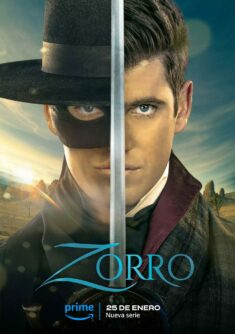
ZORRO (2024): Season One
A masked hero worth following — with a caution for younger kids.
Should You Watch It?
Here's the decision. In an era of "superhero fatigue," when the biggest studios strain to do better than The Marvels or Madame Web, this small Spanish import — dubbed into English — does what the giants can't: it reveres its source material and treats it with dignity. The writing, performances, camerawork, and stunts all rise clean above the show's evident budget, and they keep you hooked through all ten episodes.
The content is mostly manageable but real. The violence is significant, though — like most superhero adventures — it's sanitized to avoid excessive gore. There's a few light obscenities, and some non-explicit references to sexuality. The show depicts both Catholicism and indigenous religious practices neutrally, though the hero himself donates money to the Church.
So: if you're a teenager or an adult, this one is well worth your evenings — a hero whose defiance of corrupt authority is genuinely worth admiring. If you're choosing for younger children, wait; the action and adult references put it a notch beyond them.
The Story
NO SPOILERS — WE KEEP THE SURPRISESColonial California, the 1830s. Diego de la Vega returns to the colony of Los Angeles after learning of his father's murder — and finds a people overlooked and oppressed by the ruling aristocratic class.
To bring them justice, he takes up the mantle of a fallen Native American hero: Zorro. What that mantle costs him, and where his quest leads, is the story the season sets out to tell.
Is It Any Good?
Four stars, and here's what earns them. This is a low-budget, independent series that transcends its financial limitations at nearly every turn. The writing is excellent. So are the action, the camerawork, the stunts, and the performances — and they hold across all ten episodes without sagging.
What sets it apart is conviction. Where much of the modern superhero genre feels half-hearted and lifeless, Zorro is made by people who plainly love the character and take him seriously. The result is a revival with a pulse: thrilling, coherent, and grounded in something the hero actually believes. It's the rare small production that plays bigger than its means.
The Worldview
Zorro carries a strong moral worldview built around fighting corruption and injustice — and, crucially, an anti-revenge message. The hero's vigilantism isn't fueled by anger or hatred; it's framed as a quest to see justice actually done. "If the law doesn't serve justice, justice shouldn't serve the law" is a defining tenet of the title character, and the show means it.
That conviction runs close to what Scripture honors: defending the oppressed, refusing to let the powerful trample the overlooked, and resisting the temptation to make vengeance the point. The season shows the cost of a corrupt authority and dignifies the people crushed beneath it.
The religious picture is mixed. The show offers neutral depictions of both Catholicism and indigenous religious practices, presenting them side by side without comment — though the hero himself donates money to the Catholic Church. Weigh that even-handedness for yourself; discernment is warranted where faiths are treated as interchangeable.
Beneath the swordplay is an old, good longing: for justice to be done and the oppressed to be lifted up. Scripture puts it plainly — "Learn to do good; seek justice, correct oppression; bring justice to the fatherless, plead the widow's cause" (Isaiah 1:17).
The Content Guide
The specifics — spoilers included by nature — so you can judge for your own family.
Dominant Worldview and Other Worldview Content/Elements
Strong moral worldview about fighting corruption and injustice, with an anti-revenge message, “If the law doesn’t serve justice, justice shouldn’t serve the law” is a key tenet of the title character, plus some neutral depictions of both Catholicism and indigenous religious practices, but hero donates money to the Catholic Church
Foul Language
A few light obscenities and profanities, usually “d” words or “God”
Violence
Strong action violence using historically-appropriate weapons such as swords and old-fashioned pistols as well as martial arts and fisticuffs, a character is flogged as punishment for a crime
Sex
A supporting character is verbally referred to as having an affair, and there’s a reference to prostitution
Nudity
A woman is shown opening her dress, but she is only depicted from the shoulders up, so nothing is shown onscreen
Alcohol Use
Mild drinking in social/dining situations
Smoking and/or Drug Use and Abuse
No smoking or drugs
Miscellaneous Immorality
Racism towards Native and Asian-Americans, abusive labor practices, some religious corruption.
Talk About It
Four questions for the couch, the commute, or the couple bingeing it together.
Zorro lives by the line, "If the law doesn't serve justice, justice shouldn't serve the law." When is it right to resist an unjust authority — and where does Scripture draw the limits?
Acts 5:29 · Romans 13:1–5The show insists that its hero fight for justice rather than revenge. Why does that distinction matter, and what does God say belongs to Him alone?
Romans 12:19 · Deuteronomy 32:35The people of the colony are overlooked and oppressed by a ruling class. How seriously does Scripture take the cause of the poor and the powerless?
Isaiah 1:17 · Proverbs 31:8–9The series treats different religions as roughly equal side by side. How do we honor real people of other faiths while still holding to what is true?
John 14:6 · 1 Peter 3:15The Final Word
In a season of tired superheroes, Zorro is a genuine surprise: a small, handsome, well-made revival built around a hero worth admiring and a conviction worth discussing. For teenagers and adults it's an easy recommendation — worth watching — with a fair warning that the violence and adult references put it beyond younger children.